
AUSTIN, Texas — In a lab in Austin, a small team of engineers is working on a big idea: restoring movement by reconnecting the body to technology in a more natural way.
Phantom Neuro believes it has found a better way to control robotic limbs, not by implanting electrodes in the brain, but by tapping into the electrical signals muscles already produce.
“What we’re trying to solve,” says founder and CEO Connor Glass, “is how do you transfer all these amazing signals from your nervous system, the ones responsible for complicated movements, wirelessly to a machine so you can do those same complicated things with the machine itself?”
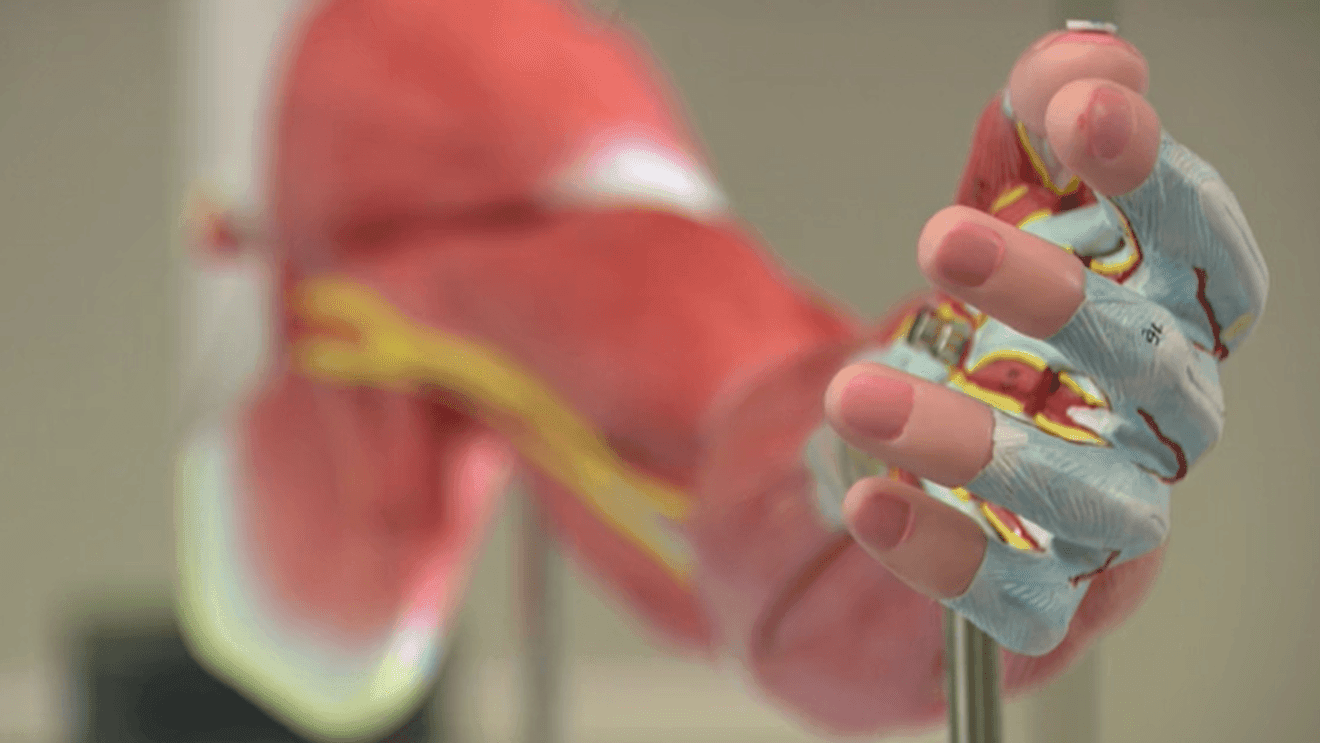
Every time someone closes a fist, muscles in the forearm generate tiny electrical impulses. Those impulses carry the instructions for movement. Phantom Neuro’s system reads those signals through a minimally invasive implant placed just under the skin, over the muscle.
Phantom Neuro believes it has found a better way to control robotic limbs, not by implanting electrodes in the brain, but by tapping into the electrical signals muscles already produce.
“Whenever I close my fist, all the muscles in my forearm are generating electricity,” Glass explains. “We tap in here, rather than going into the brain, so it’s much safer and much more natural.”
It creates a direct link between a person’s intent and a robotic device without brain surgery.
Glass says the technology is nearly ready.
“I’d say we’re extremely close. Our technology is actually pretty much done.”
From Research to Reality
Glass starting thing about starting Phantom Neuro while at Johns Hopkins University. He says he was surprised to learn that many promising breakthroughs never made it out of academic labs.
“I had an aha moment,” he says. “The technology that I thought existed on a commercial scale didn’t exist at all. There was still a very big need for somebody to focus on translating results from academia out to the general population.”
That realization pushed him to build a company focused not just on research, but on delivering a product patients can actually use.
The Limits of Today’s Systems
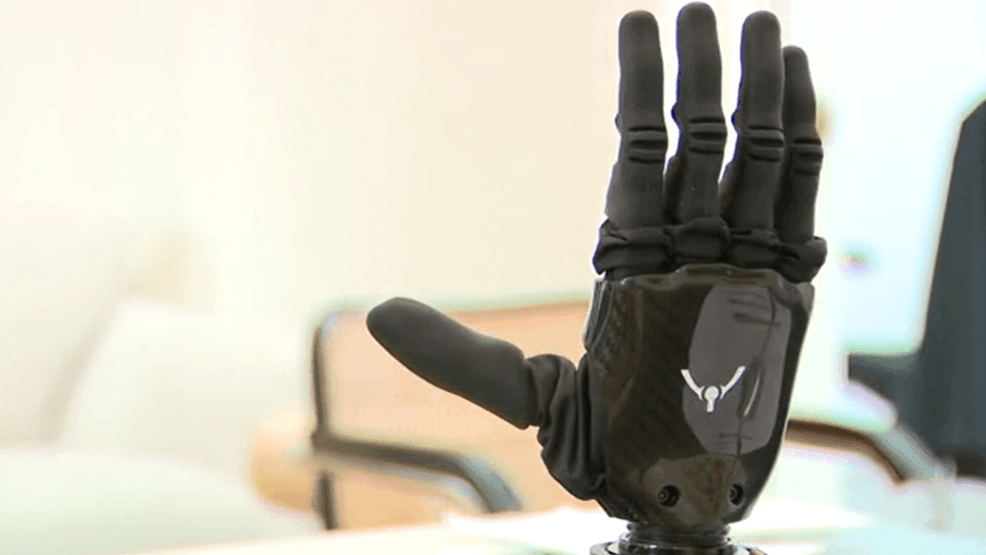
Even the most advanced robotic hands can be difficult to operate.
“Most of the people you see using these complicated robotic hands are using two buttons — literally two buttons — to control it,” Glass says.
Typically, users load a small number of gestures into the hand, often four, and switch between them one at a time. The process can be slow and awkward.
“What you get is a very clunky, burdensome experience,” Glass says.
Alex Smith experienced that firsthand. He lost his arm in a boating accident and has used traditional prosthetic systems.
With those systems, he could only program a handful of movements and had to cycle through them. With Phantom’s technology, he says the experience is different.
Phantom Neuro believes it has found a better way to control robotic limbs, not by implanting electrodes in the brain, but by tapping into the electrical signals muscles already produce.
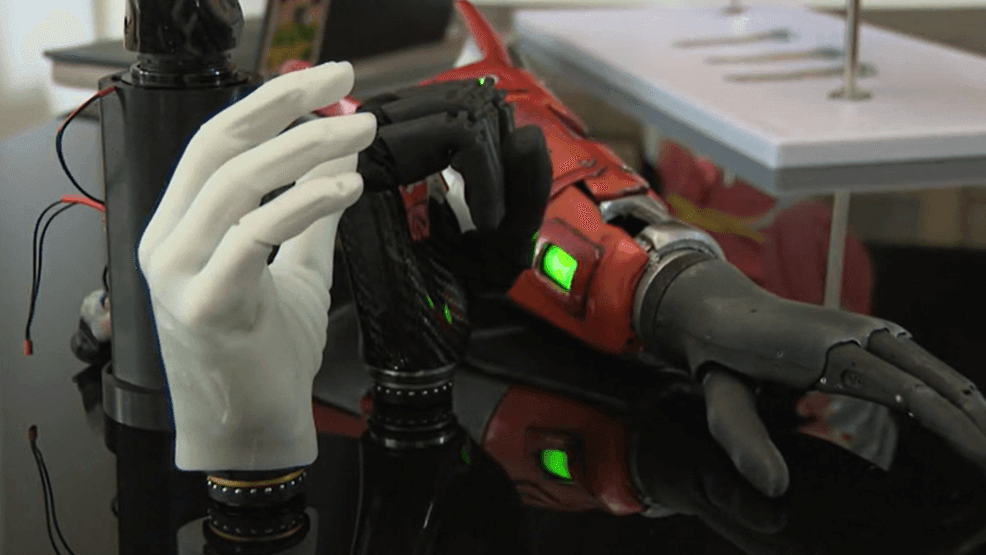
“Now I’m using the Phantom X and it’s controlling the same hand and wrist that I had in my old system,” Smith says. “But unlike the old system, I can control any gesture that I want automatically just by thinking about it. I can point. I can count to two, three, four.”
No buttons. No switching modes. Just movement that follows intent.
Clinical Trials Ahead
Human implants are expected to begin this year, with clinical trials planned in Australia.
“We’re on the cusp of implanting and demonstrating what we’re capable of doing,” Glass says.
If the trials succeed, the technology could significantly change how prosthetics are controlled, making them feel less mechanical and more intuitive.
For Glass, the long-term goal goes beyond restoring what was lost.
“I want the future to look like where people with disabilities not only regain their lost function, but they actually have capabilities that able-bodied people don’t have.”
In Austin, that future is already in development.