
Millions of Texans Lived Through It
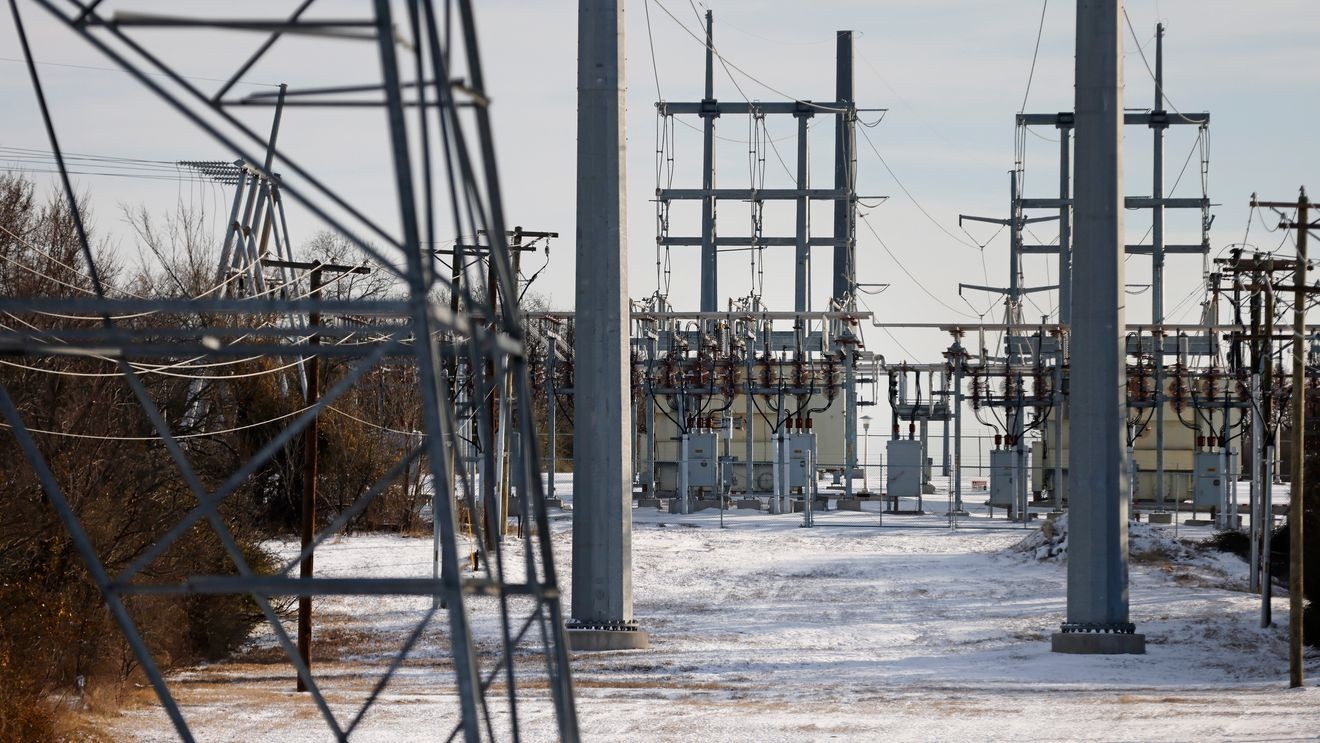
AUSTIN, Texas — Texas’ power grid came within minutes of total collapse during the deadly February 2021 winter storm.
ERCOT officials later said the system was just four minutes and 37 seconds away from a statewide blackout — in the middle of freezing temperatures.
“It was a very scary time,” said Monserrat Garibay, who lived through days without power.
“I felt like we were stranded in our own home — no lights, very cold, and the little food we had was spoiled,” she said.
Garibay spent 48 hours in the dark and cold. At the time, she didn’t realize how close the state had come to a complete grid failure.
“So this is not something new. ERCOT is not prepared, and it’s totally unacceptable,” she said in 2021.
Her neighbor shared the frustration.
“Having other people in other areas get power while we were left out in the cold — it’s frustrating,” he said.
Five years later, Garibay says she’s cautiously hopeful — but not fully confident.
“It helps that the city is trying to be more proactive. But I’m not 100 percent sure at the state level. The fact that we have a grid just for Texas — that’s still a concern,” she said.
At least 246 Texans officially died in the storm, though some independent analyses estimate the toll closer to 700.
More than 4.5 million homes lost power.
Economic losses were estimated at $195 billion, making it one of the costliest disasters in Texas history.
What were the ingredients of the storm?
Months before the freeze, La Niña conditions developed in the Pacific.
La Niña can bring warmer, drier winters to Texas — but it can also destabilize the polar vortex. When that happens, Arctic air can surge much farther south and linger.
That’s what happened in February 2021.
In Austin, temperatures stayed below freezing for 144 hours — the coldest stretch since the 1980s. Pipes burst. Water mains failed. Power demand surged beyond supply.
Central Texas was hit repeatedly — freezing rain, then heavy snow, then more ice. Layered precipitation made roads impassable for more than a week.
What did lawmakers change?
In the weeks after the storm, state leaders promised reform.
Gov. Greg Abbott acknowledged Texans’ anger: “You have a right to be. I’m angry too.”
By spring 2021, lawmakers passed Senate Bills 2 and 3, which:
Restructured the ERCOT boardRequired weatherization of power plantsMandated earlier public alerts ahead of grid emergencies
Energy producers were required to “harden” operations, according to St. Edward’s University political science professor Brian Smith.
Ahead of the five-year anniversary, Abbott’s press secretary said in a statement:
Texas’ all-of-the-above energy approach has cemented our state as the energy capital of the world. Since Winter Storm Uri, the state has taken significant legislative action to strengthen the grid and added more than 40,000 megawatts of power. Thanks to those reforms, no Texan has lost power because of the state grid. Governor Abbott will continue working with the legislature to build a grid with enough energy to power Texas for the next century.
But Smith says the real test hasn’t come yet.
“We haven’t had another storm like 2021,” he said. “So we don’t fully know.”
Could it happen again?
The January 2026 ice threat did not become another 2021. But the risk remains.
Researchers estimate the 2021 storm was roughly a 1-in-50 to 1-in-100-year event. That does not mean it cannot happen again — only that the annual probability is about 1% to 2%.
Climate trends show extreme weather events are becoming more frequent.
Another major ice storm would require the same ingredients: Arctic air, moisture, and prolonged cold.
The odds are low — but not zero.
From Response, To Resilience
Since 2021, Austin has focused on recovery and preparation.
The city helped create the Austin Resilience Network (ARN) — a partnership between government agencies and community organizations.
“We want a whole community approach,” said Austin Emergency Management Director Jim Redick.
ARN was tested in May 2025, when a microburst toppled 91 utility poles and left neighborhoods without power.
Redick says community groups often respond faster than government.
“These organizations already know where people go for help,” he said.
The network now includes nonprofits like the Austin Disaster Relief Network, which connects more than 200 churches.
“We are more prepared now than we were then,” said Associate Director Stephen Brewer.
ARN has not faced a crisis like 2021. But leaders believe it will improve coordination and resource distribution when the next emergency hits.
Has Texas’ electrical grid improved?
Five years later, Texas’ grid looks different.
Solar capacity has grown from about 5 gigawatts in 2021 to 35 gigawatts today, making Texas the nation’s top solar producer.
Battery storage — almost nonexistent in 2021 — now stands at 17 gigawatts.
During a cold morning in January, batteries and wind supplied about one-quarter of Texas’ peak demand before sunrise.
That’s progress.
But energy expert Ed Hirs of the University of Houston cautions that more capacity does not automatically mean more reliability.
“ERCOT doesn’t know how much of that is deliverable,” he said. He also notes the market structure remains largely unchanged.
“This market still rewards scarcity,” Hirs said. And while officials say the grid is stronger, Hirs warns: “We’re not out of the woods at all.”
Here’s a statement received from ERCOT and Texas’ Public Utility Commission ahead of the five year anniversary:
Your Voice. Your Future. Town Hall
Austin leaders, water officials, and energy experts were invited for a town hall to help answer one central question: If 2021 happened again tomorrow, would we be ready?
The consensus: Texas and Austin are in better shape — but vulnerabilities remain, especially in building codes and the natural gas system.
Five years later, progress has been made. But preparation is not a finish line. It’s an ongoing responsibility. The next test may not look like the last one.
But the questions remain the same: Are we ready — and who is accountable?
You can count on CBS Austin to keep asking those questions — before, during, and after the next storm.