
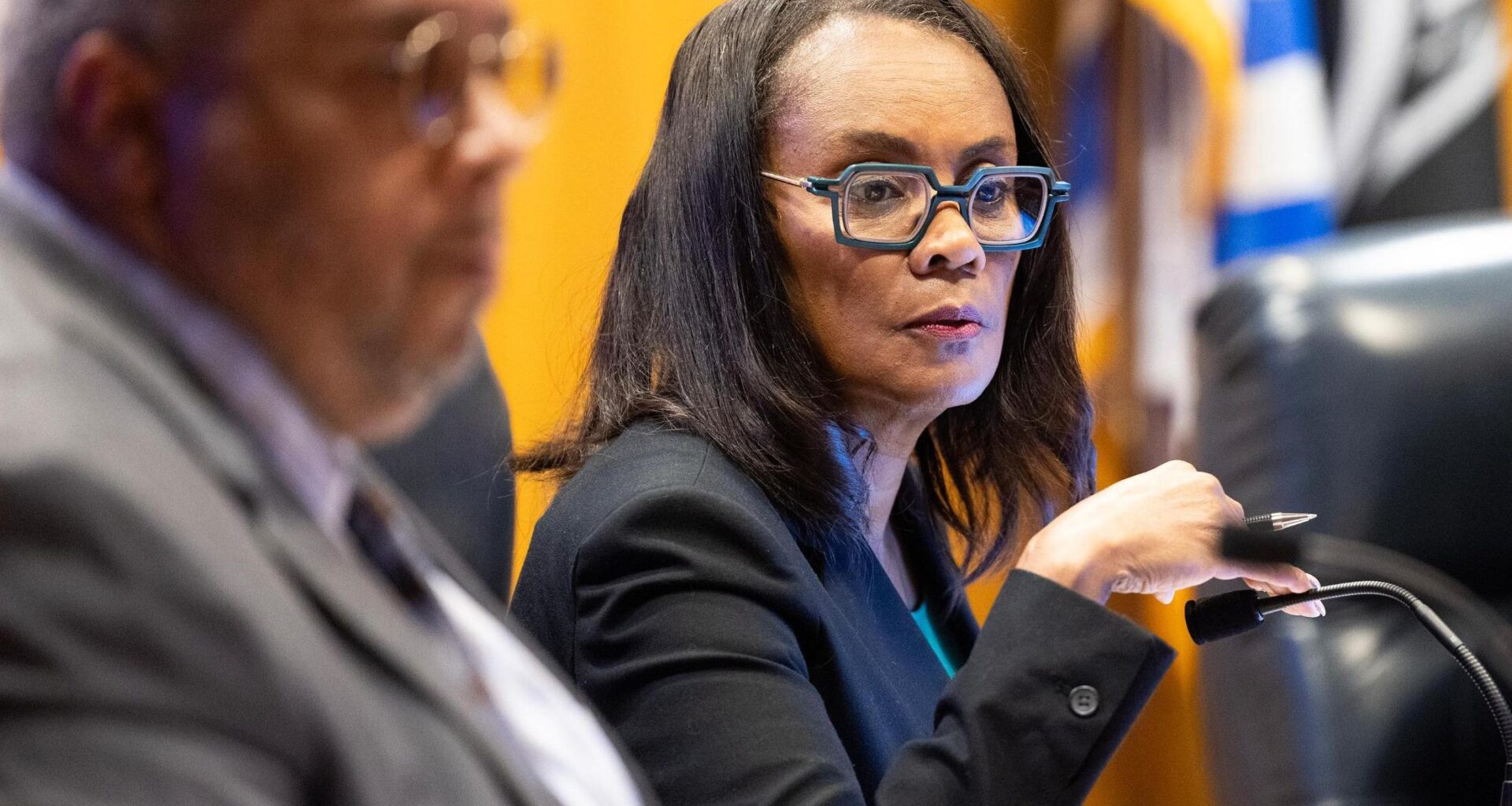
Alisa Simmons, the Tarrant County Commissioner of Precinct 2, listens during the public comment portion of a meetings in June 2025.
Chris Torres
ctorres@star-telegram.com
A Tarrant commissioner continues to question whether youth offenders in the county’s juvenile system are falling through the cracks with rehabilitation and support services.
Commissioner Alisa Simmons has been critical of whether My Health My Resources of Tarrant County is capable of performing those services. MHMR is a component of county government that serves people with the mental illness, disabilities and substance use disorders.
Up until 2024, Tarrant County contracted with Youth Advocate Programs, Inc. to work with juveniles in the system, providing counseling, mentors and community service to reduce recidivism. But the county cut ties with YAP over inclusivity language on its website and accused the organization of using taxpayer money for lobbying. The county then contracted with MHMR to do the job for $895,000.
Simmons asked for a briefing on MHMR’s performance under the contract during Tuesday’s commissioner meeting. She said her request was in response to data over the last two years showing Tarrant County has committed more youth to Texas juvenile prisons than any other county. Many juvenile advocates attribute the increase in incarcerations to the removal of community-based alternatives that had existed in Tarrant County for decades, such as Youth Advocate Programs.
“I ask that we be briefed on this contract to ensure we are spending our money appropriately and that our incarcerated youth are getting the mental and behavioral support they need,” Simmons said. “To be truly diverted from crime and to hopefully become productive citizens of our county.”
Riley Shaw, the director of Tarrant County Juvenile Services, did not attend Tuesday’s meeting but wrote a letter of support for MHMR. It was read out loud by the county administrator.
“I believe that MHMR of Tarrant County has the capacity to deliver the specific mentoring and other services for which we have contracted with MHMR of Tarrant County, and I believe that such contracting services are capable of meeting the needs of the youth and families who have been, are and will be referred to MHMR of Tarrant County,” Shaw wrote.
Last week, Simmons met with the chief executive officer of MHMR, Susan Garnett. According to Simmons, Garnett could not answer questions about the services that Youth Advocate Programs had provided to the county because she had never seen the contract.
Simmons said she came away from the meeting believing that MHMR was not fulfilling its contract obligations.
She asked the county administrator to compare MHMR and Youth Advocate Programs to determine whether there is a gap in services. When the Tarrant County Juvenile Board voted to end four contracts with Youth Advocate Programs in 2024, it halted services for about 75 youth at the time and up to 423 youths per year.
Garnett gave commissioners a presentation last month on the work MHMR is doing. It included the Multisystemic Therapy program, community navigation and mentoring services. Garnett also provided information on state services, including the Youth Crisis Outreach Team and youth psychiatric services.
Simmons asked how many juveniles MHMR serves through its contract. Garnett said it serves about 400 juveniles in all. She could not answer how many juveniles have served since being awarded the contract, which includes mentoring, community navigation, Juvenile Justice Alternative Education Program and post-adjudication navigation.
Simmons also asked whether MHMR has staff for these services and whether it outsources any of the work. Garnett said MHMR has over 2,000 staff members who, based on their availability for part-time work and training, will conduct the services as needed.
Related Stories from Fort Worth Star-Telegram

Fort Worth Star-Telegram
Kamal Morgan covers racial equity issues for the Fort Worth Star-Telegram. He came to Texas from the Pensacola News Journal in Florida. Send tips to his email or Twitter.