
Long-awaited flood relief is taking years longer than expected for some.
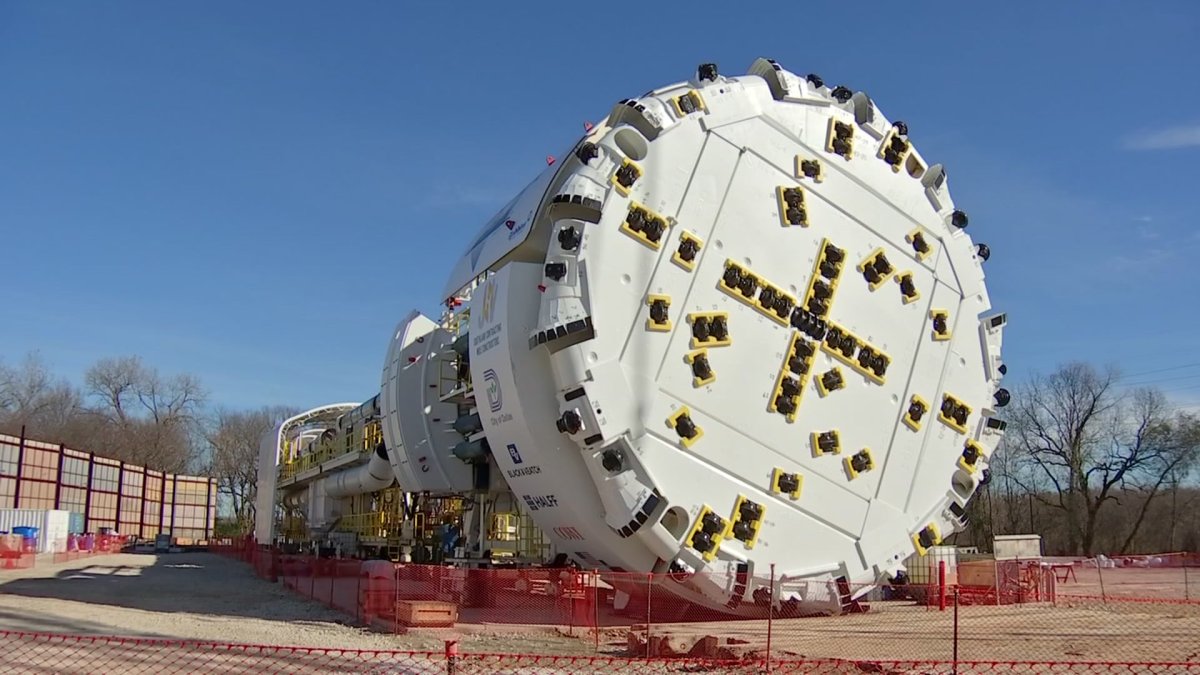
The Mill Creek Drainage Relief Tunnel, a 5-mile drainage tunnel which sits 75 to 150 feet underground, was expected to be done by 2024. A new timeline suggests full completion won’t happen until 2029.
Council member Paul Ridley, whose District 14 covers parts of East Dallas and downtown, told NBC 5 in June of 2025 that the drainage system was designed nearly a century ago to handle water runoff from a very different Dallas than what currently exists.
“The system is overwhelmed by the new development and the runoff from that development,” Ridley says.
The historic East Dallas Peak’s Addition neighborhood has been home to Gloria Alvarez for some 35 years, and she doesn’t plan on leaving.
“The house is paid, so I don’t want to go, you know,” said Alvarez.
She loves it there, although it has come with one repeated problem. She learned quickly that flooding was to be expected. Not just minor inconveniences, but life-altering flooding events.
She shared a photo of her street during a downpour in 2022 when the water rose above her front porch. Now, she holds her breath any time rain is in the forecast.
“It’s not easy this time because you think it’s going to happen again,” she said.
Her house is near one of the intake shafts for the Mill Creek project, a five-mile tunnel from Uptown, across parts of East Dallas and Fair Park. The project, now roughly 83% complete, is expected to provide much-needed flooding relief, largely to East Dallas.
Alvarez told NBC 5 she’s seen improvement with drainage on rainy days.
Excavation work started in 2019 and was largely complete by the summer of 2022. Still, construction is behind.
In a statement to NBC 5, Dallas Water Utilities said in part, “Although originally scheduled to be completed in 2024, construction is now estimated to be substantially complete in 2028 and fully complete by early 2029.”
A memo sent recently to the city’s Transportation and Infrastructure Committee cited delayed parts for the tunnel boring machine, permitting changes affecting concrete production, and COVID-19 supply chain disruptions.
“I’m trying to understand, reading that memo and all the problems that happened, which is disappointing, what that cost is and what that cost means to the system and our rate holders,” said City Council Member Cara Mendelsohn.
Dallas Water Utilities director Sarah Standifer said the project, even with all its delays, is still within budget.
Alvarez got a chance to tour the massive tunnel and sees herself as somewhat of a liaison within the neighborhood. She said she simply wants to see progress and improvement.
“The water comes fast,” she said. “It’s only not me, it’s everyone.”
Standifer said the department is doing what it can from its end to move the project forward.
“We’re doing everything we can from our end to make sure that we’re with them daily doing inspections and pushing forward,” Standifer said.
She said once the tunnel is complete, homes and businesses in the immediate areas near the intake sites will see a noticeable improvement during heavy rains.