
EL PASO (KFOX14/ARC EL PASO) – Black history has plenty of big moments, but sometimes the best stories are tucked into neighborhood rooms, old school memories and quiet rows of headstones.
That was the case on a tour organized by the East-Side Central Coalition, with stops at the McCall Neighborhood Center located at 3231 Wyoming Ave and Concordia Cemetery in Central El Paso to spotlight the contributions of Black El Pasoans.
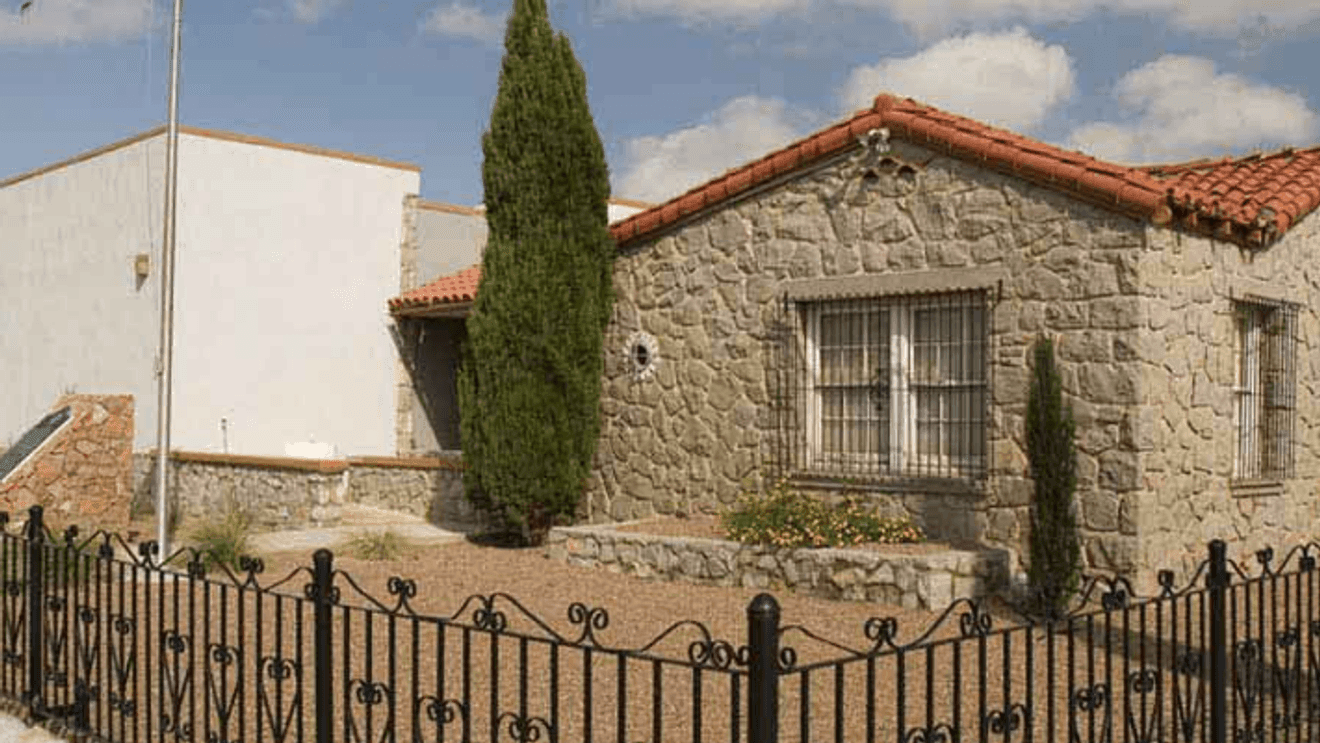
At the McCall Neighborhood Center, visitors learned why the site is a key part of the annual African American historical tour.
“I want to talk to you about the McCall Neighborhood Center a little bit. And this is part of the one of the three stops is the beginning and the end stop of the annual African American historical tour,” Gregg Davis, President of the Eastside-Central Coalition said.
The center preserves pieces of local history tied to the McCall family. “That is Mr. and Mrs. McCall. I always like to start with them because without them, this place wouldn’t exist. They actually used to live in this house,” the guide said.
Part 1: Black History Month tour spotlights McCall Center, Concordia Cemetery in El Paso
The guide explained that Marshall McCall “was one of the first African American postal workers” and that his wife, Olalee McCall, “was one of the first African American principals of the famous Douglass School of History.”
The Douglass School’s impact reached far beyond El Paso, the guide said: “We had politicians, artists, authors. A lot of people who graduated from Douglass School were quite significant in the nation.”
The McCall Neighborhood Center also features two historical markers. “You know, the McCall Neighborhood Center, we house two historical markers. Two historical markers,” the guide said.
One marker highlights Dr. Lawrence A. Nixon, described as “one of the most famous African American El Pasoans that we have.” Davis said Nixon took a voting rights fight all the way to the nation’s highest court.
“He went to the Supreme Court, the United States Supreme Court, and he fought for voting rights for black people, not only in Paso, but in the state of Texas. And guess what? He won. He won.”
Another marker recognizes Henry O. Flipper. The guide said Flipper “was the very first African-American who graduated from Westport military academy,” later lived in El Paso after being dismissed from the military “ironically because of racism to tell you the truth,” and worked as an engineer. The guide added that Flipper was “very very foreign in Spanish.”
ARC El Paso also got the chance to speak to someone who attended Douglass School through integration.
“Yeah, I went to Douglas,” she said. “I was there until it integrated in 1955, and then I went to Jefferson after that and graduated from Jefferson.”
She recalled Douglass as a first-grade-through-12th-grade school and described the transition in 1955.
“No fussing and fighting and pushing and cussing and throwing things that we’re going to integrate, and so we went to whatever school we wanted to,” she said, adding that she chose Jefferson because it was easier to reach by bus.
Another figure highlighted at the McCall Center was Leona Ford Washington.
“This lady right here really made this building work, because this is the visionary. This is Leona Ford Washington. In 1983, she established the McCall Center, along with a friend, Mr. Buss, but actually she was the visionary. Without her, none of this would be here,” Davis said.
At Concordia Cemetery, the focus shifted to the Buffalo Soldiers and a memorial honoring those buried there.
Bill Redmorton is a member of the El Paso Chapter of the National Association of Buffalo Soldiers and Troopers Motorcycle Club. Redmorgan described the Buffalo Soldier Memorial and how it came together.
“What you have here is the Buffalo Soldier Memorial in 2009. A bunch of us got together and we decided that we would want, we wanted to script out a memorial dedicated to the 42 Buffalo Soldiers that are actually buried out in Concordia,” Redmorgan said.
He said the project was built with community support. “So we got together with the community, our national organization and local businesses and we came up with plans to build this and funding. All the funding was donated to build this,” Redmorton said. “The 42 headstones you see here represent the 42 soldiers that are actually buried out in the cemetery.”
Redmorgann also shared background on the Buffalo Soldiers, saying they were formed after the Civil War in 1866 called U.S. Colored Troops and organized into the 9th and 10th cavalry and the 24th and 25th infantry. He said they were active until 1944, though he added there was a unit active until 1951 in “Coppos, California.”
He said Buffalo Soldiers came to El Paso in 1877, with duties that included guarding the mail, protecting settlers and establishing an Army presence.
More stops are part of the tour, including Ms. Estines Barber Shop and the Black El Paso Living Museum, which will be featured in part two on Monday.
Information on taking the tour is available on the McCall Neighborhood Center’s website.
RECOMMENDED: El Paso’s first black mayor reflects on historic role during Black History Month
Sign up to receive the top interesting stories from in and around our community once daily in your inbox.