
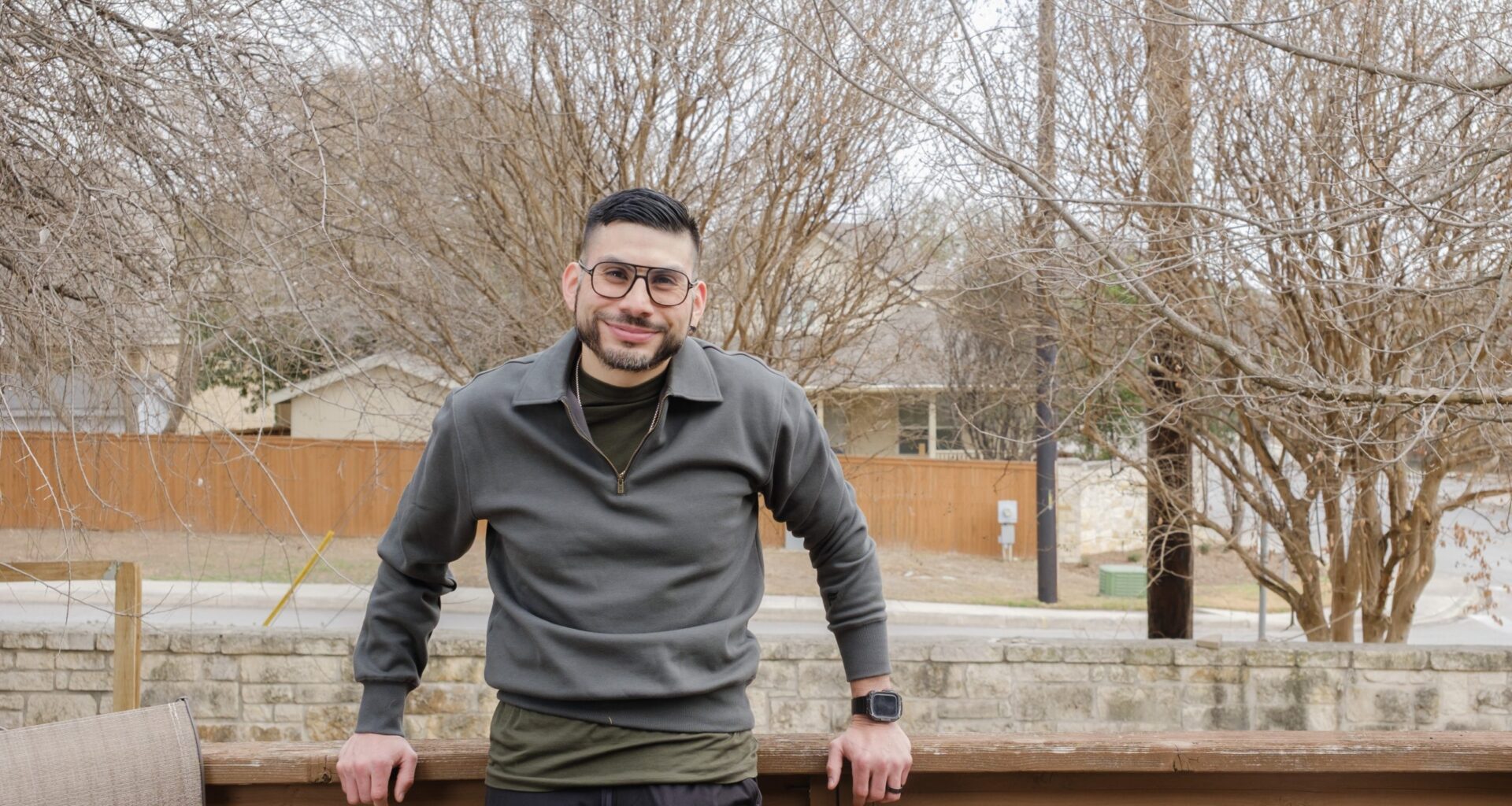
The Where I Live series aims to showcase our diverse city and region by spotlighting its many vibrant neighborhoods. Each week a local resident invites us over and lets us in on what makes their neighborhood special. Have we been to your neighborhood yet? Get in touch to share your story. If your story is selected and published, you will receive a $250 stipend.
I am a proud Alamo City native who owes his life to the community that raised him.
In San Antonio, we don’t just live — we show up. We show up for Spurs games, for Fiesta in bright colors, for Sunday barbacoa, for our neighbors and for our family. We shout “GO SPURS GO!” from our hearts.
But for a long time, the loudest noise I heard was the one in my own head.
I grew up on the West Side in the Woodlawn Lake neighborhood, where history lives on every corner. I walked the halls of Thomas Jefferson and John Jay high schools, surrounded by the murals and rhythms of a city built on Mexican, Tejano, and Indigenous roots. But I left school before I could ever walk the stage.
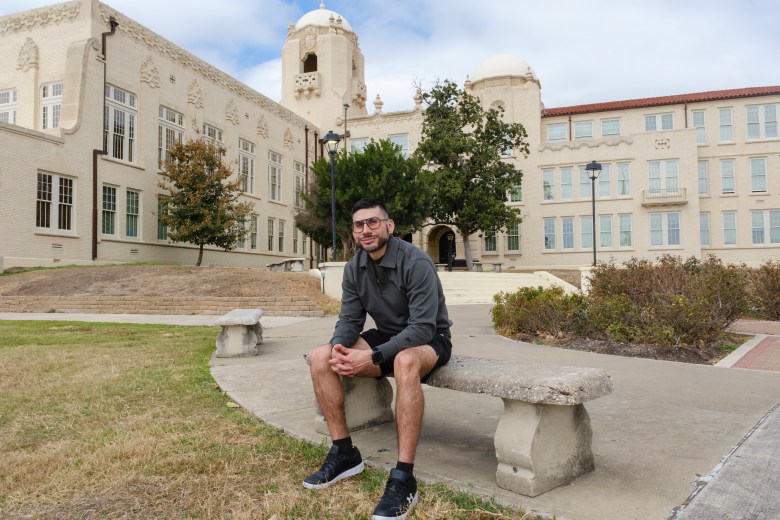 Victor Lopez poses for a portrait outside Thomas Jefferson High School, which he attended. Credit: Clint Datchuk for the San Antonio Report
For years, I became a drifter in my own hometown. I was drowning in alcoholism and drug use, unanchored and unsteered. I wasn’t drinking to celebrate life in the 210 — I was drinking to disappear from it.
Still, even in my darkest years, San Antonio lived in me. This is a city that has survived battles, floods and change. A city built on resilience, culture and corazón. That grit was in my DNA long before I even knew how to use it.
My turning point came on a cracked cement basketball court in my childhood neighborhood.
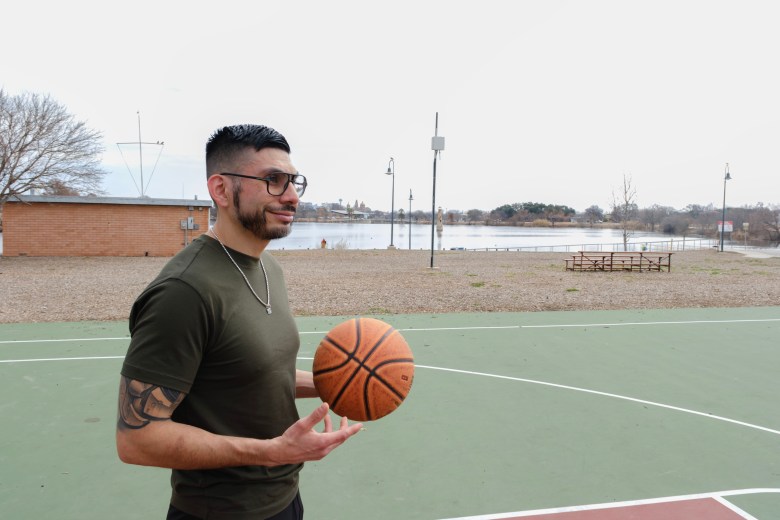 Victor Lopez poses for a portrait at Woodlawn Lake Park. Credit: Clint Datchuk for the San Antonio Report
In 2010, my wife Jasmine and I were living at my mom’s house just to survive. Mid-game, I started gasping for air, my chest tightening as the truth hit me hard: I was dying in the same neighborhood where I was supposed to be leading.
Then I looked at my twins — AnneMarie and Victor. They were born at 26 weeks, weighing barely a pound each. They spent four months in a San Antonio NICU, fighting for every breath. Watching my son later face life with cerebral palsy with courage and determination stripped away every excuse I had. If my children could fight that hard just to live, how could I not fight to be present for them?
That moment changed everything. I traded the bottle for the barbell — but I didn’t do it alone.
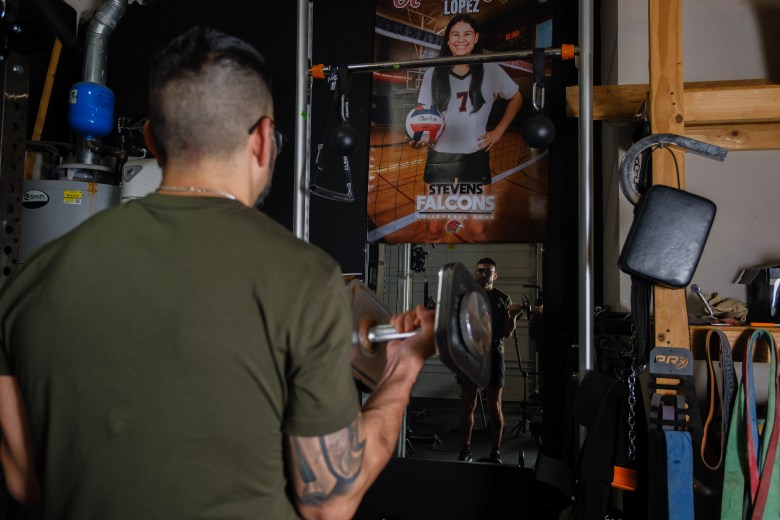 Victor Lopez works out in the makeshift gym inside his Alamo Ranch home, where a poster of his daughter helps to motivate him for his fitness competition. Credit: Clint Datchuk for the San Antonio Report
San Antonio doesn’t let its people fall quietly. This city lifts you, feeds you and reminds you who you are.
From the West Side to Alamo Ranch, people showed up for me. Old classmates still call or message just to say, “Keep going, bro.” Not because I’m a nominee now — but because we share roots, stories and history.
Here, family isn’t just blood. It’s compadres, teammates, gym partners, neighbors and tias who pray for you even when you don’t know it. They saw me at my lowest and treated me with the same respect they do now that I’m standing strong at 40. That’s San Antonio. That’s amor.
Today, I’m honored to be a national nominee for the Mr. Health & Fitness competition. This isn’t about vanity. It’s about representing what this city builds in its people. The competition supports the B+ Foundation, helping families facing childhood cancer — a cause close to my heart after my children’s early fight in the NICU.
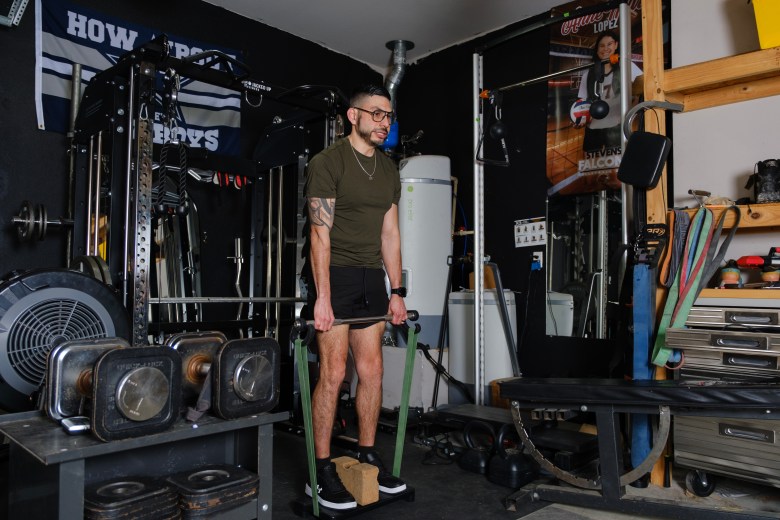 Victor Lopez works out in the makeshift gym inside his Alamo Ranch home. Credit: Clint Datchuk for the San Antonio Report
If my story means something to you — if you believe in second chances, in family, in the spirit of San Antonio — I’d be honored to have your vote.
When I step on a stage or into a gym, I carry my city with me. The same city that celebrates Fiesta with confetti in the streets and honors Hispanic Heritage not just for a month, but as a daily way of life. The same city where culture, faith and family still matter.