
Sign up for the Slatest to get the most insightful analysis, criticism, and advice out there, delivered to your inbox daily.
It is one thing for a state to say that it is dedicated to doing justice in capital cases. It is quite another for them to turn those commitments into action.
All too frequently, in those cases, words don’t govern actions. We say we are in favor of equal treatment but stand by while race shapes the fates of those accused of capital crimes. We say that we will not punish cruelly, but use methods of execution that impose unnecessary suffering on those we execute.
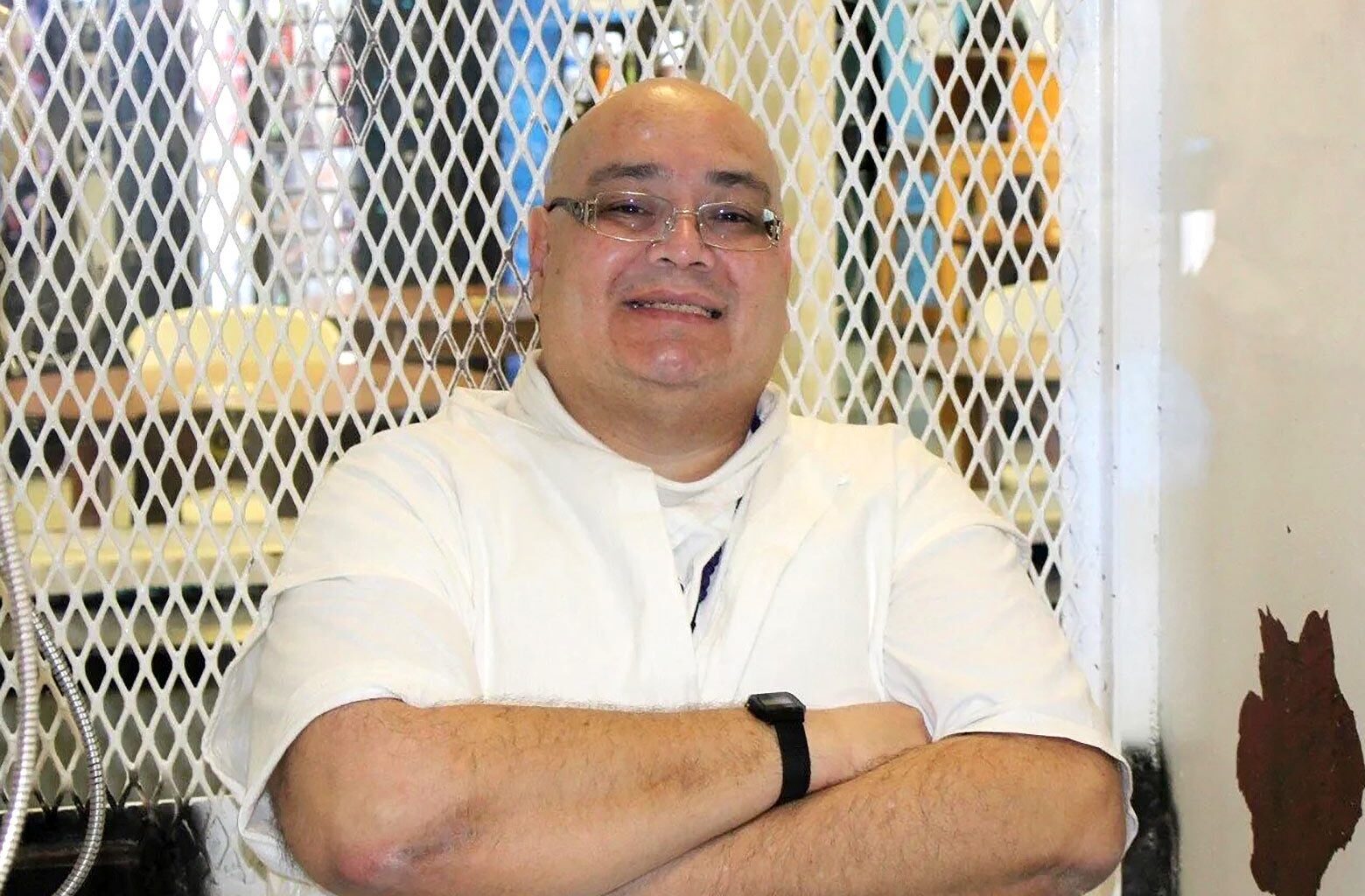
Earlier this month, Charles Flores filed a petition in the United States Supreme Court offering it the chance to change that by saying that Texas has to fulfill promises it has made to death row inmates. In his case, he wants to take advantage of a law that allows death row inmates to prove they were falsely convicted and are actually innocent.
The court should hear his case and require the Lone Star State to follow its own laws.
Charles Flores was convicted of the January 1998 killing of Betty Black during an attempted robbery. Right from the start, he has maintained his innocence.
His co-defendant, Richard Childs, pleaded guilty and was sentenced to 35 years in prison. He was released on parole in 2016.
One of the witnesses who helped convict Flores was Jill Barganier, Betty Black’s neighbor, who insisted at Flores’ trial that she was 100 percent sure she had seen him enter Black’s house the morning she was killed. Her testimony proved to be decisive in securing his conviction since there was no physical evidence tying Flores to the murder.
We know that eyewitness identification is notoriously unreliable. In addition, the neighbor’s testimony was tainted in several ways.

Dahlia Lithwick and Mark Joseph Stern
A Lawyer for ICE Broke Down in Court. It’s the Sound of the System Collapsing.
Read More
First, on the day of the crime, she told police that two white men with long hair and similar builds got out of a car, a purple and pink Volkswagen Bug, and entered Black’s garage. She then picked a white male with long hair out as the driver she had seen.
But Flores looks nothing like that man. He is Hispanic, not white, and at the time that Black died, he had shaved hair and was overweight.
Bargainer also helped a police artist create a composite sketch of the men whom she saw enter Black’s house. It looked nothing like Flores.
To top it all off, she did not pick a picture of Flores out of an array of photos. So how could she go from all that to being sure Flores was involved in Black‘s killing?
She was helped along by what is called “investigative hypnosis.” A 1979 article published in the journal Detective describes it as a technique used to “obtain vital information that may have been forgotten.” Even then, though, the publication cautioned that “all leads developed through hypnosis should be verified with supporting physical or testimonial evidence … and investigative conclusion should not be based solely on hypnotically obtained information.”
Since that article was published, investigative hypnosis has been shown to be completely unreliable. “Instead of improving memory,” the Christian Science Monitor notes, “hypnosis may only manipulate it.”
That seems to have been the case with Barganier. During her hypnosis, the police asked her if one of the men she had seen had short, shaved hair.
During the hypnosis session, Barganier again described the man she saw driving the car as having “long, wavy” dark-blond hair. The hypnotist then asked her about the passenger and urged her to focus on his hair. She said it was “a lot like his friend’s,” and clarified: “dark, long.”
“Just relax,” the hypnotist said, “take a deep breath, take the time you need. Can you tell me how long his hair is? Does he have it neatly cut, or is it trimmed?”
That is a classic example of a suggestive question.
Even without such overt leading of a witness, courts in many places, including Florida, one of America’s leading death penalty states, have questioned “the reliability of statements procured by way of hypnosis.” A California court explained the danger of investigative hypnosis this way. Someone subject to hypnosis “will lose his critical judgment and begin to credit ‘memories’ that were formerly viewed as unreliable … will confuse actual recall with confabulation and will be unable to distinguish between the two, and … will exhibit an unwarranted confidence in the validity of his ensuing recollection.”
In 2023, Texas recognized that such defects were present in investigative hypnosis. It joined a “majority of jurisdictions, which ban post-hypnotic testimony.”
The Texas criminal code now says that a statement made during or after investigative hypnosis “is not admissible against a defendant in a criminal trial, whether offered in the guilt or innocence phase or the punishment phase of the trial, if the hypnotic session giving rise to the statement was performed by a law enforcement agency to investigate the offense that is the subject of the trial.”
But it was not made to apply to cases in which someone had already been convicted at the time was passed. That in itself should raise red flags.
A state decides that a kind of evidence is so unreliable that it should not be used in any criminal case, but is willing to see someone put to death when that kind of evidence was used to convict him. What kind of justice is that?
Crucially, the issue facing the Supreme Court is whether Texas is obliged to revisit this case. Texas has passed laws specifically designed to protect innocent people from wrongful execution. They allow prisoners to return to court by filing a writ of habeas corpus and present evidence of their innocence.
It also has a law on the books allowing courts to use a lower standard of proof in cases involving junk science.
Flores wants to take advantage of those laws. As he points out in his petition to the U.S. Supreme Court, he has asked the Texas Court of Criminal Appeals to allow him the chance to prove that he is in fact innocent of the crime for which Texas seeks to execute him.
But,” he contends, “the TCCA has repeatedly and arbitrarily barred these efforts without explanation.” By doing so, the court is, in essence, nullifying state law and depriving him of “the state-created liberty interest upon which he seeks to rely.”
“Due process,” his petition observes, “demands more than unexplained summary dismissal in response to a substantial threshold showing of actual innocence. This case and the question it presents are exceptionally important: whether a state law enacted to safeguard against executing the innocent, when rendered illusory in practice, offends the federal right to due process.”
“Once a right is established through state law,” Flores argues, “a deprivation of the right implicates federal procedural due process protection.”
This Content is Available for Slate Plus members only
It Sure Looks Like This Supreme Court Justice Is Getting Ready to Retire
He accuses the state of “gratuitously barring credibly innocent prisoners on death row from proving their innocence. This Court,” he adds, “should grant certiorari to clarify that the constitutional guarantee of due process prohibits state courts employing arbitrary or irrational procedures to foreclose even making the case of innocence.”
It should.
More than 50 years ago, the Supreme Court recognized what it called “statutory entitlements.” As Justice William Brennan put it, when the state creates a right for a class of individuals, it may not deny an individual seeking to exercise that right without “procedural due process.”
Quoting an earlier case, he noted, “’The fundamental requisite of due process of law is the opportunity to be heard.’”
That is all Charles Flores is asking for, an “opportunity to be heard” on a life-and-death matter. If the Supreme Court does not give him that chance, it will add to the long list of instances when the law promises one thing but doesn’t deliver it to death row inmates.

Sign up for Slate’s evening newsletter.