
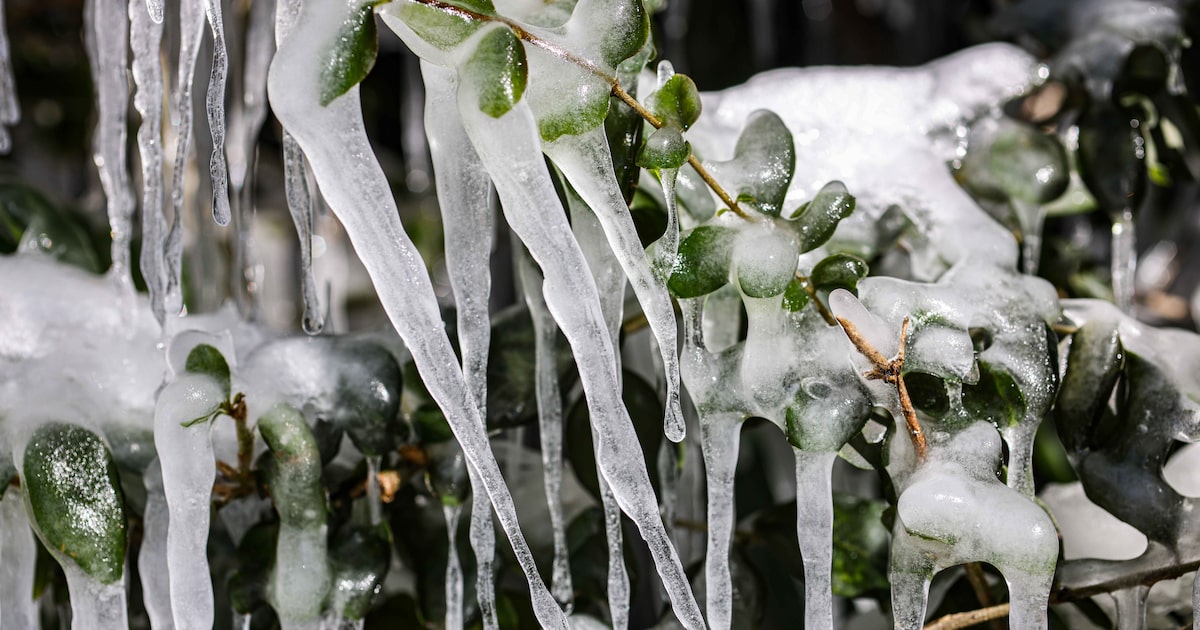
Lauralene Butler Jackson, 84, was alone in her Arlington home in mid-February 2021 when an Arctic blast named Winter Storm Uri by the Weather Channel sent temperatures into single digits and deposited frozen precipitation across Texas for four days.
The electricity went out and stayed out for days. Jackson died from hyperthermia Feb. 16. Her daughters and grandchildren sued Oncor Electric Delivery, Vistra Corp., NRG Energy and Calpine, claiming their corporate gross negligence and intentional decision-making — not Uri — caused their mother’s death.
Jackson’s name is now at the top of literally hundreds and hundreds of court documents in the Texas civil justice system as a lead plaintiff for 31,600 Texas residents and business owners who have sued more than 220 energy companies for damages related to the storm. The Jackson family is among the 246 wrongful death cases. Tens of thousands of other Texans claim the power outages caused them serious medical injuries. And thousands of Texas businesses and homeowners say the energy companies owe them billions of dollars for property damages.
Related

Yet, as Texans approach the fifth anniversary this weekend of the deadliest winter storm to ever hit the state, not a single one of those lawsuits has made it to trial. In fact, no trial dates have even been set. Not a single witness deposition has been taken.
Business Briefing
Instead, the Texas courts — especially the Texas Supreme Court and the First Court of Appeals in Houston — have issued rulings that either eliminated the rights of those victims to have their day in court or severely restricted the arguments that they will be able to present if any of their cases actually do make it to trial, according to lawyers following the litigation.
And many legal experts now predict that none of those cases will ever make it to trial.
“The only thing colder than the temperature during the Uri storm is the reception courts have given litigation arising from it,” said Dallas trial lawyer Jeff Tillotson.
“Instead, courts turned up the heat on plaintiffs. Facing head winds from the Supreme Court, plaintiffs have made little progress in their cases.”
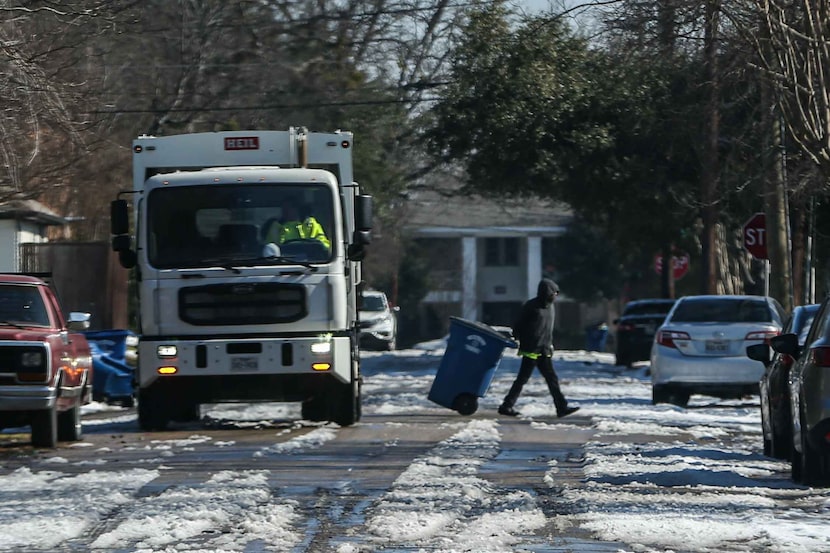
Garbage collection service continues its work around the city as temperatures start to rise and the snow accumulated after the passage of snowstorm Uri begins to melt on Worth Street in Dallas on Friday, February 19, 2021. (Lola Gomez/The Dallas Morning News)
Lola Gomez / Staff Photographer
‘It’s a sad day’
Meanwhile, the energy companies involved have so far paid hundreds of millions of dollars in legal fees to scores and scores of the most prominent, experienced and expensive lawyers in Texas who are zealously fighting the lawsuits at every turn, claiming that they are frivolous and arguing that they should never be allowed go to trial.
“It is a sad day for normal Texans that they are not being allowed to have their day in court,” said Houston lawyer Derek Potts. “But maybe we should not be surprised that the Texas courts are protecting the energy companies. It is a pretty depressing situation for our clients.”
The lawsuits claim that the widespread power outages during the storm were caused by the energy companies’ corporate gross negligence by failing to winterize their operations, by failing to warn their customers of potential power outages and by intentional decision-making that caused the electric failures that led to the deaths of 246 people, including Jackson.
The energy companies “deliberately chose not to have adequate plans and systems in place to respond to the weather conditions during Uri” and “failed to learn earlier failures” and failed to make improvements recommended a decade earlier by federal regulators, according to Dallas lawyer Ann Saucer, a partner at Nachawati Law Group.
“Defendants’ failures to plan and prepare caused cascading systems failures and widespread blackouts,” Saucer wrote in an amended complaint filed in January.
“Because of these failures, millions were forced to endure days-long blackouts in freezing cold weather. People died as a result. Millions more endured traumatic hardship short of death.”
Saucer argues in recently filed court documents that the utilities decided where to cut power, favored some neighborhoods over others, intentionally took steps that made the power shortage worse, ignored numerous warnings to better winterize their systems and lied to their customers about the seriousness of the storm as it approached.
Related
Lawyers for the energy companies have achieved extraordinary legal success so far by making multiple legal arguments, including: Winter Storm Uri was so massive and devastating that the damage it caused could never have been prevented and that Republican-led energy deregulation several years ago meant that the energy companies no longer have a contractual relationship with their customers and thus no legal duty to them.
“This was an unprecedented storm that was responsible for the damage and now unprecedented theories of liability by plaintiff’s lawyers in pursuing these cases,” said Jackson Walker partner Tré Fischer, who serves as the primary liaison counsel for the defendants.
The 31,600 Winter Storm Uri-related wrongful death, personal injury and property damage cases across Texas were consolidated by the Texas Supreme Court into a single multidistrict litigation handled by former Harris County District Judge Sylvia Matthews. The judge divided the litigation into three categories by business sectors: natural gas, power generators and transmission and distribution utilities.
Starting in 2023, the courts began rejecting elements of the cases brought by storm victims, starting with the natural gas companies, such as Atmos and Energy Transfer, because their conduct was too disconnected from impacting the customers. That same year, a divided Texas Supreme Court ruled, 5-4, for the first time ever that the Electric Reliability Council of Texas is actually a government agency and thus immune from civil lawsuits.
Then, in December 2023, the First Court of Appeals in Houston ruled that the lawsuits against large power generators such as Luminant, NRG and Calpine had “no basis in law or fact.” That case is on appeal to the Texas Supreme Court.
In a highly unusual twist, 1,304 insurance companies have joined their old nemeses, plaintiff’s lawyers, to sue the energy companies on behalf of their 287,000 Texas customers, alleging the evidence shows that the power generators were partially or even mostly at fault for some of the power failures that caused so many deaths and injuries. The insurance companies want the energy companies to reimburse them for claims paid to homeowners.
“Their negligent acts and omissions directly resulted in grid failure,” former Texas Supreme Court Justice Eva Guzman, who is representing the insurance companies, wrote in a court document filed last week. “Their acts extended far beyond mere breaches of contractual duties, rising to willful interruption of service which undermined the entire grid integrity and resulted in a public calamity that cannot be endured.”
The Jackson family’s case against Oncor and the other TDUs is now back before Judge Matthews, but lawyers for the energy companies say they are planning yet another appeal. That will add another two years to the litigation battle before any trials could even start, and that is assuming the energy companies lose.
Mikal Watts, a lawyer representing 6,000 of the storm victims, said the decisions by the Texas Supreme Court and the lower courts “do not reflect well on the Texas tort system.”
“By immunizing these energy companies, the Texas Supreme Court is almost guaranteeing that this will happen again and again,” Watts said. “It is incredibly disappointing that the Texans most victimized by the actions of these companies may never get to show a jury the evidence in this case.”
The Texas Lawbook is an online news publication focused on business law in Texas. For a longer version of this story, visit texaslawbook.net.