
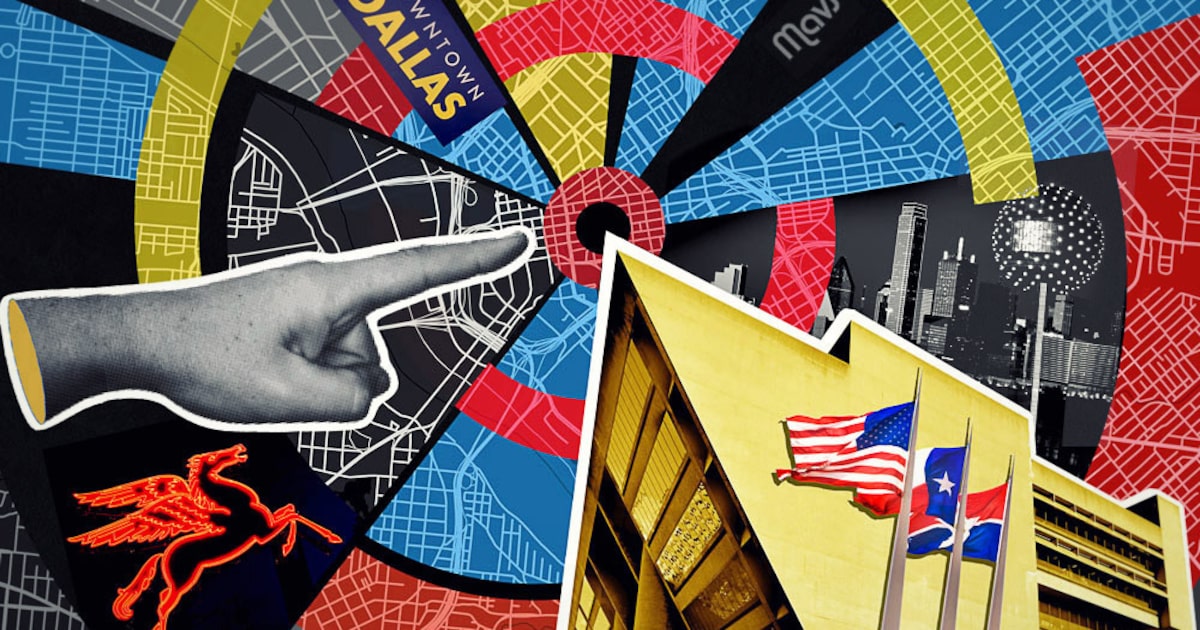
Read the recent headlines and you might think downtown Dallas is doomed. AT&T has announced it will move its headquarters. The streets are described as littered with homelessness and public safety issues. A wave of commentary has been published, much of it questioning whether downtown’s best days are already behind it.
I see something very different.
I’ve been investing in downtown Dallas for a long time. I’ve seen it through more than one cycle. I’m also an entrepreneur across multiple industries, with hundreds of team members working in and around downtown every day. And our company owns 20 acres adjacent to City Hall. My perspective isn’t academic. It’s personal, long-term and shaped by being in the arena when things are easy and when they are not.
Cities — and especially downtowns — are not built or unbuilt in a news cycle. They are shaped by decades of decisions, investments and, most of all, bold leadership.
Examples abound: South Lake Union in Seattle before Amazon; the Meatpacking District and Chelsea in New York before Google; East Austin; RiNo in Denver; or Wynwood in Miami. In every case, the journeys were uneven. Skepticism was widespread. The narrative lagged reality. And in every case, what ultimately changed the trajectory was bold, visionary leadership — people willing to make big, long-term bets before the outcome was certain.
Opinion
The forest for the trees
What’s often missed in today’s commentary is how much real progress has already taken root. Downtown Dallas is no longer a place that empties out at 5 p.m. It is now home to more than 15,000 residents — a figure that would have been almost unimaginable 15 or 20 years ago. That alone permanently changes the trajectory of a place.
We already have districts that work: the Farmers Market, Main Street, the Arts District. These are active, lived-in parts of the city with daily life, restaurants, culture and foot traffic.
And the next wave is already underway: a new, reimagined convention center; the reconstruction of the Interstate 30 canyon with deck parks and walkable connections to the southern side; a new public school that has already broken ground at Newpark, the master development our company is managing on the southern side of Downtown.
There is much more in the pipeline: the redevelopment of multiple 1980s-era office towers into mixed-use centers, including Bank of America Plaza, which our team is working on with PegasusAblon; a reimagined El Centro campus by Dallas College; and even the possibility of a new Dallas Mavericks arena that could fundamentally reshape southern Downtown.
Safety matters
Of course, there are challenges. Homelessness and public safety concerns must be taken seriously. But here again, the story most people hear is driven more by anecdotes than by data.
The reality is that conditions downtown have improved meaningfully over the past year, thanks to focused, coordinated work by the city, Downtown Dallas Inc. and many partners.
The number of police officers dedicated to the central business district has been increased to nearly 130. In 2025, more than 250 individuals experiencing homelessness were housed directly from the streets, and all encampments within downtown were closed. Quality-of-life violations fell by 34%, and violent crime declined by 12% from the prior year. It is simply not accurate to say that downtown safety is getting worse.
In 2026, public safety efforts are being expanded. The city and county have each committed $10 million toward supporting homeless service providers. The Dallas Police Department is moving forward with a new downtown command center — a permanent, visible presence that sends a clear message that safety and security in the urban core are priorities, not afterthoughts.
Perception often lags reality, especially when reality is finally getting better.
Why companies move
We also need to be clear-eyed about what the recent corporate and real estate headlines actually mean. Companies are not monolithic. They do not all want the same kind of environment. Some prefer horizontal, campus-style, suburban settings. Others deliberately seek density, walkability, authentic urban energy and proximity to culture, talent and institutions. AT&T’s decision reflects a campus preference. It is not a rejection of downtown as a concept.
Around the country, many of the world’s most innovative companies continue to choose urban cores for exactly the opposite reasons. Amazon didn’t go to a suburban office park in Seattle; it built a dense, urban campus in South Lake Union. Google is in Manhattan’s West Side, Salesforce in downtown San Francisco and Adobe in the heart of San Jose. Downtowns don’t compete with suburban campuses. They serve different kinds of companies.
We are also seeing some large, high-profile projects across the country — including in Dallas — go through financial restructurings and ownership changes. In most cases, these are not stories about the places themselves. They are stories about capital markets, interest rates and timing colliding with long development cycles. That is very different from a judgment on whether downtown Dallas is a place people want to live, work or invest.
If anything, moments like this are when the next chapter quietly begins.
What comes next?
In 2026, the conversation about downtown needs to move from diagnosis to delivery. A bold vision for downtown Dallas should focus on safety, connectivity and the smart use of public assets.
First, public safety must remain the foundation. That means fully delivering the downtown police command center, implementing permanent re-housing programs and addressing illegal street feedings that undermine safety and order, particularly on weekends.
Second, Dallas should do everything it can to keep the Mavericks downtown. A downtown arena is not just about basketball; it is a cornerstone of activity, identity and economic energy.
Third, this is the moment to unlock the value of the city’s own assets. With AT&T vacating the Discovery District, City Hall should be relocated into the smaller buildings of the campus, giving a new life to the huge public investments already made on those blocks. Doing so would free up the existing City Hall site and allow for a seamless, walkable entertainment and retail corridor stretching from the new convention center, around the new Mavericks arena and through to the Farmers Market.
Finally, repositioning today’s structural office vacancy requires the same kind of public-private partnership that powered downtown’s revitalization over the past two decades. The Downtown Connection Tax Increment Financing District’s sunset date should be extended, and access to historic tax credits should be expanded to more of downtown’s aging office inventory.
We’ve lived through major wake-up calls before in this city. I got to see it personally as a limo company owner when Dallas lost Boeing in the early 2000s, and then nearly two decades later during the Amazon HQ2 pursuit, when I was a developer pitching my heart out alongside so many others who believed in what our urban core could become. Both moments were sobering. And both, in their own way, pushed Dallas to think bigger and act more boldly.
In the end, this is not really a debate about one company, one building or one news cycle. It’s a question about what kind of city Dallas chooses to be. Do we believe in having a great, living, urban core? Or do we lose confidence every time the cycle gets hard? Do we give in to the obstacles of the day, or do we create opportunities out of them?
Great downtowns are built by visionary leaders who keep showing up, cycle after cycle. And that is exactly what Dallas should do now for downtown.
Mike Hoque is founder and CEO of Hoque Global.
Part of our Opinion series on Saving Downtown, this essay argues for bold changes to the built environment.
We welcome your thoughts in a letter to the editor. See the guidelines and submit your letter here.
If you have problems with the form, you can submit via email at letters@dallasnews.com