
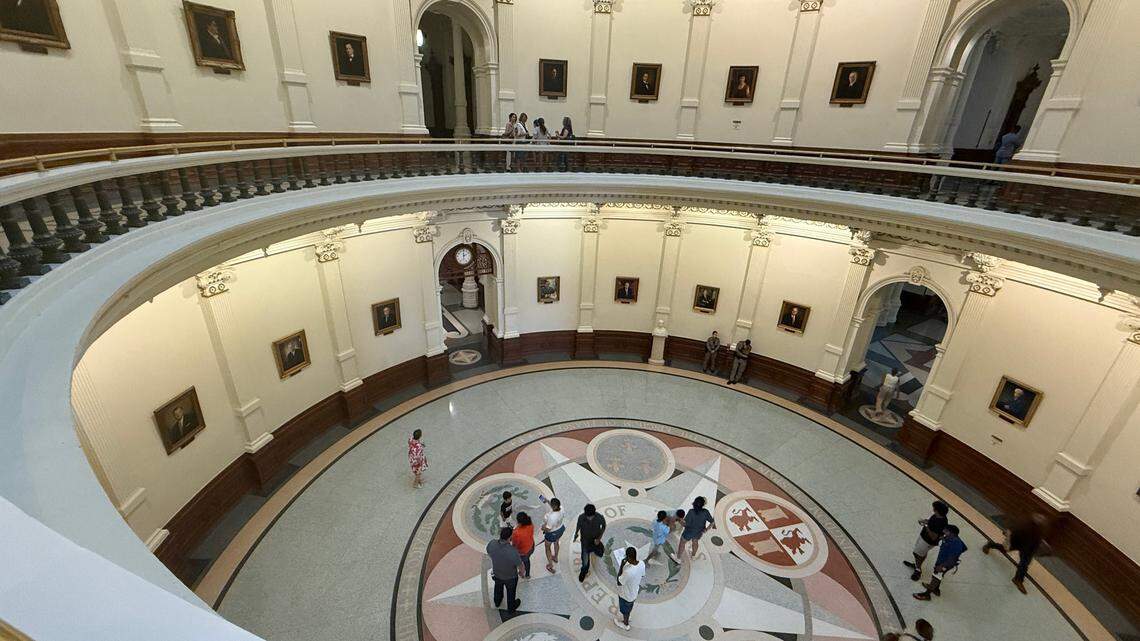
The Texas Capitol on June 2, 2025, the last day of the 89th Texas Legislative Session.
Eleanor Dearman
edearman@star-telegram.com
Three Democrats are competing in the primary for Texas House District 97. The winning candidate on March 3 will advance to the November ballot with Republican John W. McQueeney.
Here are the Democrats’ responses to the Star-Telegram’s candidate questionnaire, in the order they’ll appear on your ballot.
Diane Symons
Age (as of March 3): 54
Campaign website: www.Texas97.com
Best way for voters to reach you: 817.683.8027
Occupation: Currently a photographer. My career was in customer service as a representative, supervisor, manager, project manager, and subject matter expert.
Education: Associate of Arts
Have you run for elected office before? In 2024, I ran as a democrat candidate for Texas House District 97.
Please list the highlights of your civic involvement/activism in HD-97: In 2025, I attended 39 protests and rallies. I started the weekly bridge brigade in southwest Fort Worth in July of 2025. I was the precinct chair for precinct 1206 and the House District Coordinator for 97. I helped obtain precinct chairs to fill approximately 50% of the open seats. In order to be a candidate, I had to let go of being a precinct chair and House District Coordinator, however I remain available to those in need.
Have you ever been arrested, charged with a crime or otherwise been part of a criminal proceeding? When I was a young and dumb 22 year old, I had one public intoxication.
Have you been involved in a civil lawsuit or bankruptcy proceeding? No
Who are your top three campaign contributors? Carissa Hudson, Katherine O’Leary and Mimi Coffey
Why are you seeking this office? I want to stop the everyday struggles that people in my district and all around Texas are currently enduring. Food on the table, a roof over their head, paying utilities, being able to afford property taxes. We need affordable healthcare and great public education.
If elected, what would your top 3 policy priorities be?
1. Raise minimum wage to $20 and add $1 every year our economy grows in the state of Texas
2. Provide $10k a year for college or trade school in the state of Texas
3. Provide $0 property taxes to those receiving social security due to age or disability and to all teachers and school workers who are active or retired. When receiving a $0 tax invoice, they will have the ability to write in a dollar amount for hospital and ISD that they can afford if they choose and will be able to include the amount they pay on their annual income tax.
How will you measure your success as a member of the Texas House? When people can afford the basics needed to live, then I will consider that I was successful.
Why should voters choose you over your opponents? I have lived in every section of TX House District 97 at some point in my adulthood. I am the only candidate that has been in the community for the past 3 years talking and listening to the people about the struggles they face. I am talking to everyone not just democrats. I have come up with an actual platform that spells out how I plan to help people with the struggles they are currently facing. I am not saying look where we are at now, I can’t do worse. By not limiting who I have spoken to, I believe that we can achieve success.
As a state lawmaker, how would you interact and work with members of the opposite party? Are there specific policy ideas where you see opportunities for bipartisanship? Communication. Communication. Communication. First, you have 1:1 conversations and find out where they stand on the issues. You don’t provide them with the process, you allow them to think it is their idea
What is the biggest challenge facing HD-97? How would you address it if elected? I believe communication is the best way to build a relationship with the community. Being an elected official, you must know what the voters want and need and if you do not know, you can’t address their needs. I want to have a poll available that the residents can provide their input on bills that the house will be voting on. For example, school vouchers is not something the majority of House District 97 residents wanted, however received a yes vote for the governors endorsement and large financial donors. I believe monthly town halls are needed.
What, if anything, should the Texas Legislature do to address costs of living when they meet in 2027? Raise minimum wage. In 2009, federal minimum wage was increased to $7.25 per hour. Everything has increased in price, however minimum wage has not. I want a $20 minimum wage and add $1 every year that our economy grows in Texas. I personally love to shop at small businesses and I understand that this would put most out of business. I researched solutions and the one that works is to provide them a tax credit, which is tax-free to offset the additional salary expense. In 2009, if we would have included the additional $1 per hour every year our economy grew in Texas, our current minimum wage would be $22.25, which is currently considered a livable wage. It also would have offset inflation, so the working people of Texas would not have gone into so much debt and atruggle.
Is eliminating school property taxes for homeowners achievable and something you’d support? Why or why not, and what plan do you propose to achieve their elimination or as an alternative? I do not believe that eliminating property taxes is the right answer for Texas. If we eliminate property taxes all together, Texas would have to find another revenue source. Our county hospitals and ISDs are funded mostly through property taxes. Other options could include raising sales taxes and/or a state income tax. I recommend that tax abatements that only large corporations receive need to stop. Example: How does it benefit our economy to provide $2.8 million tax abatement for 10 years to a data center that only employs an average of 36 workers? The workers transfer here and are not hired locally. When they leave, we are stuck with a huge building, no county hospital or public education because they did not contribute financially. It is achievable to eliminate some property taxes. For instance, eliminate property taxes for people receiving social security due to age or disability, and for all teachers and school workers who are active or retired.
What steps, if any, should the state take to prepare for the rise of artificial intelligence? We must work on our infrastructure to ensure that we have the water resources and that our electric grid is stable enough. AI will drain our resources quickly. Electric prices will rise drastically. Texans will lose and large corporations will profit at the expense of Texans. Without water, our farmers will be the biggest loser. No water, no crops, no animals, no fishing and we must have water to drink or all things die.
What, if anything, should the Texas Legislature do to ensure there’s an adequate supply of water and electricity in the state now and in the future? We need to budget for building up our infrastructure throughout Texas. We need more man-made lakes.
What specific K-12 and higher education policies should state lawmakers prioritize in 2027?
Removing the voucher program is number 1, however, having a Republican majority in the House and the Senate, a republican Governor that has been bought to pass the voucher program, and a republican Lt. Gov that will not put a bill on the Senate floor if he doesn’t agree with it, we must first vote them out.
I believe people should follow their passions. I will pass a bill to provide $10k per year for trade schools and colleges in the state of Texas. My recommendation is that students pay it forward by performing community service. Let them help beautify their communities and learn different cultures, so we can stop some of this hate.
What role should the state play in immigration and border security? What, if any, specific policies would you support as a state lawmaker? Stop 287g. People should not be harrassed due to their accent, color of skin or the language they speak. We do need border security, however removing people that are following the correct process is wrong. We are stronger as a state because of immigrants. They contribute hundreds of millions of dollars in taxes annually and they do not receive benefits in return.
What, if anything, should the Texas Legislature do in the way of hemp and marijuana policy? We need to legalize marijuana in Texas. We can regulate it and ensure people know what they’re getting vs it being laced with other drugs and chemicals. Matijuana is brought into Texas from Oklahoma more than it is through the Mexican border. We should be keeping the revenue within Texas. Marijuana revenue should be placed into a medical fund to help county hospitals, mental health, vision and dental assistance.
Ryan Ray
Age (as of March 3): 43
Campaign website: VoteRyanRay.com
Best way for voters to reach you: ryan@voteryanray.com
Occupation: Attorney/Entrepreneur
Education: J.D. form Texas Welseyan School of Law (Now A&M)
Have you run for elected office before? I served on the Crowley ISD School Board for 10 years form 2012 to 2022 and also ran for State House District 96 in 2018.
Please list the highlights of your civic involvement/activism in HD-97:
I’m a product of HD-97—a Crowley ISD graduate and a parent of three boys in our schools. My commitment to this community is best reflected in my ten years on the Crowley ISD Board of Trustees (2012–2022). During that decade, I focused on the essentials: securing pay raises for staff, navigating the District of Innovation process, and helping establish our Equity Committee to ensure every student has a fair shot.
Beyond the boardroom, my activism is rooted in service and advocacy. My family and I run an animal sanctuary in the district, providing a home for farm animals in need. It’s a labor of love that keeps us grounded in our responsibility to care for those without a voice. Professionally, I’ve helped local property owners challenge and reduce excessive tax valuations. I’ve seen how rising costs squeeze families in Southwest Fort Worth and Benbrook, and I’m proud to help neighbors keep more of their hard-earned money. I believe in being a neighbor who shows up.
Have you ever been arrested, charged with a crime or otherwise been part of a criminal proceeding? I was arrested once in Miami after my first year of law school, we were having a party, the cops came. I was arrested for annoying the officer, I never saw the police report, the charges were dismissed the next morning.
Have you been involved in a civil lawsuit or bankruptcy proceeding? I’ve never been involved in bankruptcy or any personal civil matters.
Who are your top three campaign contributors? Myself, my friend Jay Rogers, and Jennifer Edgeworth.
Why are you seeking this office?
Texas’ economy is a world-class success, but I’m running because three issues threaten our future. First, I am deeply troubled by the authoritarianism in DC fueled by the vanity of one man; and seeing Republicans in Texas capitulate to his demand to redistrict was a step too far. Second, despite our wealth, our schools are hurting. Failed state leadership has left the majority of districts running deficit budgets while prioritizing political theater—like the Ten Commandments mandate and slanted curricula—over classroom results.
Finally, we need real property tax relief, but the Governor’s proposal is a recipe for disaster. It primarily benefits the wealthy while forcing us to either hike sales taxes or gut local services. It would create chaos in the real estate market, unfairly shifting the burden to new homeowners. I’m running to offer a fair, thoughtful alternative that protects homeowners and our schools alike.
If elected, what would your top 3 policy priorities be?
First is Affordability. I’ll fight to raise the Homestead Exemption to $250,000 and provide direct renter rebates. To keep energy costs down, we must support green energy projects and require data centers to offset their massive energy usage with renewable investments. We cannot let industrial growth drive up electric bills for everyday families.
Second is Public Education. I will work to abolish the voucher system, which open to fraud and favoritism. Instead, we must increase the basic allotment, index it to inflation, and earmark funds for smaller class sizes. This is the only way to improve student outcomes and stop the epidemic of teacher burnout.
Third is Healthcare. Expanding Medicaid is a no-brainer. It would bring billions of our tax dollars back from DC, insure over a million Texans, and lower costs for everyone by reducing uncompensated care. It’s time we stop playing politics with our neighbors’ health and make this a priority.
How will you measure your success as a member of the Texas House?
I measure success by progress toward my legislative goals, but also by my ability to stop harmful agendas through collaborative problem-solving rather than partisan point-scoring. I am not going to Austin to perform for the cameras; I am going to get things done.
Equally important is my role in bringing our community together. During my ten years on the School Board, we had very little interaction with state elected officials. I intend to change that. I will proactively reach out to our local leaders and form a council of advisors—including members of our city councils, county government, and school boards—to ensure I am constantly in touch with the needs of our local entities. Success is ensuring that the people of HD-97 have a direct line to their representative and that our local governments have a partner at the Capitol, not an adversary. If I can lower the temperature and raise the level of local engagement, that is a win.
Why should voters choose you over your opponents?
I have deep respect for my primary opponents, but I am uniquely prepared for this role. I am the only candidate in this race who has won an election in the district, and the only candidate who has served as an elected official in the district. In 2018 when I ran for State Rep. I won more votes than any other Democratic house candidate in Tarrant County.
Beyond that my professional perspective is sorely needed in Austin. As both a former Trustee and a property tax attorney, I bring a specific expertise in school finance and tax law that is currently lacking in the legislature. Beyond policy, I am a successful business owner. I bootstrapped my way through law school while working full-time and built an office from my savings that now employs 60 Texans. I know how to manage an organization, meet a budget, and deliver results. My combination of local electoral experience, specialized legal knowledge, and proven business leadership makes me the most effective choice for our community.
As a state lawmaker, how would you interact and work with members of the opposite party? Are there specific policy ideas where you see opportunities for bipartisanship?
I believe the most lasting legislative change is that which has bipartisan support. Without it, the other side simply spends the next session trying to dismantle your work. While some values are non-negotiable—restoring reproductive freedom is a line I will not cross—most issues offer room for give and take.
We see the alternative in DC, where bipartisanship is dying because leadership often blocks common-sense solutions from even reaching the floor. That is a failure of leadership that hurts everyone. On the school board I learned that you don’t solve problems by shouting into an echo chamber; you solve them by building coalitions. I know there are Republicans who want better public schools, expanded healthcare, and fair property tax relief. Success in Austin is about finding those colleagues, reaching across the aisle, and focusing on solving problems for Tarrant County families rather than just scoring partisan points.
What is the biggest challenge facing HD-97? How would you address it if elected?
The biggest challenge is managing explosive growth along the Chisholm Trail Parkway corridor. In HD-97, we see this daily: I live on an asphalt, county-maintained road riddled with potholes, while just across the street, high-density developments are being newly incorporated into Fort Worth. Our old country roads weren’t built for this volume, and the strain is reaching a breaking point.
Beyond roads, this growth creates a funding crisis for our schools. Crowley ISD and others must build campuses and hire staff for students who don’t yet exist on current tax rolls. We also face a critical need for water resource planning to sustain this population surge.
In Austin, I will fight for a state budget that prioritizes infrastructure in high-growth corridors. We must increase the basic allotment for schools and index it to inflation so fast-growing districts aren’t penalized. Finally, I’ll advocate for regional water strategies that ensure our growth is sustainable.
What, if anything, should the Texas Legislature do to address costs of living when they meet in 2027?
Property tax is the most direct lever the state has for relief. While the state recently increased the homestead exemption to $140,000, I believe we must raise it to $250,000 to provide a real cushion for families and seniors. I also support direct renter rebates; renters pay property taxes indirectly through rent but are consistently left out of the relief conversation.
Equally urgent is the crisis in homeowners insurance. Rates in Texas are now among the highest in the country, yet transparency is lacking. I will push for stronger oversight of rate hikes and support incentives for home-fortification programs that lower premiums. We must also stop the ‘hidden’ costs of insurance by expanding Medicaid. This is a fiscal no-brainer that would bring billions of our tax dollars back to Texas, insuring one million neighbors and lowering healthcare costs for everyone by reducing uncompensated care.
Is eliminating school property taxes for homeowners achievable and something you’d support? Why or why not, and what plan do you propose to achieve their elimination or as an alternative?
Eliminating school property taxes for homeowners is irresponsible and dangerous. People in HD-97 want good public schools, police, and firefighters. We must balance the need for tax relief with the community’s actual needs. Full elimination would cost at least $40 billion per biennium. Without a permanent funding source, we would be forced to either hike the sales tax—the most regressive tax we have—or gut the very services that keep our neighborhoods safe and our schools open.
Furthermore, elimination primarily benefits the wealthiest homeowners, whereas my plan for a $250,000 homestead exemption helps every homeowner equally. We can look at Wyoming as a cautionary tale: they passed a 25% cut with no funding plan and are now slashing school and local government staff. I will not put our state or our children in that precarious position. I am for fair, thoughtful relief that works for everyone, not a politically motivated plan that risks bankrupting our schools and cities.
What steps, if any, should the state take to prepare for the rise of artificial intelligence?
Texas must lead on AI by balancing innovation with accountability. With the Texas Responsible AI Governance Act now in effect, our first step is ensuring rigorous oversight of the new ‘regulatory sandbox’ and the AI Advisory Council to prevent corporate overreach. We must protect consumers from AI-driven discrimination in hiring and housing, and crack down on the misuse of deepfakes and biometric data that threaten our privacy.
Equally important is protecting our workforce. AI should be a tool that augments workers, not a pretext for mass displacement. I support state-funded retraining programs and ensuring that as technology evolves, we strengthen labor protections so Tarrant County families aren’t left behind. In our schools, we must provide educators with the resources to teach AI literacy while ensuring these tools never replace the human connection vital to student success. We can embrace the future without sacrificing our rights, our jobs, or our community values.
What, if anything, should the Texas Legislature do to ensure there’s an adequate supply of water and electricity in the state now and in the future?
Texas should be the green energy capital of the world. Our leadership blames wind and solar for grid issues, but the 2021 freeze proved the real culprit was a lack of preparation by the state and power generators. By embracing solar, wind, clean natural gas, and advanced storage, we can ensure a steady, affordable supply of clean energy while securing our economy for the next century.
Furthermore, we cannot bankrupt the state with irresponsible tax cuts that leave us unable to invest in critical water infrastructure. As HD-97 grows, we must stay ahead of the curve with smart water projects. I will specifically require data center developers to implement closed-loop cooling systems to minimize water usage and invest in green energy projects to offset their massive energy consumption. This ensures industrial growth protects our local resources and keeps utility costs in check for everyday families. We need to invest in our future, not just react to the past.
What specific K-12 and higher education policies should state lawmakers prioritize in 2027?
State leaders must first stop the war on public education. We have to end the voucher programs that drain resources from our neighborhood schools. I will prioritize increasing the basic allotment and, crucially, indexing it to inflation so our schools aren’t forced into deficit budgets every time the cost of living rises. We must also invest in reducing class sizes, which is one of the most effective ways to improve student outcomes and prevent teacher burnout.
In the classroom, we need to stop the politicization of our curriculum. Schools should be for learning, not for 10 Commandments mandates or politically slanted lessons. In higher education, we must stop the attacks on our colleges and universities that threaten their accreditation and prestige. Finally, we need innovative solutions to bring down tuition costs. Texas is an economic powerhouse; there is no reason we can’t make a high-quality degree or trade certification affordable for every student who works for it.
What role should the state play in immigration and border security? What, if any, specific policies would you support as a state lawmaker?
The state’s primary role in immigration is lobbying the federal government for comprehensive reform. While I support secure borders, the state should not overstep federal authority—especially given the current state of federal agencies. We are seeing aggressive, illegal tactics from agents who are poorly trained and, in some cases, infiltrated by extremist elements like insurrectionists and Proud Boys. They are too quick to use force and violate the law daily, often targeting residents who are in the country legally.
As a state lawmaker, I will stand up against these tactics to protect all lawful Texas residents, including asylum seekers following the law. We must ensure that Texas remains a state that follows the law and respects human dignity, rather than participating in overreach that threatens our neighbors’ safety. My focus will be on holding federal agencies accountable and demanding that Washington finally fix our broken immigration system.
What, if anything, should the Texas Legislature do in the way of hemp and marijuana policy?
It is long past time for Texas to legalize marijuana for adult use. Our current policy serves no one; we waste hundreds of millions of taxpayer dollars annually prosecuting and incarcerating people for low-level possession. This doesn’t make us safer—it simply clogs our courts and saddles thousands of Texans with criminal records that limit their future.
By legalizing and taxing marijuana, we could bring billions into state coffers—funds that should be directed toward our public schools and healthcare priorities. I also believe we must expunge past low-level possession records. It is particularly urgent that we reform the laws regarding THC vapes and edibles, which are currently treated as felonies in Texas. Treating a vape pen the same as heroin is a failure of common sense. We need a modern, regulated market that generates revenue, respects personal freedom, and allows law enforcement to focus on serious violent crime rather than possession charges.
Beth Llewellyn McLaughlin
Age (as of March 3): 68
Campaign website: bethfor97.com
Best way for voters to reach you: hello@bethfor97.com
Occupation: Retired Teacher
Education: B.A. in French, German and Political Science, University of Nebraska, Lincoln
Have you run for elected office before?
Yes, State House District 97, 2018
Please list the highlights of your civic involvement/activism in HD-97:
French Teacher, Southwest High School, FWISD, 1981-2010
Elected Member of FWISD District Advisory Board 2007-2009
Volunteer Kimbell Docent, 2012-present
Board Member, Tarrant Together, 2018-2021
Board Member, Texans Defending Democracy, 2024-25
Have you ever been arrested, charged with a crime or otherwise been part of a criminal proceeding? No
Have you been involved in a civil lawsuit or bankruptcy proceeding? No
Who are your top three campaign contributors? Diane Crane, Kathy Spicer, Robert Fox
Why are you seeking this office?
I have lived and worked in HD97 for over 40 years. As an educator, I have forged deep ties with families here. I believe more educators should have a seat at the table in Austin, where decisions impact public schools the most.
If elected, what would your top 3 policy priorities be?
Stable and adequate funding for public education, restoring individual freedom to make decisions about one’s own body, expanding access to healthcare
How will you measure your success as a member of the Texas House?
I want to be part of a team that finally makes progress in areas of the greatest impact to everyday Texans. It will be a collaborative effort to pass legislation that has languished under decades of GOP control.
Why should voters choose you over your opponents?
I am a skilled communicator, with experience connecting with people of all ages and of diverse backgrounds. I have a perspective that, while grounded in my hometown and my home state, is broadened by a lifetime of exposure to other cultures.
As a state lawmaker, how would you interact and work with members of the opposite party? Are there specific policy ideas where you see opportunities for bipartisanship?
Personal relationships are key to developing the trust that allows frank discussions about policy. I believe there are many areas of common ground. The governor has focused too much time on divisive issues, and demanded all members follow his lead. This is particularly true about public education, which used to be noncontroversial.
What is the biggest challenge facing HD-97? How would you address it if elected?
The takeover of the FWISD by the TEA. Local districts should be helped, not punished excessively due to the struggles of one school. This process is flawed and it can be changed. Control must remain with locally elected school boards.
What, if anything, should the Texas Legislature do to address costs of living when they meet in 2027?
Expand Medicare. Bring our federal tax dollars back to serve Texans. Research ways to help renters and first-time homeowners, as housing is unaffordable. Raise the minimum wage.
Is eliminating school property taxes for homeowners achievable and something you’d support? Why or why not, and what plan do you propose to achieve their elimination or as an alternative?
This is an extremely complicated question. Something has to change, because the current formulas are not sustainable. Many experts and organizations have been working on possible solutions for years, including Raise Your Hand Texas. I can’t pretend to have the answer. I do think we need the WILL to prioritize finding a way forward.
What steps, if any, should the state take to prepare for the rise of artificial intelligence?
The strain of data centers on public infrastruction-power and water-is being minimized as they are built in Texas. That is just the physical beginning of what could become the main issue of the 21st century globally-how to ethically manage information not created by humans.
What, if anything, should the Texas Legislature do to ensure there’s an adequate supply of water and electricity in the state now and in the future?
I think is it unwise for Texas NOT to connect to the national grid. We are bowing to private industry rather than providing protections for the consumer. Water conservation and sourcing is critical as Texas’ population continues to grow.
What specific K-12 and higher education policies should state lawmakers prioritize in 2027?
Universal pre-K programs, reading interventions at Grade 3, free tuition at community colleges and technical schools for qualified students. I also believe we should pass laws protecting the intellectual freedom of educators, reassert the separation of church and state in public schools, and reestablish the worthy goals of diversity, equity, and inclusion-by a different name, as the demonization of these common sense ideals is complete.
What role should the state play in immigration and border security? What, if any, specific policies would you support as a state lawmaker?
This is the jurisdiction of the federal government. I strongly disagree with Gov. Abbott’s collaboration with the Trump administration’s mass deportation policy. I would fight for due process laws to be applied to all migrants. I would support a ban on mass detention centers. For Texas to be party to the inhumane treatment of vulnerable people is unacceptable to me.
What, if anything, should the Texas Legislature do in the way of hemp and marijuana policy?
It is not practical or logical for Texas to continue to ban and/or criminalize marijuana when it is legal in other states. It will happen here inevitably. Common sense laws should be established now.