
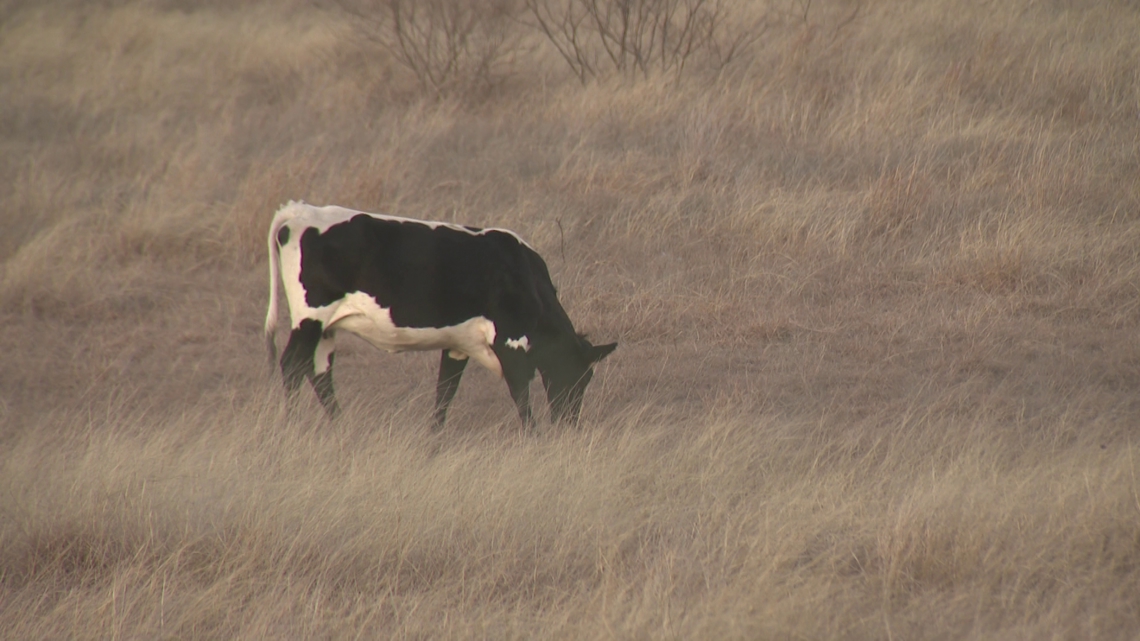
Texas Agriculture Commissioner Sid Miller said that dwindling cattle supply is putting Texas BBQ spots out of businesses.
LEANDER, Texas — Travis Meckel has spent his entire life in the ranching business — and he hopes one day to pass that legacy on to his daughters.
Meckel runs Meckel Family Beef Company, where his focus is on raising cattle and encouraging customers to buy local. He says purchasing beef directly from ranchers can make a significant difference for families trying to manage grocery costs.
“I know what it costs to buy beef in the store — a package at a time, a steak at a time — versus buying from your local farmer or rancher,” Meckel said. “It’s thousands and thousands of dollars cheaper to buy local.”
Beef prices surge nationwide
Beef prices, however, are climbing to historic levels. According to the U.S. Bureau of Labor Statistics, the average price of ground beef in January reached $6.69 per pound nationwide.
Meanwhile, in Texas, cattle weighing between 500 and 600 pounds are averaging around $450 per hundredweight as of mid-February.
Sid Miller, the Texas Agriculture Commissioner, says rebuilding the nation’s cattle herd is critical to stabilizing the market.
“We’ve got to do something to grow our cattle herd back,” Miller said. “Importing beef from Argentina is a temporary fix at best, and it actually makes our agriculture trade deficit worse.”
Temporary import deal raises concerns
Earlier this month, President Donald Trump struck a temporary agreement to increase beef imports from Argentina in an effort to ease rising prices.
According to Miller, the cattle supply shortage is putting pressure on Texas barbecue restaurants.
“A lot of these barbecue places are feeling the crunch; there’s a few of them that have closed,” said Miller. “We just can’t charge our customers enough to make a profit.’”
Despite the broader concerns, Meckel says he has not experienced a supply issue firsthand.
“I think it’s a good idea what [Miller is] trying to do,” Meckel said. “I don’t know if our cattle numbers are actually that low, our cows are bigger, our calves are bigger than the last study — we’re still having the same amount of pounds of beef getting processed.”
Still, Meckel said he worries about how efforts to lower grocery store prices could impact producers.
“I’m worried they’re going to try bringing the price of beef down in the grocery store, and that’s going to bring the price of calves or price of beef down to the producer,” Meckel said. “The cattle prices are really at a point right now — if they could stay there, more kids would want to stay home and raise cattle.”
For Meckel, the issue goes beyond market trends. It’s about protecting an industry — and a way of life — that he hopes will continue for generations to come.