
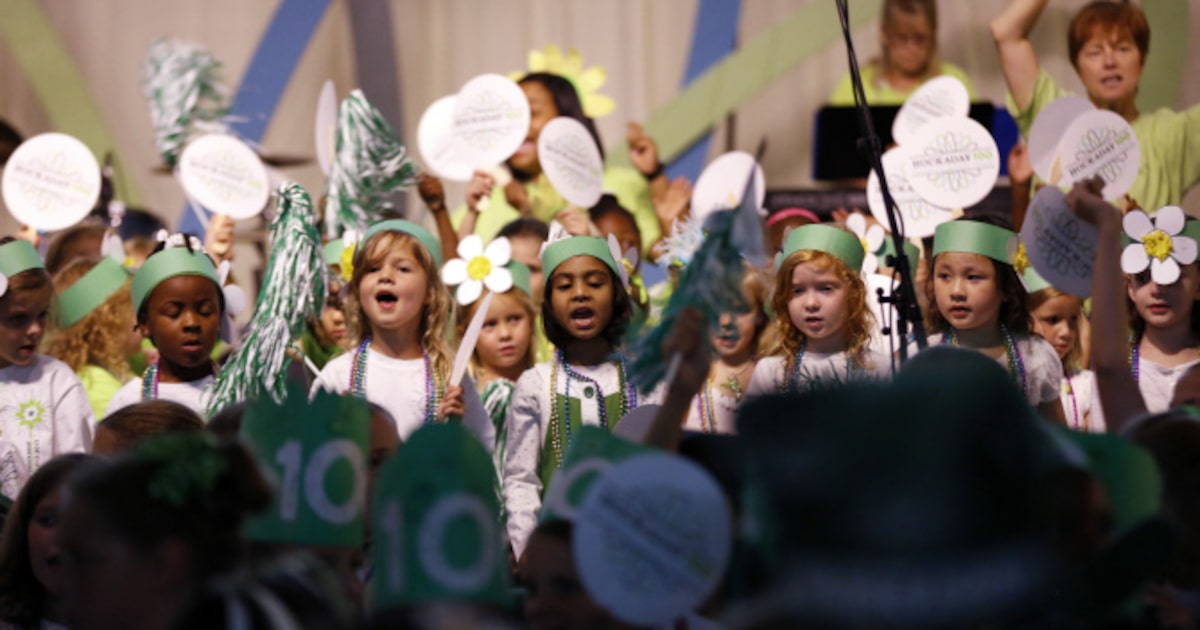
Over the past century, the Hockaday School has made a name for itself — the kind of reputation that invokes recognition, esteem and awe.
Tucked in the heart of Dallas, this sprawling green campus has educated young women hailing from the most famous of families, including the Roosevelts and Bushes.
The Texas education savings account program is billed as offering parents more say in schooling for their children. Multiple barriers still limit options for many parents seeking high-quality education for their children.
But there’s one place you won’t see this prestigious all-girls college prep school’s name etched: the list of private schools accepting funds for Texas’ school voucher-style program this fall.
The program, titled Texas Education Freedom Accounts, pitches itself as a way to give families more say in their child’s schooling and promises to uplift low-income students. But even if parents are approved for funds, some of North Texas’ top private schools would still be out of reach for a number of them, sparking frustration among some families with high hopes.
The Education Lab
Some premier schools, with higher tuition and larger enrollments, can afford to — and will — stay on the sidelines during the first years of school voucher programs to watch how they unfold, education experts and administrators say. Schools may worry about the strings attached with accepting government aid — like increased regulations and academic oversight. If TEFA shows consistency, those concerns could be dampened and compel highly-ranked private schools to participate.
“That will give private school leaders more confidence that the rules of the game aren’t going to change,” said Patrick Wolf of the University of Arkansas, who researches school choice.
Of the top ten private high schools in Dallas-Fort Worth listed on Niche’s 2026 list, four have been approved to take education savings account funds, as of Feb. 12, according to a map released by the comptroller’s office, which oversees TEFA. Among the remaining six, four schools — the Hockaday School, St. Mark’s School of Texas , Greenhill School and the Episcopal School of Dallas — confirmed to The Dallas Morning News that they are not currently planning on partaking in TEFA.
Alcuin School and Cistercian Preparatory School did not respond to multiple requests for comment.
Related

If parents are approved for TEFA, they will have an education savings account and receive about $10,500 to go toward their child’s private schooling. Critics argue that the program will channel money away from cash-strapped public schools, which serve the vast majority of the state’s children.
About 1,900 private schools have been approved to take ESAs, including more than 550 in the Dallas-Fort Worth area, as of Feb. 12, according to the map.
The program, which Gov. Greg Abbott signed into law last year, is expected to draw about 80,000 participants in its first year. More than 42,000 students applied for the program on Feb. 4, the first day of the application period.
Related
 Sitting out won’t make or break us, one school says
The Selwyn School, located in Argyle, does not plan to take TEFA funds, said head of school Deborah Hof. The school is ranked No. 14 on Niche’s top private high schools in the Dallas-Fort Worth area.
Hof thinks the program has too many unknowns and worries that regulations could increase if she opts in. She wonders: What if she has to teach state-issued textbooks? What if she has to submit student information?
To accept TEFA funds, private schools must be accredited by an organization recognized by the Texas Private School Accreditation Commission or an accreditor recognized by the Texas Education Agency. Schools have to administer a standardized test that compares a student’s performance with a representative national sample, such as the Iowa Assessments or ACT. Schools must also have operated for at least two school years before applying.
The comptroller can collect and report demographic data about participating children, including their sex, race and ZIP code, according to the law.
Related

More oversight could detract from Selwyn’s mission of being an independent school, she said. The school’s main priority is to fulfill its promises to parents: classes are topped at 14 kids, teachers know kids by “heart and mind,” and students can experiment with curriculum.
“Staying true to what we believe is more important than money,” she said. “Selwyn’s been here since 1957. I don’t think this voucher system is going to make or break us.”
The law that established TEFA includes “strong safeguards” to protect student and family privacy, “as well as the educational freedom of participating schools and educators,” said Travis Pillow, a TEFA spokesperson in a statement.
Related

He cited sections of the law outlining the autonomy of participating schools. The state cannot impose requirements that are “contrary to the religious or institutional values” of schools, nor can officials limit schools from freely determining curriculum, admissions or practices.
While politicians promised that TEFA would prioritize low-income students, Hof said her school’s financial assistance program is sufficient to support their attendance. At Selwyn, tuition can cost about $14,400 for preschool and about $27,500 for high schoolers. The school gave aid to 24% of its students this year.
“Our 100% goal is to have different kids, lots of kids, lots of ideas,” Hof said. “Let’s bring everybody in the room.”

Episcopal School of Dallas fans cheered on their team in a lacrosse game against Highland Park. The two teams played their Class AA state championship game at the Texas High School Lacrosse League state tournament held at Highlander Stadium in University Park on May 11, 2025.
Steve Hamm / Special Contributor
The Episcopal School of Dallas, the sixth-ranked private high school, said it is not participating in TEFA for the 2026-27 school year, because it has “continuously met the demonstrated financial needs of our families.” The school allocated over $5 million of its annual operating budget to support tuition for 200 students this school year.
Greenhill School, the third-highest ranked private high school, is opting out. Trustees are “carefully studying the educational, financial, and operational implications for our school,” a school representative said in a statement. The school remains “open to the possibility of participating” down the line.
St. Mark’s School of Texas is sitting out because it does not accept public funding, a spokesperson said in an email. The school places “high value … on institutional independence and autonomy.”
A Hockaday spokesperson declined to comment on whether it plans to participate in the future.
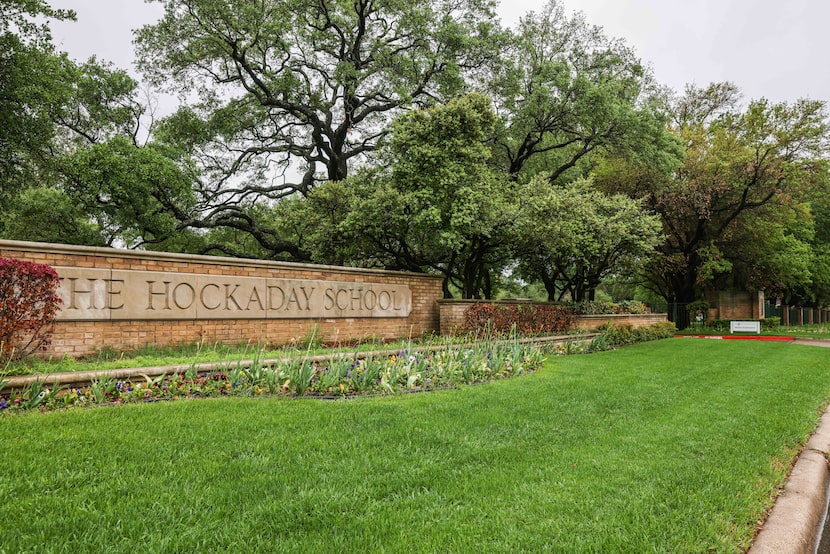
The Hockaday School in Dallas in 2021.
2021 File Photo / The Dallas Morning News
Still, some highly-ranked campuses in the D-FW area will take TEFA funds. Among the top ten private high schools, Jesuit College Preparatory School of Dallas, the Westwood School, Dallas International School and E.A. Young Academy have been approved for the program.
Could top private schools join later?
Selwyn School could change its plans, Hof said.
“Being an independent school means you have to preserve your mission,” Hof said. “If 12 months from now, it’s clear as a bell that my mission would not be impacted, I might reconsider.”
One of the biggest fears among private school leaders, Wolf, the researcher, found, was “regulatory creep.” However, if Texas keeps its rules consistent, that could make top private schools more comfortable with opting in. As the program gets fully implemented over the next three years, he anticipates most high-quality private schools will end up joining.
Compared with other school choice programs across the country, Texas’ aid is a “generous” offer, coming in at about $10,500. Top schools may feel financial incentive to opt in, especially if they are competing with private schools that give parents a significant reduction in tuition, he said.
“They’re going to feel market pressure to participate in this program as the number of students served goes up and a wider swath of Texans become eligible for these programs,” he said.
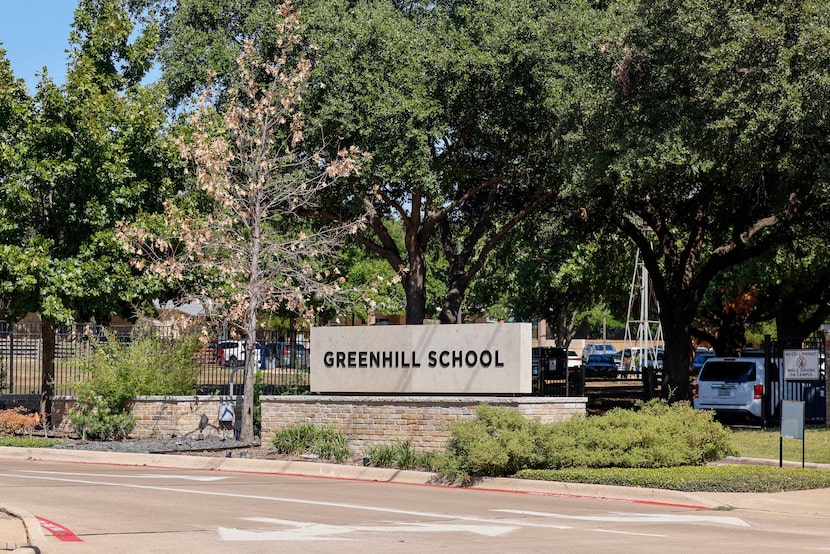
The Greenhill School pictured, Thursday, Sept. 26, 2024, in Addison, Texas.
Elías Valverde II / Staff Photographer
What parents think
One parent, Francis Clay, wants to use the state funds to give her 12-year-old daughter a private school education. She’s looked into it before, but as a single parent, she couldn’t afford it, she said.
Even with TEFA funds, tuition at some private schools, especially the top rated schools, will remain inaccessible for her family. At the Hockaday School, tuition is around $34,500 for its lower school and $40,900 for its middle and upper schools, according to the school’s website.
“It’s not fair,” she said. “We should be able to pick wherever. We shouldn’t be limited just because it costs too much money or is top-tier.”
Another mom, Shatara Leonard, who wants to support her five children’s attendance at private school, is unbothered by the top schools’ decision to stay out of the program.
“I don’t blame them, all the loops and holes,” Leonard said. “If I was a business, I would do the same.”
The DMN Education Lab deepens the coverage and conversation about urgent education issues critical to the future of North Texas.
The DMN Education Lab is a community-funded journalism initiative, with support from Bobby and Lottye Lyle, Communities Foundation of Texas, The Dallas Foundation, Dallas Regional Chamber, Deedie Rose, Garrett and Cecilia Boone, Judy and Jim Gibbs, The Meadows Foundation, The Murrell Foundation, Ron and Phyllis Steinhart, Solutions Journalism Network, Southern Methodist University, Sydney Smith Hicks, and the University of Texas at Dallas. The Dallas Morning News retains full editorial control of the Education Lab’s journalism.