
Lucio Vasquez / Houston Public Media
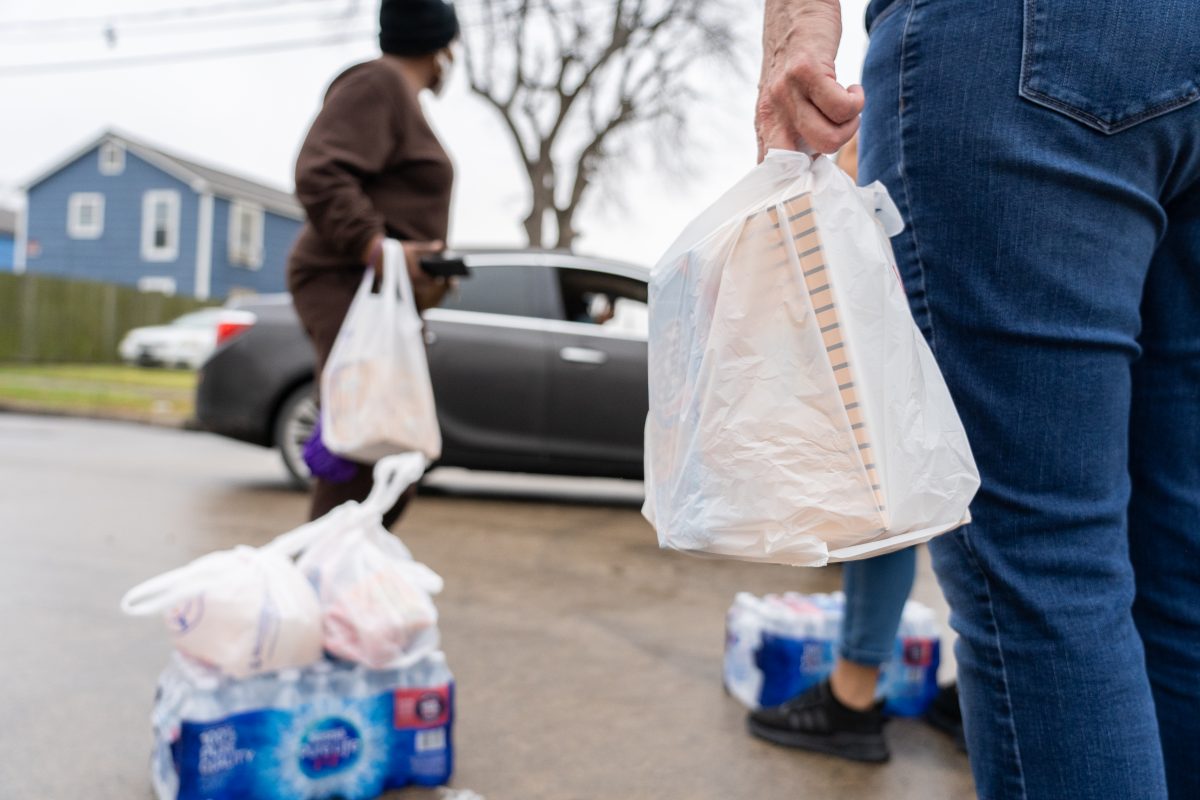
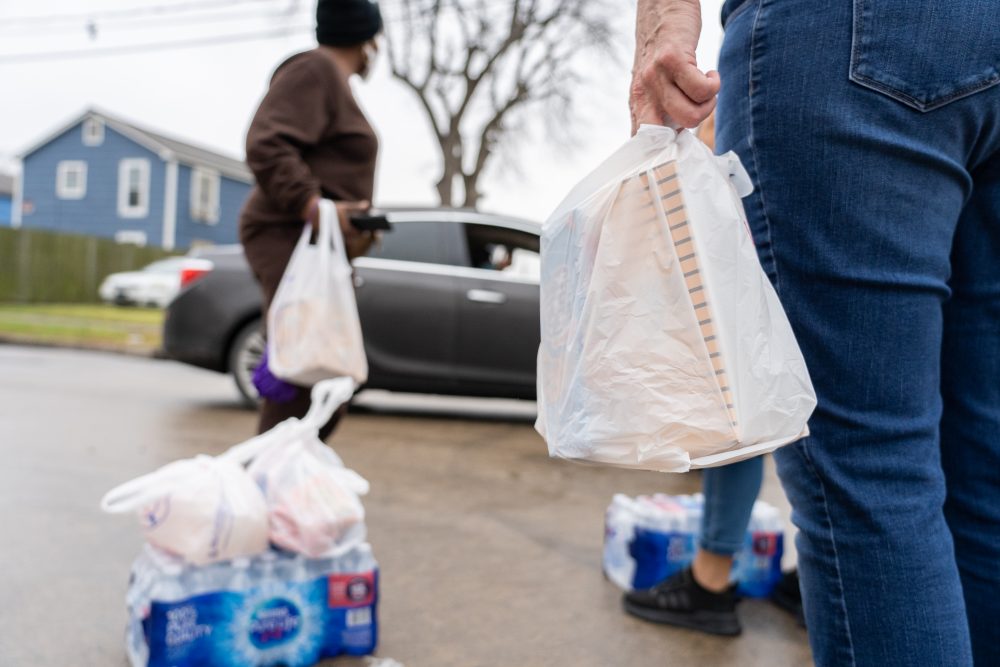
Food and water was distributed in Fifth Ward on Feb. 25, 2021, where several residents were left without water after extreme cold weather following a generational winter storm.
Pedro Montemayor was recovering from knee surgery when Texas saw massive blackouts during a once-in-a-generation winter storm five years ago.
Montemayor spent two weeks huddled under blankets in his bed, waiting for the power to return. His wife was in Mexico for a funeral, and he told her not to return to their Denver Harbor home until power had been restored.
“I said, ‘You don’t want to go over there right now because there’s no water, no electricity, so you might as well stay here until everything is back to normal,'” he said.
Sign up for the Hello, Houston! daily newsletter to get local reports like this delivered directly to your inbox.
Montemayor is one of millions of Texans who lost power during the deadly 2021 winter storm, when power plants failed under freezing weather, and Texas grid operators were forced to initiate rolling blackouts.
State leaders and energy companies say the grid is more resilient than it was five years ago.
Still, for many Texans, harsh memories remain of the 2021 freeze and the ensuing days — or even weeks — without power and water. When forecasters predict another winter storm earlier this year, many of the state’s residents flock to grocery stores to gather supplies.
“I start panicking,” Montemayor said. “I prepare myself.”
Natalie Weber / Houston Public Media
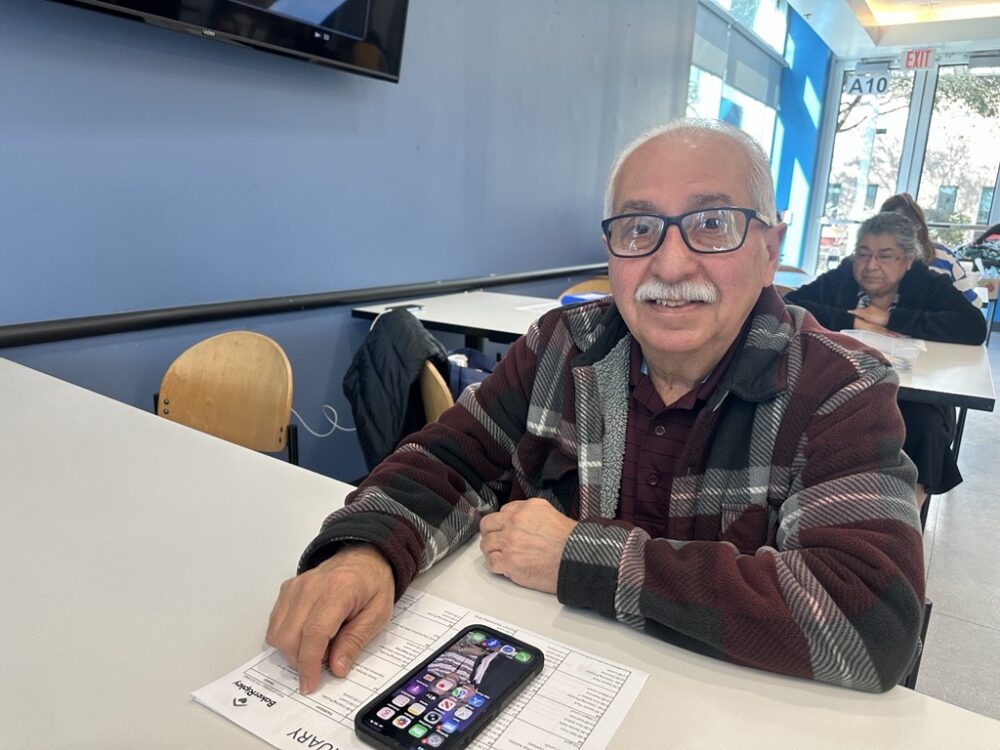
Pedro Montemayor at a BakerRipley Senior Health and Wellness Center on Feb. 5, 2026.
The storm caused hundreds of billions of dollars in damage and led to at least 246 deaths statewide — though that number could be higher according to one analysis.
“There were stories of people dying in their homes, and the ability for low-income Texans to be able to go places where they can get access to heating centers or tap into other networks just wasn’t available,” said Patricia Zavala, the executive director of the nonprofit, PowerHouse Texas.
Dr. Samuel Prater saw the toll of the storm firsthand. At the time, he was the medical director for the emergency center at the Memorial Hermann Hospital in the Texas Medical Center.
In just 72 hours, the hospital saw three times the annual amount of carbon monoxide poisoning cases, Prater said, as desperate Texans brought barbecue pits inside their homes to try to stay warm. The doctor did a press conference to educate the public about carbon monoxide poisoning, as the hospital did media outreach about the dangers.
“Having that many patients experience carbon monoxide emergencies all at one time was the very definition of a mass casualty event,” Prater said.
Hospitals prepare for other mass casualty events, like shootings and bus crashes, he added. But the volume of carbon monoxide patients during the storm was staggering.
“At one point, we had to scramble and find extra oxygen tanks, because we had more patients than oxygen outlets in the walls,” Prater said.
Natalie Weber / Houston Public Media
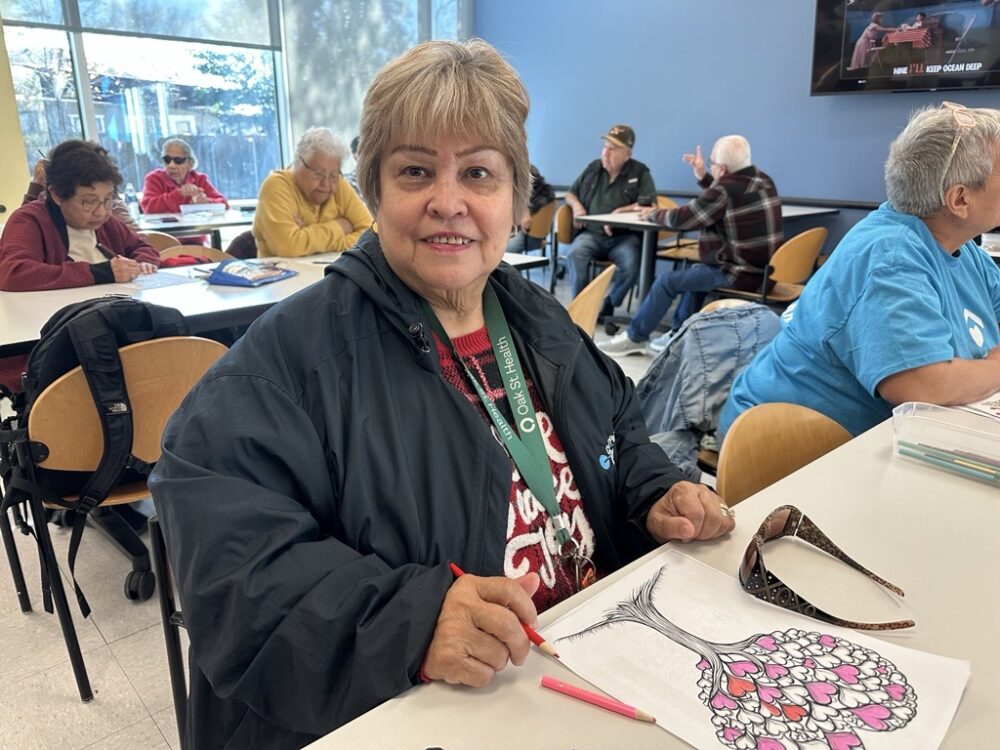
Alicia Vela at a BakerRipley Senior Health and Wellness Center on Feb. 5, 2026.
Houston resident Alicia Vela kept warm during the storm by staying in bed under blankets during the roughly two weeks her family’s home was without power. However, the family still had a gas stove that worked, and they used it to make sopa de fideo during the storm.
“I didn’t want so much soup anymore. … I was already full of sopa de fideo,” Vela said in Spanish.
The family had to throw away expired meats and cheese, and all of Vela’s plants died — including citrus and apple trees.
One day, while lying in bed, Vela noticed that a light had finally turned back on.
“I gave thanks to God because I had electricity again,” she said.