
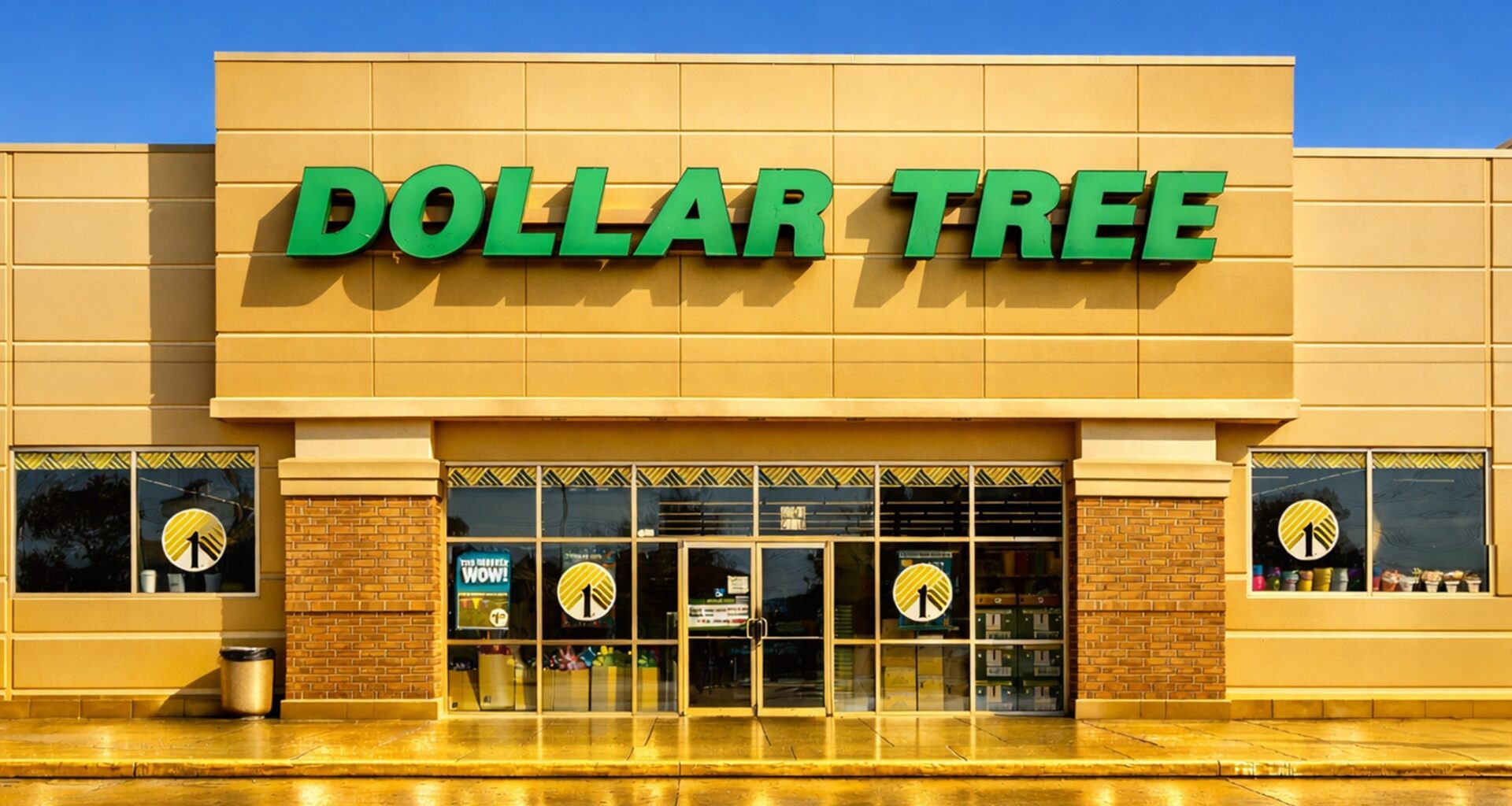
Discount retailer Dollar Tree is making a push to cater to more affluent customers, expanding into wealthy neighborhoods in a bid to capture business from high earners.
In May, the company opened its 9,000th North American location in an upscale section of Plano, TX, where homes just around the corner sell for more than $1 million.
The arrival of a Dollar Tree in a neighborhood dominated by seven-figure homes reflects the retail chain’s increasing focus on the wealthiest consumers, whose spending increasingly dominated the economy.
Over the past six years, nearly half of Dollar Tree’s new U.S. locations have opened in ZIP codes with median household incomes above the local average, up from just over 40% in the prior six years, according to a recent analysis from Bloomberg.
Dollar Tree opened up its Plano, TX location in this spot, where a CVS once stood.Google MapsThis five-bedroom home in Plano, near Dollar Tree’s 9000th location, is listed for $1.3 million.Realtor.com/NTREISDollar Tree’s shifting real estate strategy
In Plano, the landmark new Dollar Tree backfilled a vacant former CVS at a prominent corner of Park Boulevard and Preston Road. It is part of the company’s national strategy to scoop up former drugstores and party-goods box stores that already sit on prime real estate.
Company executives say they actively pursue vacated CVS, Party City, and Joann locations because those chains spent years assembling some of the best retail intersections in the country.
For commercial landlords, Dollar Tree’s arrival often provides a new anchor tenant that drives foot traffic, even if the banner is less glamorous than a specialty grocer or fitness chain. And for nearby residents, it can provide a handy local amenity for quick shopping trips.
“Reaching 9,000 stores is a powerful indicator of the strength of our brand and the loyalty of our associates and customers,” Dollar Tree CEO Mike Creedon said when the Plano store opened. The chain’s growth is a source of “long-term value” for shareholders and communities alike.
Dollar Tree’s evolving pricing strategy
Dollar Tree’s push into wealthy neighborhoods is, in part, a story of the company’s shifting pricing strategy in the age of inflation.
The chain lifted its core price point from $1 to $1.25 in 2022, and currently offers items priced up to $7, giving it leeway to afford pricier leases in affluent areas while still undercutting nearby supermarkets and pharmacies.
Dollar Tree says that shoppers earning more than $100,000 accounted for 60% of the company’s 3 million new customers in its most recent quarter. While those wealthy customers shop at Dollar Tree less often, they spend $1 more per visit on average, a difference that adds up.
To lure those affluent customers, Dollar Tree has focused on presenting clean, well-organized stores and positioning itself as a handy one-stop shop for all manner of small household items.
In affluent Plano, Mayor John Muns has likened the new format to a downsized Target or Walmart, where shoppers can get in and out quickly without navigating a large parking lot or big-box store.
Dollar stores have drawn criticism in lower-income neighborhoods, where clusters of such outlets have been linked to concerns about disinvestment, food access, and, in some research, higher crime rates.
That history has prompted some cities to experiment with zoning restrictions or caps on new dollar-format locations, often citing concerns that they crowd out full-service grocers or signal neighborhood decline.
Meanwhile, Dollar Tree’s march into affluent suburbs is softening that stigma and potentially demonstrating that the discount retailer can co-exist as simply one more retail option among many.
In Plano, local officials emphasized that the store plugged into an established retail node and did not displace a supermarket, helping it sidestep political fights that have dogged dollar-store openings elsewhere.
For nearby homeowners, a single Dollar Tree is unlikely to move property values in either direction, the way a major employer or high-quality school district can.
But the retailer’s presence does signal that even in neighborhoods known for luxury listings, the retail landscape is tilting toward convenience and affordability.
As Dollar Tree’s green and white façade increasingly crops up next to Pilates studios and juice bars, it may be a sign of an economy increasingly built around the spending power of the upper class.
Get real estate news in your inbox
Sign up now