
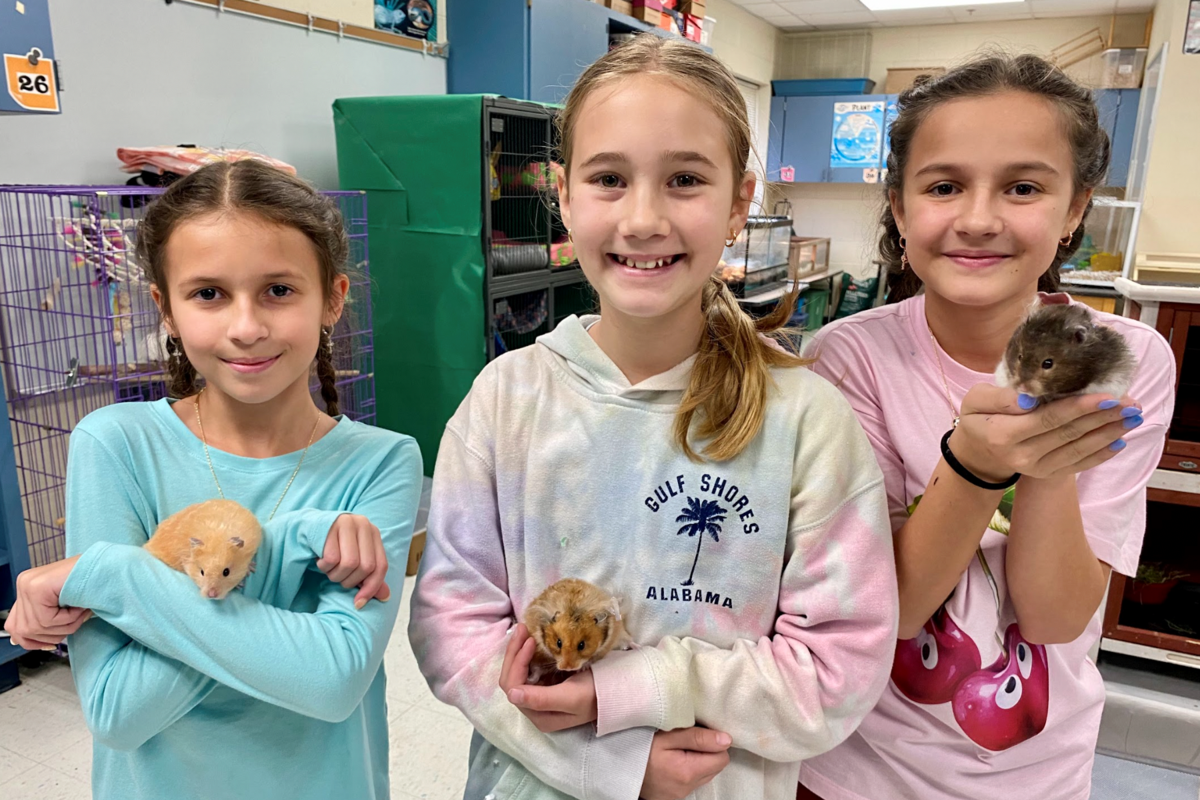
At Hughston Elementary, students arrive early each morning to care for more than 20 animals in the school’s pet lab
Hughston Elementary in Plano ISD is home to one of the most unusual programs you’ll find at an elementary school: a campus pet lab with more than 20 animals, including an axolotl named Stormy.
The hands-on program allows nearly 80 fourth- and fifth-graders to care for reptiles, mammals and aquatic species before school each day — all under the oversight of Plano ISD’s Holifield Science Learning Center.
Students arrive at 7 a.m. to feed animals, clean habitats, monitor water temperatures and make sure every creature is healthy and accounted for.
“It’s a big responsibility,” Sam, a fourth-grade student at Hughston who helps care for Stormy, the axolotl, tells Local Profile. “You have to feed it, clean feces, check the water level.”
For these students, science doesn’t just live in a textbook. It lives in tanks, habitats and carefully labeled buckets of supplies.
How Pet Lab Began
Hughston’s pet lab started about a decade ago with one classroom pet.
“I started it about 10 years ago. It all started with one lone bearded dragon named Spike,” says Ms. Turnbull, Hughston’s fifth-grade team leader.

Photo: Rebecca Silvestri | Local Profile
As interest grew, Ms. Turnbull wanted to expand the program to include small mammals. A former principal was hesitant due to allergy concerns and made her a deal: if she agreed to bring in a snake, she could add furry animals. Despite being afraid of snakes at the time, Ms. Turnbull agreed.
That snake — a nonvenomous ball python named Fang — remains part of the lab today. In accordance with district policy, Fang is kept in a locked enclosure and handled only by Ms. Turnbull.
From there, the program grew thoughtfully — and always through district protocol.
Overseen By Holifield Science Learning Center
Every animal at Hughston is coordinated through and vetted by Plano ISD’s Holifield Science Learning Center (HSLC). Holifield staff review species, ensure they are appropriate for an elementary setting and provide guidance on habitat, care and safety. They periodically visit campus and serve as an ongoing resource for the school.
The message is clear: teachers cannot simply bring pets from home into classrooms. There is a formal process and established protocol to follow. That oversight ensures animals are properly housed and cared for — and that students are learning within district guidelines.
Meet The Residents
Step inside the Pet Lab at Hughston Elementary in Plano and you’ll find a surprising variety of species:
Stormy the axolotl, whose tank must stay around 63 degrees
Rocket and Athena, the ferrets students affectionately call “noodles”
A hedgehog that slowly uncurls while being held
Teddy bear hamsters, known for their unusually friendly temperament
Two bunnies named Clover and Snowball
A rapidly growing leopard tortoise
Crested and leopard geckos
Fire-bellied toads
Guinea pigs, fish, doves, a hermit crab and more

Members of the Pet Lab pose with the animals and are joined by Ms Turnbull and Principal Jennifer Caplinger. Photo: Rebecca Silvestri | Local Profile
Some animals come through Holifield. Others are carefully rehomed pets surrendered by families who underestimated the commitment certain species require.
“A lot of people don’t realize turtles can live 70 or 80 years,” Ms. Turnbull says.
Each animal has a specific care routine. Students are supervised. Hands are washed. Expectations are clear.
What Students Actually Do
Fourth- and fifth-graders in the Pet Lab serve one week per month. During that week, they report before school to:
Feed animals
Clean habitats
Monitor water levels and temperatures
Prepare specialized diets
Observe behavior and report concerns
Ms. Turnbull sets expectations early. “I literally tell them, you are going to clean up poop,” she says. “I’ll give you gloves, but you’re going to clean up poop.”
Rather than discouraging students, it motivates them. This year alone, dozens of fourth-graders signed up.
Hughston Principal Jennifer Caplinger sees the impact well beyond animal care.

Sam with Stormy, the axolotl. Photo: Rebecca Silvestri | Local Profile
“It teaches them empathy,” Caplinger says. “And responsibility. You have to get here on time. You have to clean up. You have to take care of something besides yourself.”
Younger students can earn passes to assist for the day, mentored by older pet lab participants. Former students — even middle schoolers — return during school breaks to help care for the animals.
“Instead of playing video games, they want to come clean out cages,” Ms. Turnbull says.
More Than A Science Lab
For some students, the pet lab builds confidence. For others, it helps them overcome fear. Principal Caplinger admits she once hesitated to enter because of the snake.
“I had to get over my fear of coming in here,” she says.
The program also creates leadership opportunities. Students represent Hughston at STEAM events, teaching others about the animals they care for each day.
The pet lab is supported in part by the school’s PTA, which helps cover food and supply costs. An Amazon wish list shared with families and community members provides additional support for enrichment items and habitat needs.
Each afternoon before leaving campus, Ms. Turnbull walks through the lab one final time — checking lights, water and heat.
It is a significant commitment.
But inside this room filled with aquariums, habitats and the quiet hum of filters, the lesson goes far beyond reptiles and rodents. It’s about responsibility and empathy. And for nearly 80 students at Hughston Elementary, it starts at 7 a.m. — long before the first bell rings.
Don’t miss anything Local. Sign up for our free newsletter.