
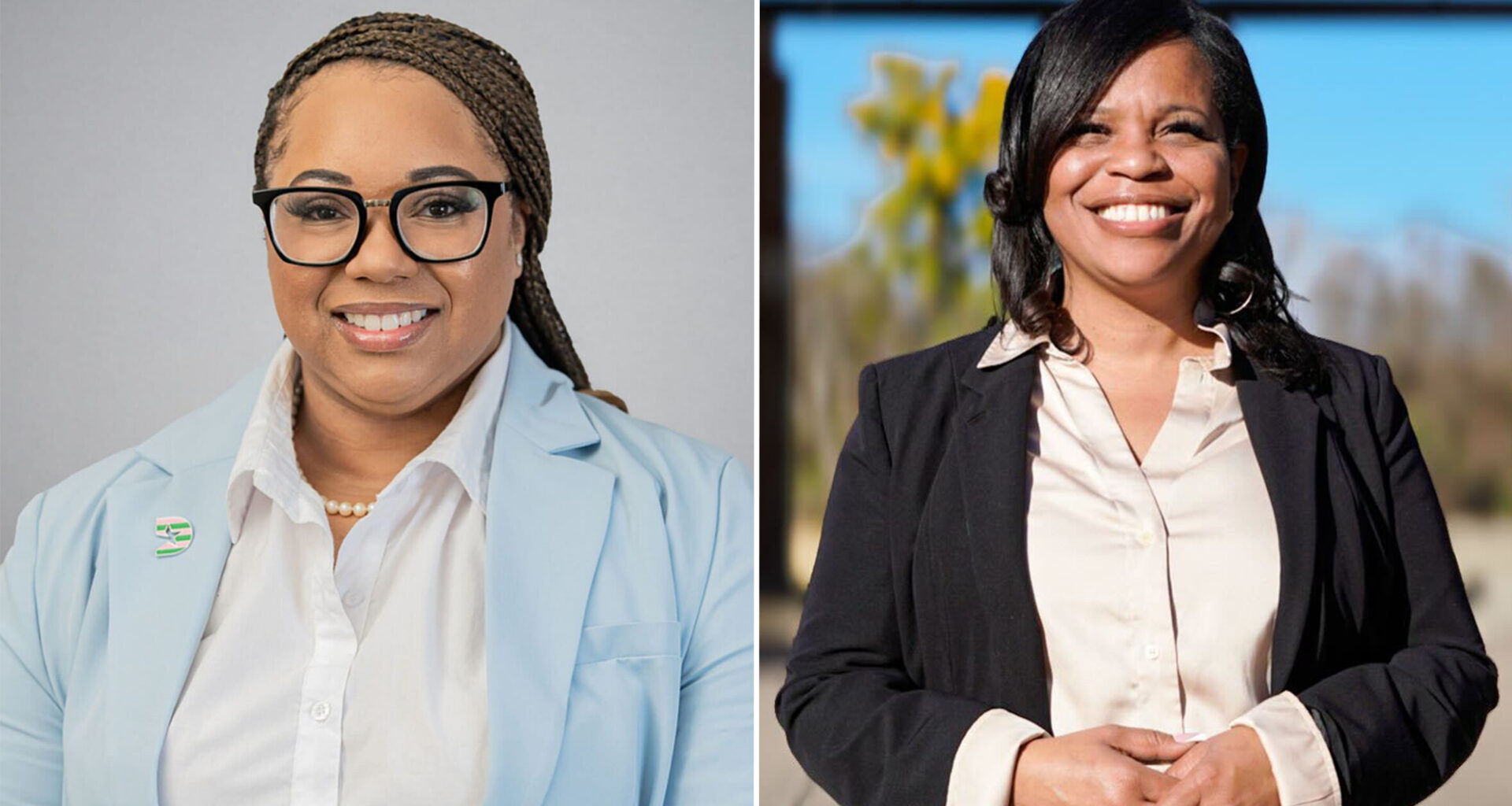
Two candidates are competing in the Democratic Party primary election for the State Board of Education seat that represents most of Fort Worth and Arlington.
Incumbent Tiffany Clark, a DeSoto Democrat and former school counselor, is seeking her first full term on the 15-member board. Clark was elected in 2024 to complete the remainder of a term for a former member who stepped down.
Challenging her is Kimberly Boswell, a Dallas ISD administrator who says the board needs more campus-level experience as it navigates politically charged education debates.
In the Nov. 3 general election, the winner will face Arlington Republican April Williams Moore for the District 13 seat that includes parts of Tarrant and Dallas counties.
The State Board of Education sets standards for public school lessons, reviews and adopts classroom materials, establishes graduation requirements and oversees charter school applications.
Clark, who has taught in Duncanville, DeSoto, Waco and Waxahachie schools, said she’s centering her campaign on transparency and advocacy. She pointed to her newsletters, youth policy summits and press conferences she said were designed to keep constituents informed about decisions made in Austin.
“I’m not a politician,” Clark said. “I’m an advocate for students, and I’m an advocate for the voiceless.”
Boswell, who has worked across elementary, middle and high school campuses and served as a principal, said her campaign is focused on ensuring educators have a stronger voice in policy decisions. Her nearly three decades in public education gives her insight into classroom realities that should inform decisions, she said.
“We need to be in the business of educating our students so that they can be successful in society,” Boswell said. “So it’s not our job to teach them what to think, more so how to think.”
Williams Moore said her campaign is focused on strengthening early literacy instruction, supporting teacher preparation and expanding early screening and intervention for struggling readers. She said the board should prioritize evidence-based reading materials and use student data to guide support rather than penalize schools.
Debates on lesson plans loom large
The State Board of Education continues to grapple with contentious decisions about what’s taught in classrooms — debates that have increasingly drawn political scrutiny.
Board members are currently considering placing Bible passages on required reading lists for public school students across Texas.
Clark is critical of efforts to introduce religion into public school classrooms and said she is hearing concerns directly from families in her district.
She was not yet sworn into office when the state board narrowly approved the optional Bluebonnet Learning lessons that include Bible stories, which have drawn criticism.
Clark said she receives emails from parents who want to maintain the separation of church and state. Those she hears from reflect District 13’s cultural and religious diversity, she added.
“We have too many students, too many diverse cultures, too many different religions,” Clark said. “So if we’re not going to teach all religions, we don’t need to be teaching any religions.”
Nearly half, 48%, of District 13 residents are Hispanic while 29% are Black and roughly 19% are white.
If elected, Boswell said research and data would guide her votes. She said she would have opposed Bluebonnet Learning’s materials.
“I would have voted no,” Boswell said, citing concerns about language and whether the materials adequately serve English language learners.
She said decisions surrounding classroom materials should prioritize academic effectiveness and reflect the needs of increasingly diverse student populations.
Different paths to improving literacy
Early reading outcomes are a priority for both candidates, who offer different approaches.
Boswell pointed to Texas’ reading academies — professional development programs designed to strengthen teachers’ literacy instruction — as a strategy worth expanding.
“These reading academies that are in play are something that we really need to promote,” she said. “I went through it myself, and it’s very beneficial.”
Expanding teacher training, she said, is critical to building a stronger educator pipeline and improving long-term student outcomes.
Clark, meanwhile, questioned whether the state is adequately tracking whether classroom materials actually improves student learning.
“We can’t continue to expect student outcomes to change if we aren’t tracking the data to see what programs are being successful in our school district,” she said.
Clark said she has pressed Texas Education Agency leaders for clearer data on which programs produce measurable gains.
“We can’t say a program is good, we can’t say it’s high quality, if we don’t see results from it,” she said.
Charter schools and accountability
Charter approvals, which pass through the board’s Committee on School Initiatives, have also shaped Clark’s early tenure, she said.
“One of the big prerogatives or decisions that we make is related to approving or denying charter schools,” she said, adding that she has pushed for more clarity in the approval process.
Clark said she voted against recent charter proposals in Fort Worth and Dallas because they didn’t seem to offer meaningful differences from nearby traditional public schools, particularly in areas where other charters had recently closed.
Boswell said she supports charters but believes they should be held to the same accountability standards as traditional districts.
“I like charter schools,” Boswell said. “Charter schools are a very good option … but I do believe that accountability should be the same with charter schools and public schools.”
Consistent standards, she said, would help prevent learning gaps for students who transfer between school systems.
A question of direction
Asked whether Texas public education is moving in the right direction, Clark was blunt.
“No, in my opinion, we are not moving in the right direction in this moment,” she said, attributing challenges to political interference in education decisions.
“The moment we take politics back out of it … we might see some results,” Clark said.
Boswell similarly cautioned against politicizing classrooms and emphasized the need for student-centered lesson planning that promotes critical thinking.
“Our curriculum must be student-centered,” she said. “It must promote critical thinking. It must be age appropriate, but it shouldn’t be a supporter of religious ideals or politicized ideals.”
Early voting begins Feb. 17 and ends Feb. 27.
Election Day is March 3.
Matthew Sgroi is an education reporter for the Fort Worth Report. Contact him at matthew.sgroi@fortworthreport.org or @matthewsgroi1.
At the Fort Worth Report, news decisions are made independently of our board members and financial supporters. Read more about our editorial independence policy here.
This <a target=”_blank” href=”https://fortworthreport.org/2026/02/16/a-north-texas-incumbent-on-the-state-board-of-education-faces-a-challenger-in-the-march-primary/”>article</a> first appeared on <a target=”_blank” href=”https://fortworthreport.org”>Fort Worth Report</a> and is republished here under a <a target=”_blank” href=”https://creativecommons.org/licenses/by-nd/4.0/”>Creative Commons Attribution-NoDerivatives 4.0 International License</a>.<img src=”https://i0.wp.com/fortworthreport.org/wp-content/uploads/2021/04/cropped-favicon.png?resize=150%2C150&quality=80&ssl=1″ style=”width:1em;height:1em;margin-left:10px;”>
<img id=”republication-tracker-tool-source” src=”https://fortworthreport.org/?republication-pixel=true&post=412092&ga4=2820184429″ style=”width:1px;height:1px;”><script> PARSELY = { autotrack: false, onload: function() { PARSELY.beacon.trackPageView({ url: “https://fortworthreport.org/2026/02/16/a-north-texas-incumbent-on-the-state-board-of-education-faces-a-challenger-in-the-march-primary/”, urlref: window.location.href }); } } </script> <script id=”parsely-cfg” src=”//cdn.parsely.com/keys/fortworthreport.org/p.js”></script>