
Allen ISD officials have started budget planning for the 2026-27 school year.
In a nutshell
Kyle Penn, assistant superintendent of business and technology, reviewed an upcoming timeline for the budget during a Jan. 20 board of trustees meeting. Multiple workshops and discussions are scheduled between now and June 15 when board members are expected to adopt the budget. The timeline is tentative, according to Penn’s presentation.
A brief overview of the timeline is listed below. Dates listed are expected to occur during a board workshop meeting or regular meeting.
Jan. 20: budget timeline discussionFeb. 23: projected enrollment and budget discussionMarch 2: budget updateApril 13: budget discussion and compensation plan discussionMay 26: budget workshopJune 15: budget adoptionPenn said the budget process is “year-round” with district officials already having discussions since August. Penn’s presentation also included a preview of strategies to reduce next year’s budget amid declining enrollment and inflation.
“This declining enrollment while trying to stay competitive in compensation and battle inflation are really the driving force on all these conversations,” Penn said. “I think you can really sum it up with that point.”
A closer look
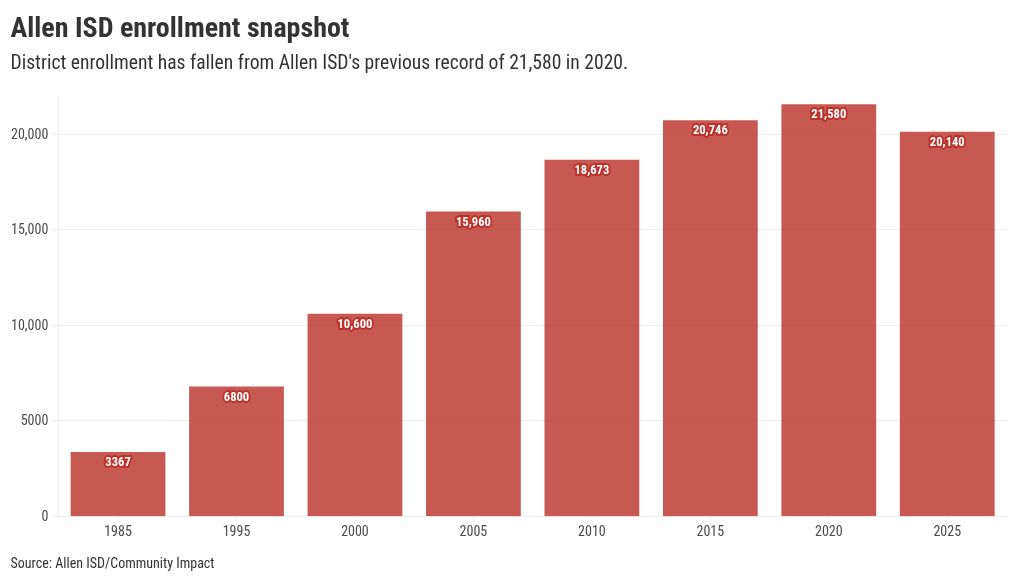
Allen ISD’s enrollment has declined by more than 1,400 students between 2020 and 2025, according to a district snapshot. Penn said officials are projecting further decline in enrollment due to a larger number of students graduating than the number of kindergarteners that will be enrolled next year.
 Officials are hoping to generate additional revenue for the district through a new open enrollment program called the Allen Advantage. The program soft-launched last fall and brought 20 additional students to the district for the spring semester.
“Those additional students are going to generate additional funds which help minimize the reductions we have to make,” Penn said.
Looking ahead
The district has historically absorbed $6 million-$8 million in annual reductions in past years, Penn said. This has occurred through natural attrition in positions and helps to absorb inflation costs for nonpersonnel costs which makes up 20% of the district’s budget, according to Penn’s presentation.
Attrition and vacant positions will be two areas of focus for officials as they plan for next year’s budget, according to Penn’s presentation. District officials will also examine costs for renewals of various softwares and resources used by the district, he said.
Officials will discuss competitive salaries later this spring while continuing to monitor inflationary pressures on the budget, he said.
“We want to stay competitive on salaries going into the spring,” he said. “So later in the spring will be a lot of conversations about what compensation looks like with us and with our neighbors.”