
An animatronic dire wolf looks around then tilts its head to greet you in the lobby. An animated megalodon shark circles its prey in a conference room made of floor-to-ceiling screens before striking and “breaking” the glass.
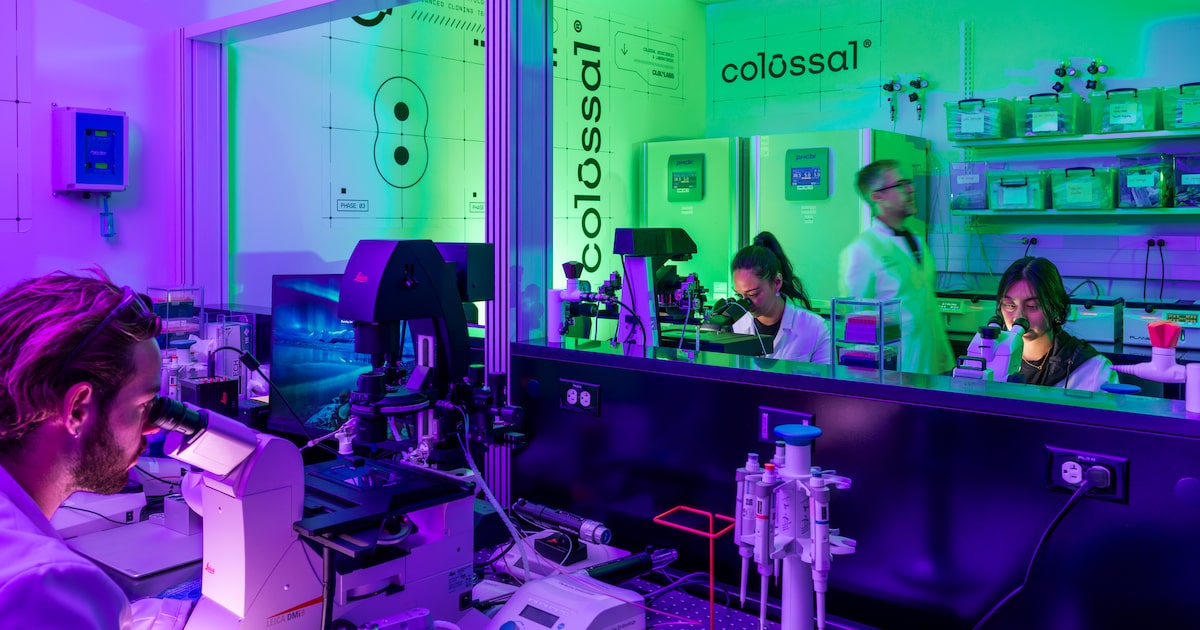
With design details in every nook and cranny, the headquarters of Colossal Biosciences feels no less sci-fi than the startup’s mission: to bring long-lost animals back from extinction. But behind its doors, there is hard science happening every day.
“You have literally every single piece of equipment you could ever want at your fingertips,” said chief science officer Andrew Pask. “This is the thing that makes the difference in really being able to push this technology forward at a fast pace.”
Colossal, based in Dallas, allowed media to tour its new headquarters and lab last Thursday, which the company is unveiling after a phased move-in beginning last June. The 55,000-square-foot space (not to mention 4,000 square feet of additional animal management space downstairs and a 30,000-square-foot lab expansion already in the works) is a significant upgrade from its old digs, a 25,000-square-foot area in what co-founder and CEO Ben Lamm called the “WeWork of labs.”
Business Briefing
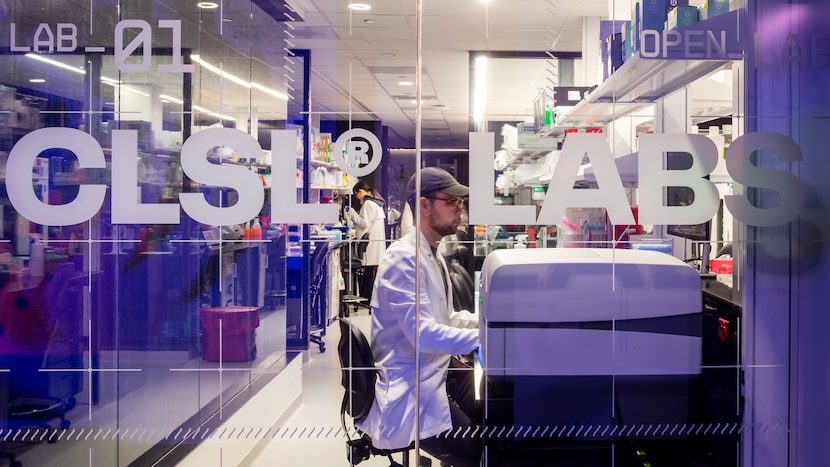
The Dallas, Texas headquarters of Colossal Biosciences, a startup that aims to bring various animals, including the woolly mammoth and dodo bird, back from extinction.
Courtesy of Colossal Biosciences
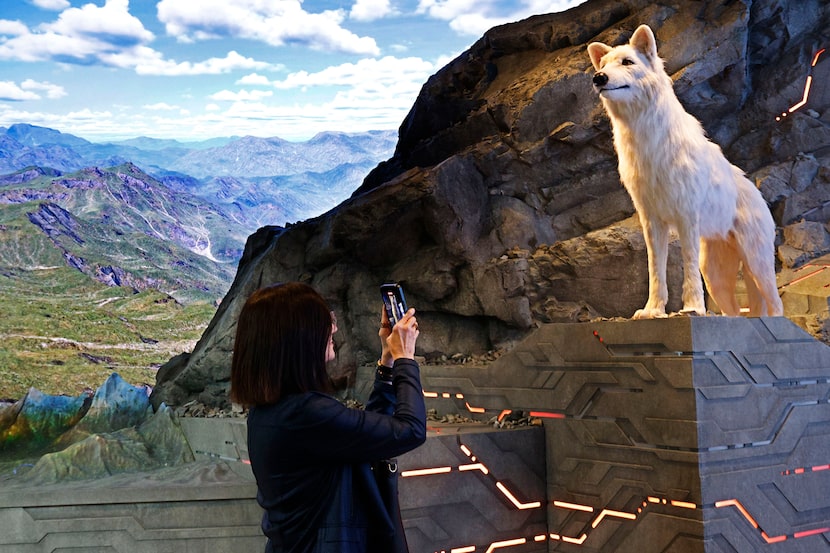
Quincy Preston of Dallas Innovates takes a photo of a display of a dire wolf at Colossal Biosciences before joining a tour to their new headquarters, Thursday, Feb. 12, 2026, in Dallas.
Chitose Suzuki / Staff Photographer
Colossal employs 230 scientists and researchers, and the new space unites all of Colossal’s main teams under one roof. Besides its genetically engineered dire wolves, which live in a nature sanctuary outside Texas, there is lab and office space dedicated to Colossal’s ongoing projects to resurrect the dodo bird, moa, woolly mammoth and thylacine.
Don’t ask where the lab is, though, because the startup won’t tell you.
“When we announced the woolly mice, we had people show up to one of our other locations, and they were like ‘Can we see the little mice?’ … or when people knew Peter [Jackson] and I were speaking in Cannes, we had people show up and wait at our hotel,” Lamm said. “We’re excited about the communication, but also, you know, we’re not open to the public. This is not a theme park, it’s our offices.”
It’s not surprising the movie star-like following Colossal has attracted. After all, the company counts the likes of Tom Brady, Sophie Turner and Chris Hemsworth as public supporters and investors.
Related

But even with the side effects — and ensuing precautions — it’s all part of a carefully curated branding strategy.
Take a look at Colossal’s website and you’ll notice a very distinctive design language. The same language permeates the new headquarters, with murals on nearly every wall, screens and LEDs galore, and that unique family of fonts labeling everything from the cell culture lab to the bathrooms.
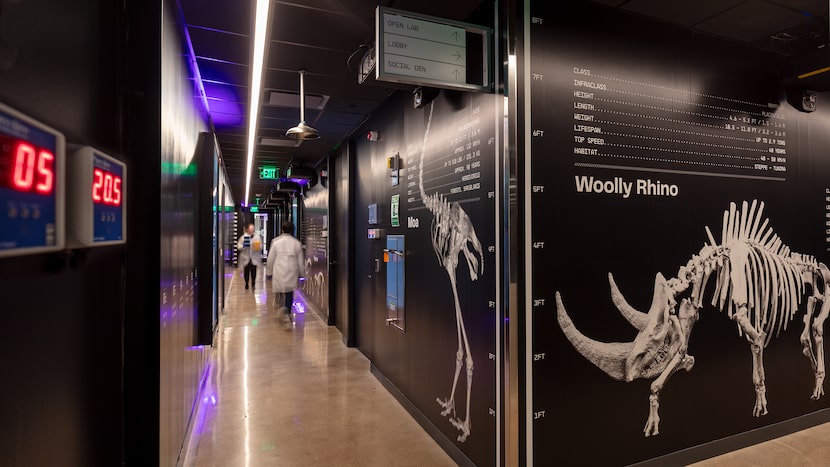
The Dallas, Texas headquarters of Colossal Biosciences, a startup that aims to bring various animals, including the woolly mammoth and dodo bird, back from extinction.
Courtesy of Colossal Biosciences
Lamm said that brand identity is something that’s been curated from the very beginning, with a “Harvard-meets-’80s MTV” vibe to convey science that’s as fun and irreverent as it is cutting edge. In the office, that identity fosters a dynamic environment where anything can happen. In the public sphere, it earns buy-in, because communicating Colossal’s mission to address biodiversity loss and conserve the environment has always been almost equally as important as the science.
“We don’t compete with like science journals for attention and eyeballs. The people that want to be scientists at the right, appropriate age are reading the science journals, but we compete in the attention economy with Kardashians, right?” Lamm said.
That may sound cynical, but listening to Lamm, possessing a background in AI and gaming, proudly explain a laundry list of engagement metrics, it’s clear the philosophy is working.
“Sentiment analysis,” he said, yielded 97.5% positive sentiment, and a string of percents within percents helped pinpoint what the 2.5% were mad about. (“You can’t please everybody,” Lamm said.) Perhaps the money stat: according to Lamm, 30% of Colossal’s investors invested because their kids told them about the company.
“Our view is that it’s not our job to persuade, it’s our job to educate and be transparent, and we hope through actions, not words, people come on that journey with us,” he said.
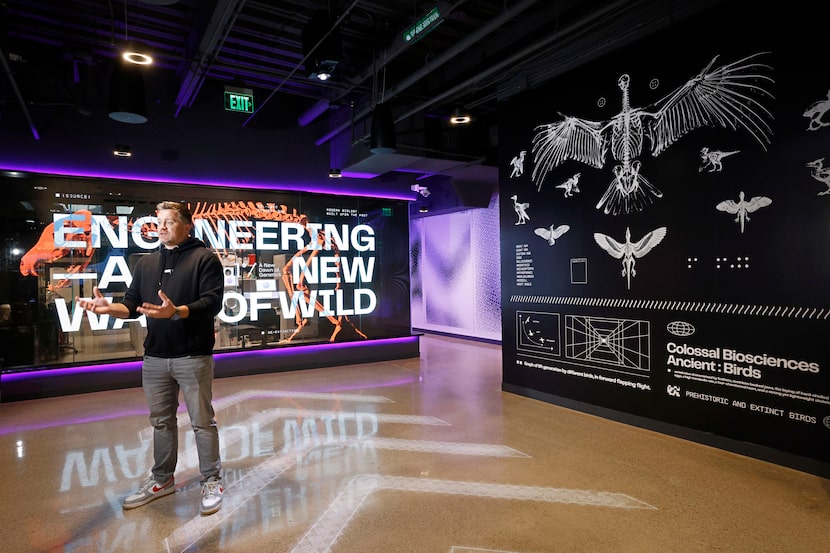
Matt James, chief animal officer at Colossal Biosciences, speaks to a reporter at their headquarter, Thursday, Feb. 12, 2026, in Dallas.
Chitose Suzuki / Staff Photographer
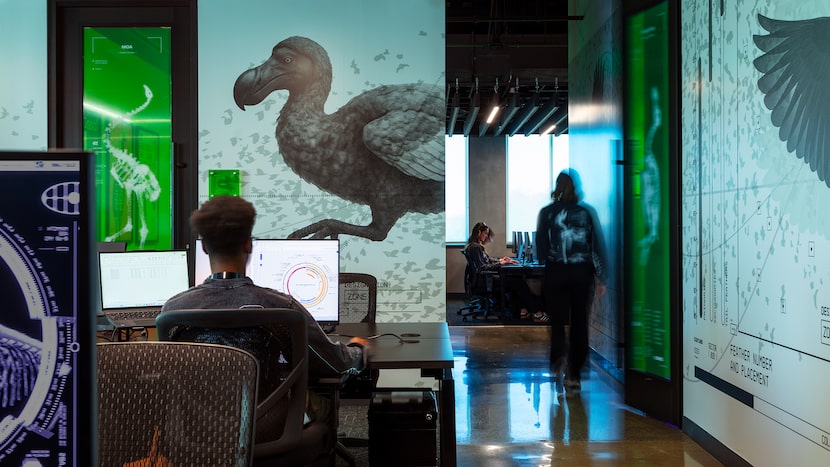
The Dallas, Texas headquarters of Colossal Biosciences, a startup that aims to bring various animals, including the woolly mammoth and dodo bird, back from extinction.
Courtesy of Colossal Biosciences
That journey is only accelerating. About a year ago, Colossal hit a $10 billion valuation, and has since padded its purse with even more funding, bringing the total to more than $600 million. Since launching in 2021, it has started the Colossal Foundation, spun off two companies, and acquired another. It also officially expanded to Australia and announced a permanent museum installation in Dubai, all in the past six months.
Related
All that investment has already paid off in the form of woolly mice and dire wolves born through genetic engineering. And though the ultimate payoff of living woolly mammoths and dodo birds may be years or even decades away, there is more to be had sooner with the application of Colossal’s de-extinction technologies to non-de-extinction problems.
“If we’re going to get to a future where we can feed 10 billion people on this planet, we need people to understand and accept GMO foods. But people obviously are a little bit worried about putting something in their mouth that they don’t fully understand,” said chief science officer Beth Shapiro as an example.
In its own way, the animatronic dire wolf in Colossal’s new lobby, just like the company’s ever-presence in media and attachment to pop culture, helps that.
“I think one of the beautiful things about Colossal is it gives people an introduction to what it means to do genetic modification in a way that is safer and more acceptable. We’re helping animals not become extinct … and this is the same technology that we can use to make a drought-resistant tomato,” Shapiro said.
“Having that conversation out loud, I think, is a step toward helping people to better understand what we can do,” she continued. “And I love that Colossal is doing that by being so in your face.”
 Elon Musk, Tim Cook add voices to chorus of warnings about ‘unprecedented’ chip crisis
The CEO of Apple has warned the company is about to ‘hit the chip wall.’
 Dallas College sets the scene for ‘Y’allywood’ with new virtual film soundstage
High-tech film set at North Lake College designed to help students land film industry jobs that can pay between $65,000 to $85,000 a year.