
It may only be a matter of time before the term “Dexit” becomes a household word.
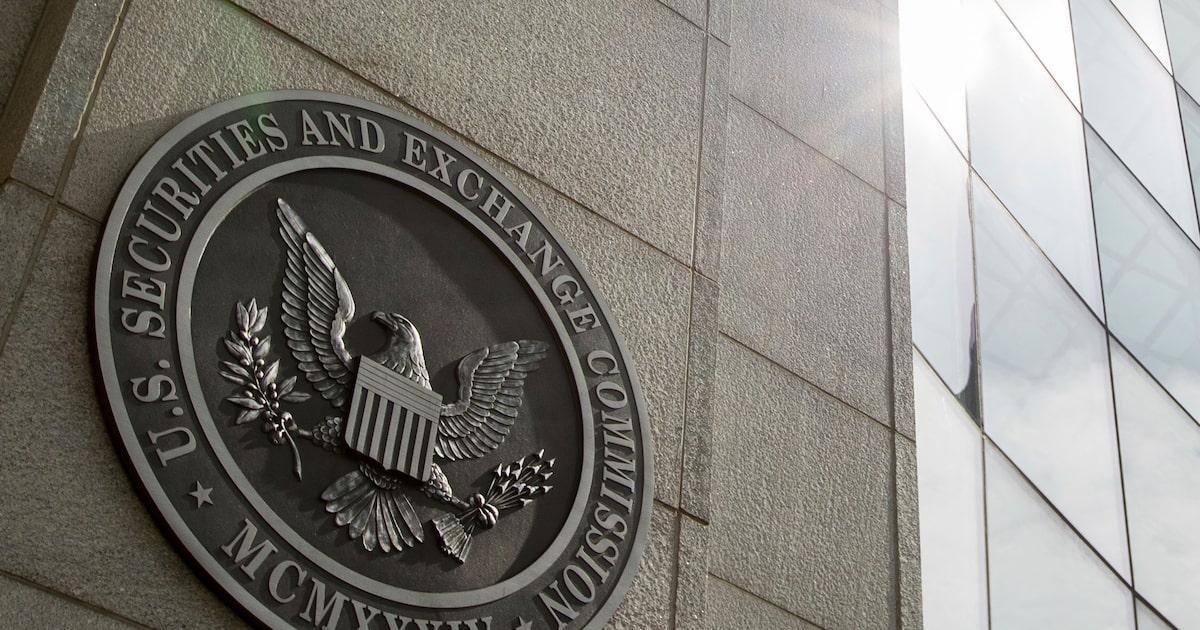
In wide-ranging remarks, U.S. Securities and Exchange Commission chair Paul Atkins commented on the burgeoning trend of companies fleeing Delaware (hence the “Dexit” moniker) and re-incorporating in Texas, a testament to phenomenon’s growing salience.
“If Texas builds it, companies will come,” he said at the second annual Corporate Law Symposium hosted by the Texas A&M School of Law at the Federal Reserve Bank of Dallas.
Related

In a speech that also debuted potential changes to corporate disclosures, Atkins praised efforts by the Texas legislature that have created the state’s Business Court in 2023. Then, Texas gave it a leg-up against other regions experimenting with business-friendly reforms in an effort to counter Delaware’s influence over Corporate America.
Business Briefing
He specifically called out Senate Bill 29, which codified the business judgement rule and provided certain protections against shareholder suits.
Texas efforts are specifically designed to court re-incorporations in the Lone Star State, and challenge the Delaware Chancery Court, the preeminent business court for over a century.
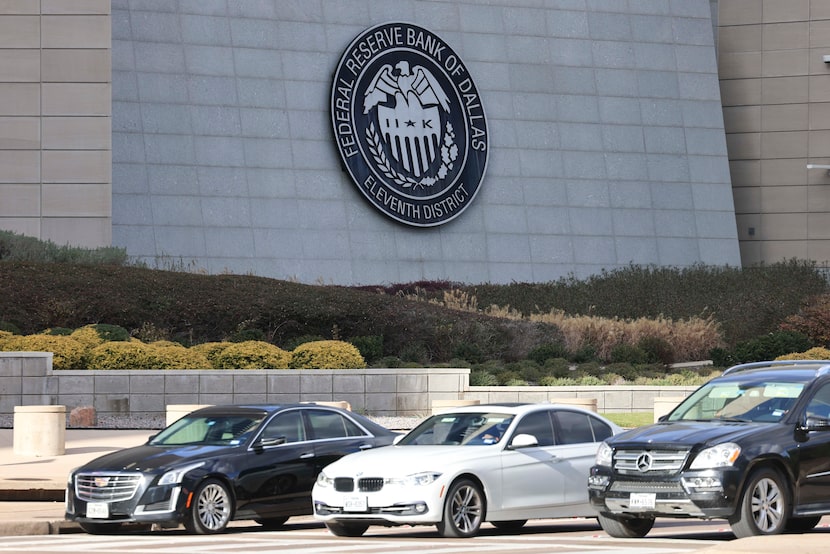
Federal Reserve Bank of Dallas photographed, on Wednesday, Jan. 14, 2026 in Dallas.
Shafkat Anowar / Staff Photographer
‘Texas has begun to build something’
As several high-profile companies have redomiciled in Texas ― including Coinbase, Dilliard’s, Tesla and SpaceX ― the trend dubbed “Dexit” is a growing threat, although one with limited immediate impact.
While hard to measure definitively, movement out of Delaware in 2025 was somewhere in the low double digits, with Nevada also a beneficiary.
Concerns about reincorporating in Texas include the lack of history and case law, and the limitations of the Texas Business Court, which, among other symptoms of its youth, does not yet have dedicated court rooms or physical infrastructure.
Meanwhile, two-thirds of the Fortune 500 is still domiciled in Delaware, mostly thanks to its decades of case law that provide corporations a degree of certainty in how legal questions will be answered.
Still, Atkins pointed out that the competition from Texas and others itself is beneficial for the health of the U.S.’s capital markets. As pushback has grown against decisions from the Chancery Court, initiatives from other states can both give companies another option and incentivize Delaware to modernize.
“Texas has begun to build something that could offer an interesting alternative to Delaware, through a framework designed to attract companies with shareholders who are eager to get back to basics, with less politicization, abusive litigation, and overall drama,” Atkins said.
“Competition does not pause for tradition, nor does it defer to incumbency. Over time, it compels systems, and states, to adapt—or to yield. Through competition, good ideas spread, poor ones fade, and the system itself grows stronger,” he added.
As Atkins walked through several proposed changes to corporate disclosures governed by Regulation S-K — spanning executive pay, risk disclosure and more — he emphasized the need for intra-state competition as a way to innovate the balance between shareholder and corporate interests in regulation.
He referenced a famous quote from Louis Brandeis, a U.S. Supreme Court justice from 1916 to 1939, that labelled states “laboratories” of democracy, where social and economic experiments can happen without threatening the wider union.
“Texas’s recent amendments to its corporate laws … remind us that state corporate law, working in tandem with the federal securities laws, matters profoundly to our economic strength as a country, and that through those laws, we can rigorously protect shareholders without needlessly paralyzing companies,” Atkins said.