

Ramadan, beginning at dusk on Feb. 17 and likely ending at dusk on March 19 (depending on the lunar calendar), brings a month of fasting for Muslims. TCU aims to provide support to those observing the religious period.
Ramadan marks the ninth month of the Islamic calendar. During this time, Muslims fast to clear the mind, teach self-control and pursue spiritual growth, Samuel Ross, an associate religion professor, said.
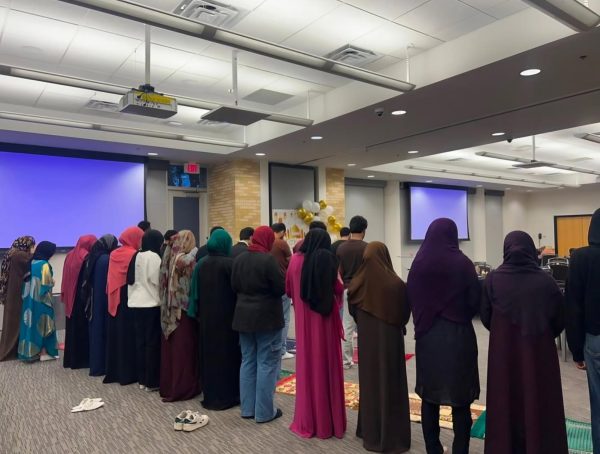 Students pray at an iftar hosted during Ramadan in 2025. (Photo courtesy of @tcu.msa on Instagram)
“Fasting during Ramadan allows me to strengthen my connection between myself and God,” Hamda Hussein, a business analytics graduate student, said. “It allows me to get through a lot of personal growth and hardships that I may have.”
For Muslims, fasting typically begins at age 12, though many excited kids fast for half days before then, Hussein said.
The month of Ramadan emphasizes charity and reflection, as Muslims go long periods of time without eating.
“When you’re in a state of hunger, and you haven’t had food all day, it’s much easier to feel the pain of those who don’t have something throughout the year,” Abbad Tahir, a Muslim community advisor, said. “It gives us a chance to start reflecting on not just what’s happening around us, but throughout the world where people are suffering.”
For many TCU students, breaking fast can interfere with scheduled class times. To avoid this, they often arrange their schedules ahead of Ramadan.
“When I make my class schedule, I try to make it align with when I break my fast,” said Rahma Ibrahim, a business analytics graduate student. “If I have class, usually I will eat dates or a smoothie to break my fast after class.”
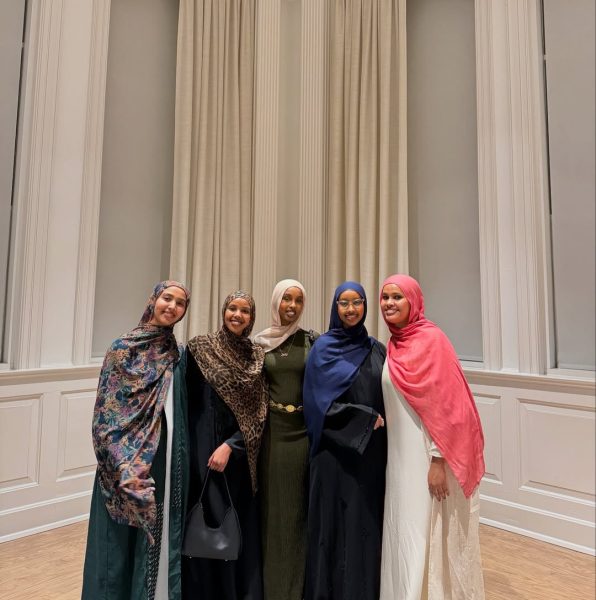 Students break their fast together at an iftar hosted by TCU’s Muslim Student Association. (Photo courtesy of @tcu.msa on Instagram)
During religious holidays, TCU offers more resources to students and allows for religious accommodations to be made.
Throughout Ramadan, TCU’s Muslim Student Association plans to host iftars on Monday and Thursday evenings. These events will be held inside the Religious and Spiritual Life office, allowing Muslims to break their fast together, Lea McCracken, the associate chaplain and church relations officer, said.
Year-round, TCU has three prayer spaces on campus available. These locations include the Religious and Spiritual Life Office, the back of Robert Carr Chapel and the third floor of the Mary Couts Burnett Library.