
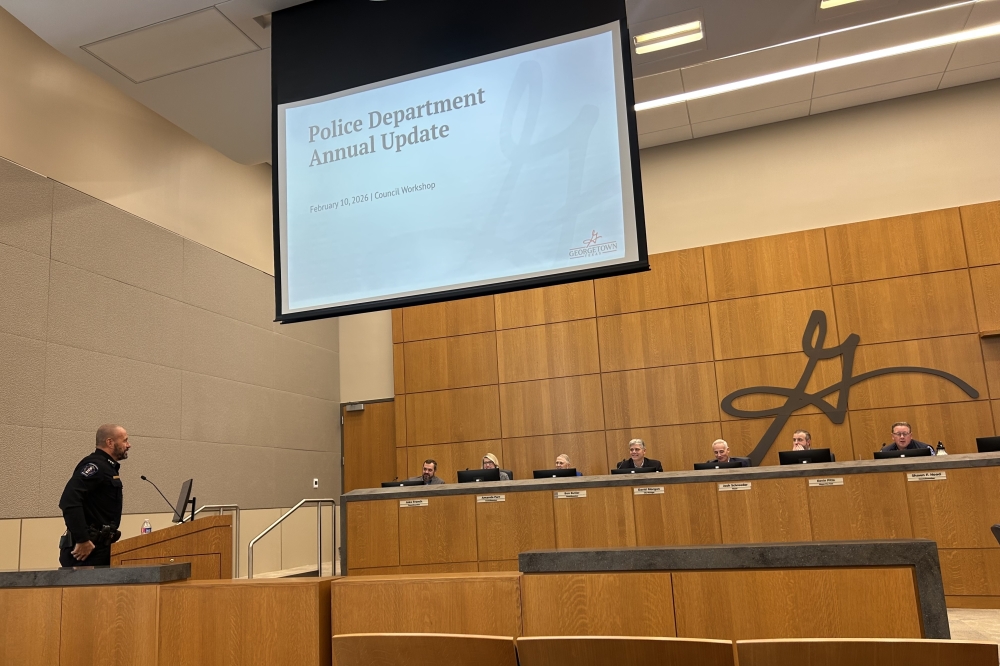
The Georgetown Police Department is working to add patrol personnel over the next few years amid a steady rise in calls for service, Police Chief Cory Tchida told City Council on Feb. 10.
The gist
Overall crime rates have dropped in the city, despite a rise in population, Tchida said.
The police department reported a 7.38% decrease in the most serious offenses—which include murder, robbery and drug violations—in 2025 compared to the previous year.
“We did see a little bit of increase on the crimes against persons but overall a reduction,” Tchida said.
Despite the drop in serious crimes, calls for service increased by 4.25%, amounting to more than 30,000 calls last year, according to city documents.
“There’s all kinds of reasons why people continue to call us from disputes or just questions,” Tchida said. “With the population growth of the city, [we] have continued to see a steady increase in calls for service.”
Increased call volume and the large geographic area that GPD covers have caused slower officer response times, Tchida said. The average response time for the highest priority calls rose to 9 minutes and 15 seconds in 2025, up from about 8 minutes and 30 seconds in 2024, according to city documents.
“We’re at 62 [square miles] and some change, so that does play a role in our response times,” Tchida said.
Something to note
Staffing has also contributed to slower response times, Tchida said. While the department hired eight new officers, it lost 13 from retirement, termination and resignation.
This leaves operational efficiency sitting at just under 80% with some officers out due to injuries, and other recruits still moving through the academy or field training, according to city documents.
The department conducted long-term staffing models, which recommend adding 15-17 patrol officers over the next five years to bring priority response times down to five to six minutes.
“We have historically in this job sold the sense of adventure and we need to focus much more on a sense of purpose because the purpose is what is going to drive people to be willing to do the hard things,” Tchida said.
What else?
Contacts with unhoused individuals increased slightly, up about 2% from 2024. The 1,153 contacts are not necessarily unique encounters and include repeat contacts, Tchida said.
GPD has enforcement options such as verbal warnings and arrests for trespassing and camping violations. The department continues to utilize “zone of support” transfers, a voluntary program that helps transport individuals to areas where they have established family or support systems, Tchida said.