
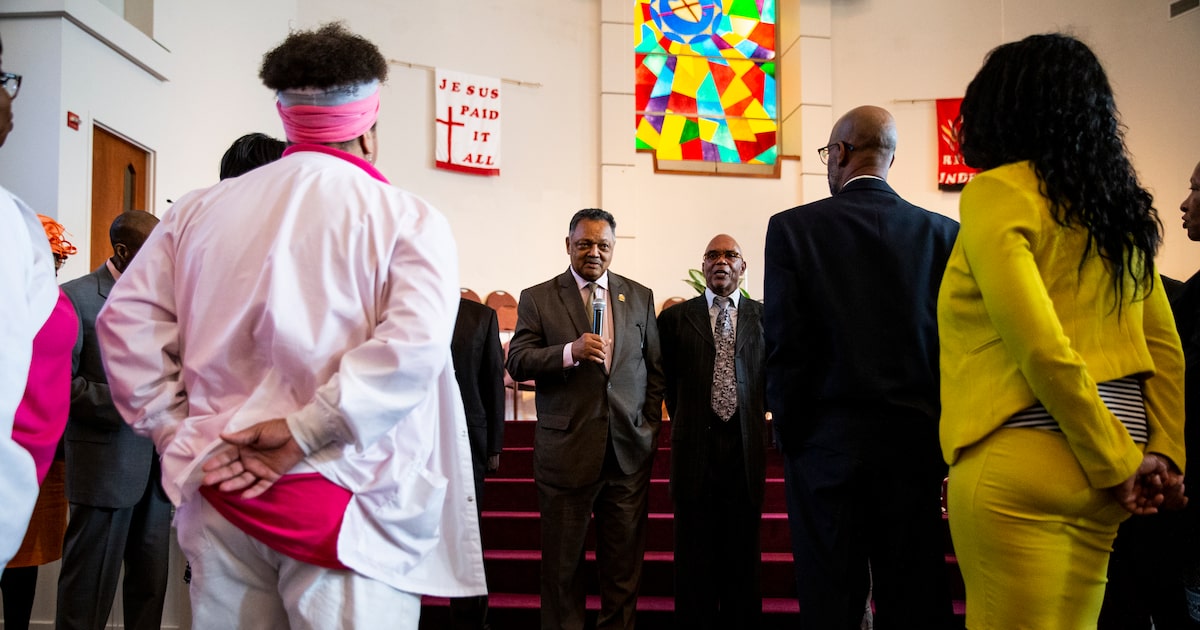
Civil rights leader the Rev. Jesse Jackson was a role model, a mentor and a friend for young Black people in Dallas.
The protege of the Rev. Martin Luther King Jr. and two-time presidential candidate died Tuesday at 84. Santita Jackson confirmed her father, who had a rare neurological disorder, died at home in Chicago, surrounded by family.
Harry Robinson Jr., the president and CEO emeritus of the African American Museum in Dallas for 50 years, said Jackson had visited the city several times. On most of those occasions, Robinson said he preached to a packed congregation at the Good Street Missionary Baptist Church in southern Dallas, where Robinson is a member.
Related

“He made it crystal clear that [he wanted] to preach the gospel. And that’s what Jesse did,” Robinson said. “Jesse was an inspiration to a lot of us, very approachable, and he was a role model to a bunch of us.”
Political Points
For Robinson and his peers, Jackson was not just a nationally known figure later in life, but an early catalyst for civil rights, whose student activism ignited parallel campaigns across the South.
Jackson led a lifetime of crusades in the United States and abroad. His activism included advocating for the poor and underrepresented on issues from voting rights and job opportunities to education and health care. Jackson was called to meet with King at the Lorraine Motel in Memphis shortly before King was killed in 1968. He publicly positioned himself thereafter as King’s successor.
Dallas historian Donald Payton, who met Jackson many times, echoed Robinson, saying Jackson came to Dallas to preach and teach.
Payton said Jackson was more militant than Dallas civil rights leaders. He praised Jackson for continuing the push for civil rights after King’s assassination.
“He was a lifetime soldier,” Payton said.
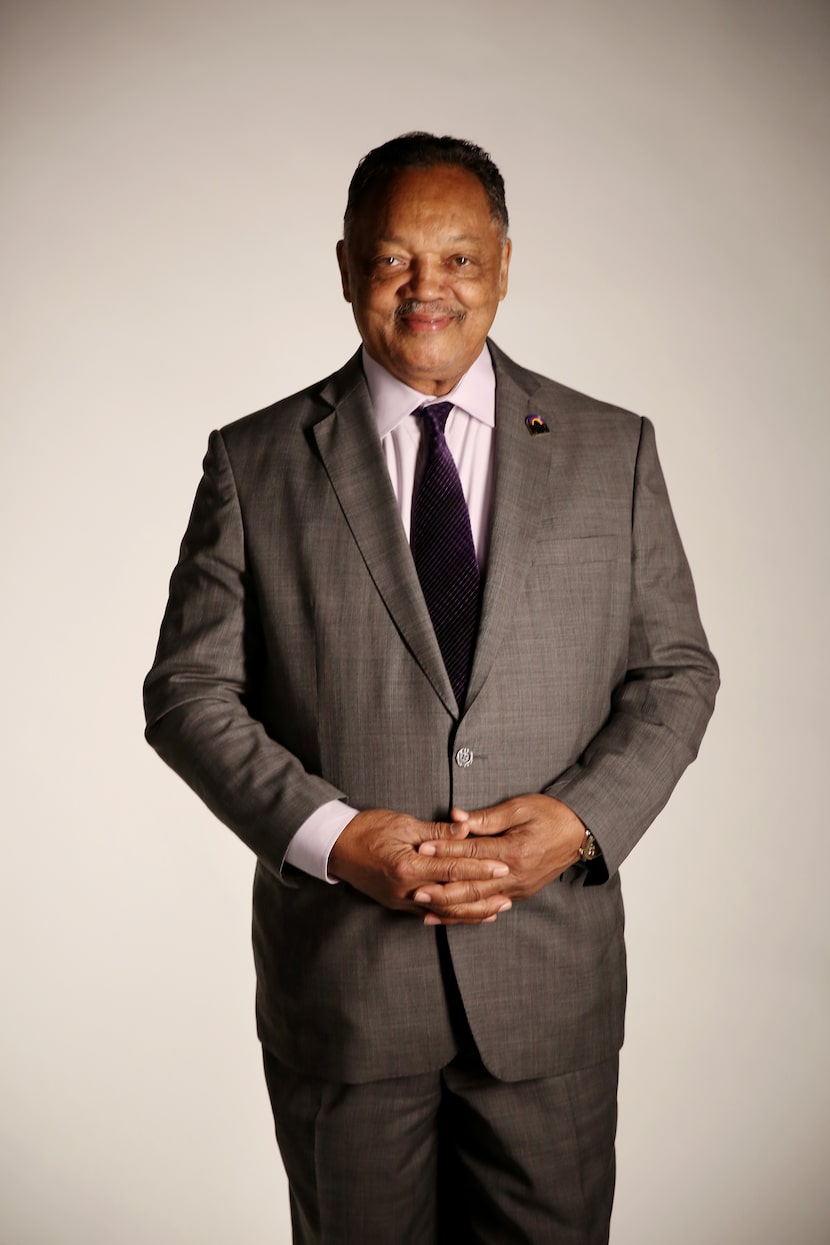
Reverend Jesse Jackson is a civil rights leader and two-time Democratic presidential candidate. He was photographed in The Dallas Morning News photography studio in Dallas Friday April 28, 2017. (Andy Jacobsohn/The Dallas Morning News)
Andy Jacobsohn / Staff Photographer
For others, Jackson’s presidential campaigns inspired Black men to get into politics.
Dallas minister Donald Parish Sr. said the afro and dashiki Jackson sported in the 1970s appealed to a younger generation of leaders, including Dallasites.
“After his presidential campaigns, the Democratic National Committee paid more attention to Black male voices,” Parish said. “He was a forerunner to Barack Obama.”
At the beginning of Tuesday’s Dallas City Council Quality of Life, Arts and Culture Committee meeting, council member Zarin Gracey requested a moment of silence to honor Jackson’s legacy and work.
“I’d like to just have a moment of silence for his impact that he’s had on the quality of life, not just in Dallas directly, but in this country as well,” Gracey said.
Commissioner John Wiley Price also led a moment of silence at the Dallas County Commissioners Court.
Related

Price said he had known Jackson for a long time, and he helped him run his presidential campaign in Dallas in 1984. For Price, Jackson was a good friend, an authentic leader and a mentor he could always count on.
“He took the mantle from Dr. King,” Price said. “And gave hope to people who were hopeless.”
Other leaders in Dallas, including former Dallas Mayor Mike Rawlings, remembered Jackson for his leadership and legacy.
Rawlings said he met with Jackson when he was CEO of Pizza Hut. He said Jackson wanted to make sure the company was helping minorities who wanted to get into the business.
Rawlings said that while Jackson is most known as a civil rights activist, he was skilled at developing relationships with business leaders in an effort to make corporations more inclusive.
“It was a learning experience to sit with a person with his legacy, someone who worked with Martin Luther King,” Rawlings said.
Former Dallas Mayor Ron Kirk praised Jackson’s work in the Civil Rights Movement and beyond.
“What an incredible life that he led of not just agitation but advocacy and never yielding on the principle that all of us deserve dignity,” Kirk said. “I like what he did particularly for young Black boys and girls. He was so inspirational to many people. He told them ‘I am somebody.’”
Kirk said he saw an ailing Jackson last year when the NAACP’s Legal Defense Fund honored the civil rights leader.
“So many of the civil rights leaders from that era are leaving us,” Kirk said.
The Associated Press contributed to this report.
New Orleans celebrates Mardi Gras, the indulgent conclusion of Carnival seasonWhen is Lunar New Year, and how do different Asian families celebrate?