All across the University of Texas at El Paso (UTEP), students walk and drive past numerous works of art that they may never think twice about. From the uniqueness of UTEP’s Bhutanese inspired architecture to gallery exhibits and iconic sculptures.
Mining Minds
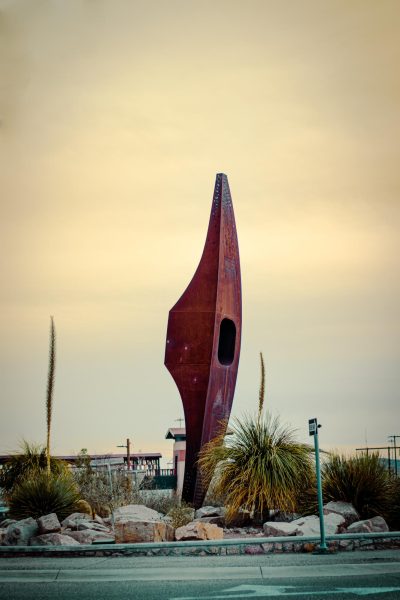 Becoming the popular photoshoot spot on campus the Mining Minds Pickaxe is designed to pay homage to UTEP’s beginnings as a mining school.
One of the most recognized and utilized graduation photoshoot spots on campus might be the Mining Minds pickaxe that stands partially buried in the rock garden on the roundabout by the Sun Bowl garage.
The 25-foot-tall carbon steel sculpture was the creation of Denver artist and sculptor Micheal Clapper in 2010. Aside from being a popular place for students to have their picture taken while showing off their UTEP pride, the rusted pickaxe head was designed as a homage to the university’s origins as a mining school.
Connecting the university’s past and present, Clapper designed the iconic sculpture to be more than a landmark. At night the pickaxe is illuminated by LED lights inside the sculpture. On special occasions like memorials and historic dates, those LED lights glow orange and blue.
Looking closely reveals the binary code perforated into both ends of the pickaxe head. A pattern of ones and zeros that are, according to the UTEP website loosely based on the inspirational quote given during former UTEP president Diana Natalicio’s convocation speech in 2008.
“Believe in yourself and in your dreams. Believe in UTEP and its aspirations. Share the dream!” Natalicio said.
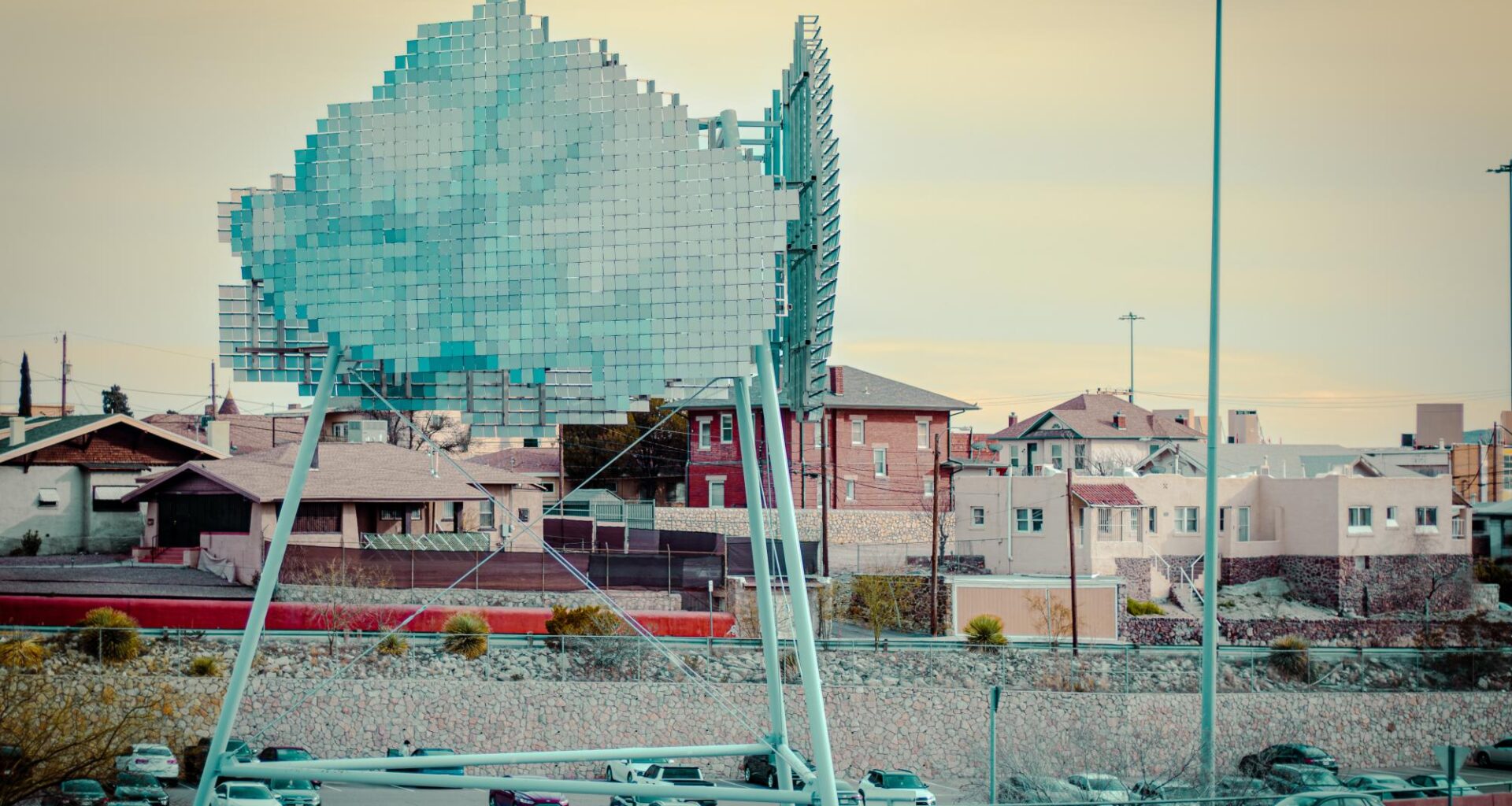
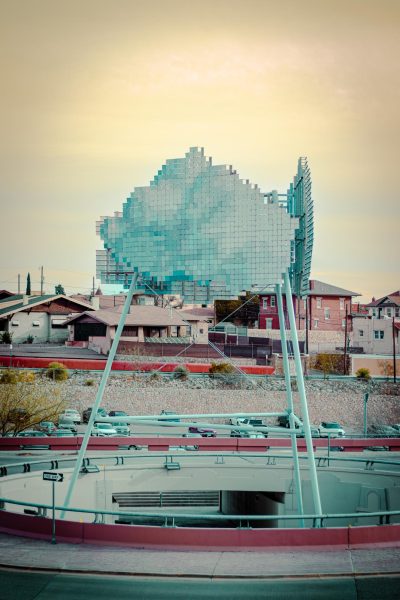 Created by award winning New York artist Donald Lipski “The Cloud” sculpture was designed to change appearance based on weather conditions, the viewers perspective and the time of day. (Nathaniel Flores)
The Cloud
Heading up the road to the roundabout on Schuster Avenue, another work of art functions as a pedestrian underpass. “The Cloud,” was unveiled in 2016 and recognized by Americans for the Arts in 2017 as “one of the nation’s outstanding public arts projects,” according to a
UTEP news release. This piece was created by award winning New York artist Donald Lipski.
Lipski described “The Cloud” in the same UTEP news release as inspired by the prevalent Bhutanese architecture around campus and the nickname given to the small country, The Kingdom of the Clouds.
Taking around two years to build, the three-sided cloud sculpture rises 60 feet above the center of the Schuster roundabout. It was constructed from thousands of multicolored stainless-steel flaps that sway in the breeze.
An interactive art piece that was designed to be viewed in a hundred different ways, The Cloud’s design changes as it reflects the weather, the time of day or from the perspective of the observer.
Bhutanese Altar and Tapestry
The University Library is one of the most frequented buildings on campus, with its six floors and the Texas Western Cafe. It also serves as another prominent home for the Bhutanese artworks UTEP proudly displays. A space where cultural artifacts from Bhutan are integrated into the building’s atmosphere.
One of the most striking pieces is a handcrafted Bhutanese altar displayed along the back of the atrium wall on the second floor. Standing eight feet tall and 23 feet wide across the back wall decorated with vibrant hand painted birds, serpents and flowers. Its deep colors carry religious significance in Bhutan, while carved wooden window frames reflect the light of butter lamps that were traditionally offered to the gods according to information from the UTEP website.
The piece was originally donated to the university by the Asian Society following an exhibition in New York.
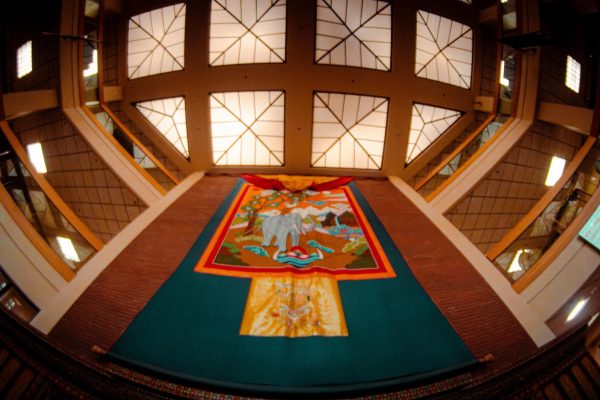 Complementing UTEP’s Bhutanese-inspired architecture, this gift from the Asia Society includes a tapestry featuring an altar and Bhutanese cultural artifacts.
(Nathaniel Flores)
Handing above the alter is another example of Bhutan artwork depicting vibrant colors and powerful symbols that are traditionally found in Bhutanese culture. The Tapestry was initially commissioned in 1987 and hand made by Buddhist monks in the capital of Thimphu according to the same website.
From graduation photos to study breaks, these works of art remain a part of everyday student life, reflecting UTEP’s history and identity. Even when they go unnoticed by students and staff.
Jewel Ocampo is a staff reporter and may be reached at [email protected]