
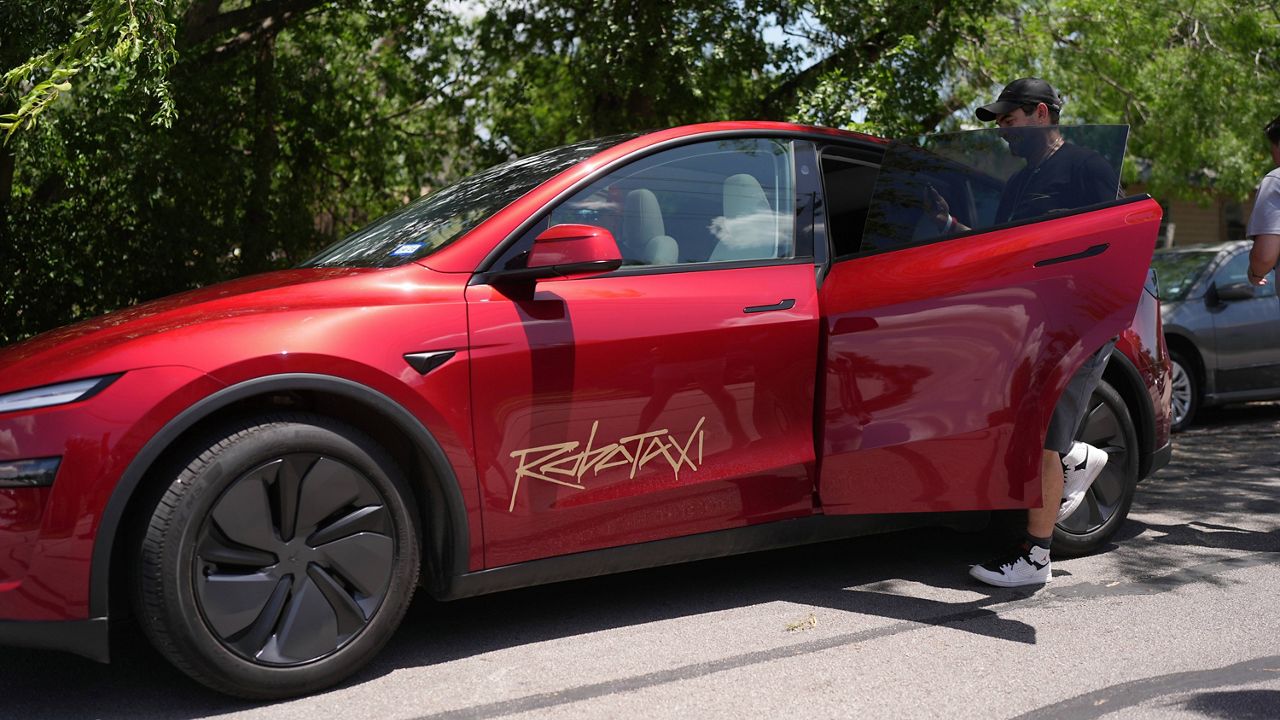
AUSTIN, Texas — Tesla, the Austin-based electric automobile manufacturer, finished production on the first model of its fully autonomous Cybercab robotaxi, according to an X post.
Built at Gigafactory Texas, just outside of Austin, the Cybercab is set to be Tesla’s entry into the world of self-driving vehicles, which includes competitors such as Waymo. Tesla has implemented prototypes in different cities in the country in 2025, with prototypes in Austin having reported several accidents in the city, according to Electrek.
Other controversies involving Telsa’s self-driving mode have caused the U.S. National Highway and Traffic Safety Administration to open an investigation based on multiple reports that the Tesla self-driving mode has broken multiple traffic laws in different states.
“The investigation covered 2.9 million vehicles, essentially all Teslas equipped with full self-driving technology, or FSD. Critics say the name is a misnomer that has lulled drivers into handing full control over to their cars. The federal agency responsible for auto safety said in a letter to Tesla on Dec. 3, 2025 that it was investigating 62 complaints, up from 58 reported incidents in October,” the article stated.
Telsa’s technology for its autonomous vehicles is different from Waymo’s . According to Spectrum News, Waymo uses “cameras, lidar and radar systems to commute through the streets of Austin” while Tesla strictly uses self-driving software.
In abother report, Elon Musk, Telsa’s CEO, stated that the autonomous nature of the vehicles is “pretty much a solved problem” and added that they were going through validation to fix everything for the full production run.
According to an X post by Musk, the Cybercab will start full production in April 2026. The cars will feature no pedals or steering wheels and will cost $30,000, according to the Cybercab website.