
University labs have partnered with a new startup focused on retrieving rare earth minerals from waste sources.
SUPRA Elemental Recovery Inc. launched on Feb. 3 with 11 scientists, including Ph.D. candidates and postdoctoral researchers from three University labs, focused on retrieving rare elements from electronic waste. The company is specifically working on extracting gallium and scandium, which are critical minerals in semiconductor manufacturing, because the United States fully relies on importing those elements, said Katie Durham, CEO and co-founder of SUPRA.
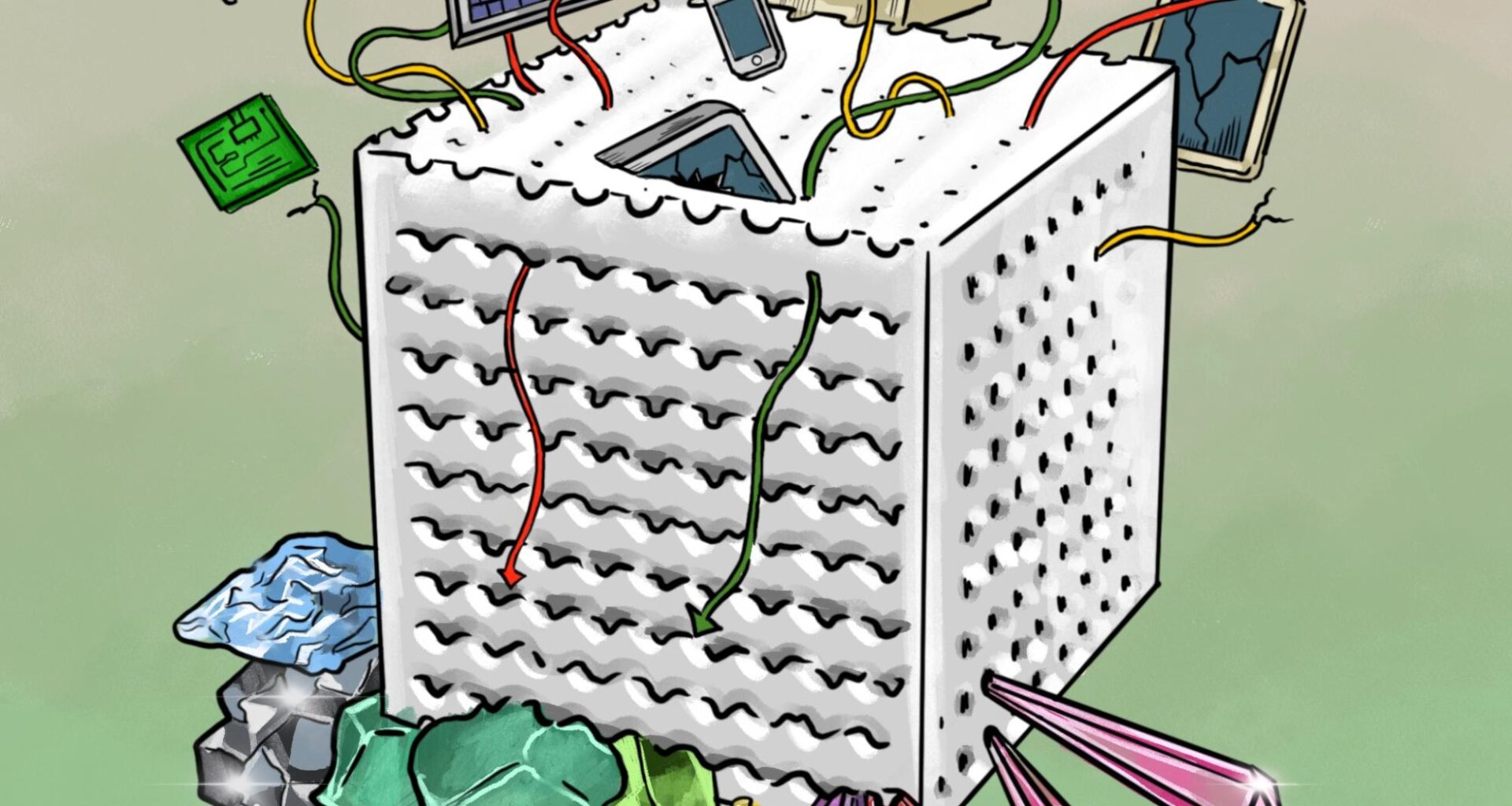
SUPRA technology runs waste, like electronic waste and mine tailings, through 3D printed-cartridges that act as filters. The cartridges, which look like white cubes, contain small receptors that bind to certain elements and extract them. Xiangyu Gao, doctoral candidate in mechanical engineering and SUPRA postdoctoral researcher, said these cartridges could “change the game.”
The cartridges can be adapted to absorb any elements on the periodic table, Durham said, meaning they can easily be inserted into pre-existing infrastructure for a lower cost than implementing entirely new systems.
“Because the cartridges are 3D printed, we can print them in any size or shape,” Durham said. “That means we can do this at a large industrial scale and print more or larger cartridges, and we can do this at a smaller scale with smaller cartridges.”
The “market need” for SUPRA technology is a primary reason why Discovery to Impact, an on-campus organization supporting inventors and researchers, invested in the venture, said Mark Arnold, associate vice president for Discovery to Impact. The organization contributed $250,000 of the startup’s initial $2 million funding using its UT seed fund, a reserve dedicated to investing in early-stage companies.
“We invested in SUPRA because it represents exactly what UT does best: world-class research translated into a real-world solution,” Arnold said.
Discovery to Impact has invested in fields spanning physical, computer and life sciences, and deep and material technologies, Arnold said. SUPRA represents this interdisciplinary focus by blending chemistry, engineering and material sciences.
Emma Medlock, graduate research assistant in the Department of Chemistry, works in SUPRA’s polymer lab, where she focuses on cartridge printing and materials development. She said bridging the gap between the three labs can be difficult, but it’s ultimately a “team effort” from lab members’ engagement.
Rachel Lamb, doctoral candidate in mechanical engineering, takes products from the SUPRA chemistry labs and integrates them into the SUPRA system. Lamb said she enjoys the startup’s collaborative nature, and she hopes to transition to SUPRA full-time after earning her doctorate.
“We have seen … some pretty promising results in the lab setting,” Lamb said. “I’m very excited for the future of this company, and I think it’s going to be a great addition to UT’s system.”