
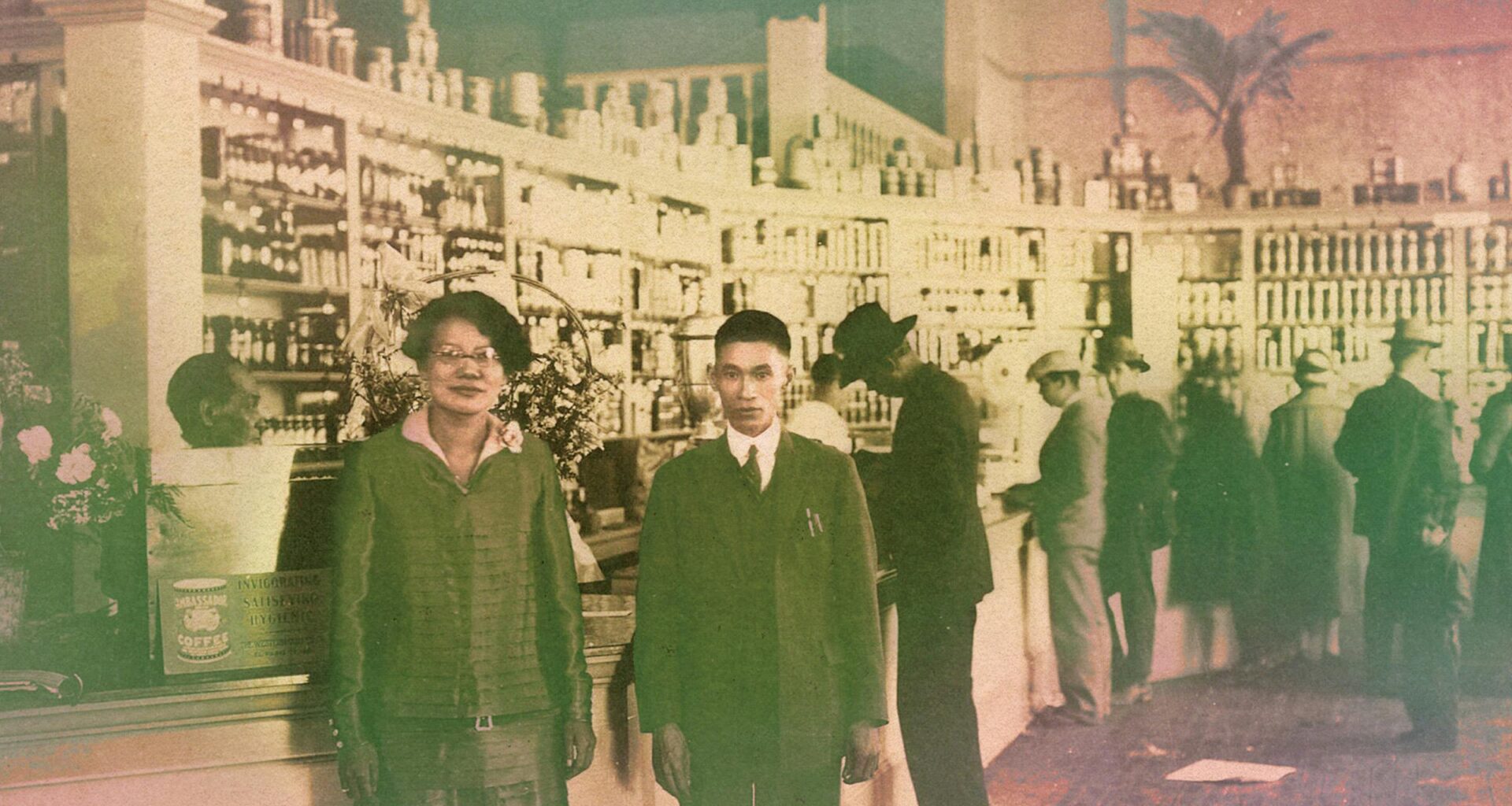
Unless you’re an El Pasoan or a sojourner who has visited the downtown museum that richly captures the city’s complex history, you probably wouldn’t know that it’s been a hell of a century for Texas’s sixth-largest metropolis. Numerous recent scholarly works have begun to detail El Paso’s neglected epic legacy: There have been legendary riots; spiritually inspired insurgencies; flu epidemics amid revolutionary fervors, conspiracies, and intrigues; and blistering immigration crackdowns, mass deportations, and scourges of violence against Mexicans, Mexican Americans, and others who were seen as foreign. At least a few wars—the Mexican Revolution, the long war on drugs, the war on terror—have left a deep impression.
Few days in the city’s history, though, have reverberated as profoundly as August 3, 2019, when a white supremacist drove into town from North Texas with the stated aim of killing Mexicans. He murdered 23 people and injured 22 at a busy Walmart. It was yet another brick in a wall of misery that has been under construction for longer than anyone can remember. The sequence of discord, loss, trauma, and recovery eerily repeats across generations.
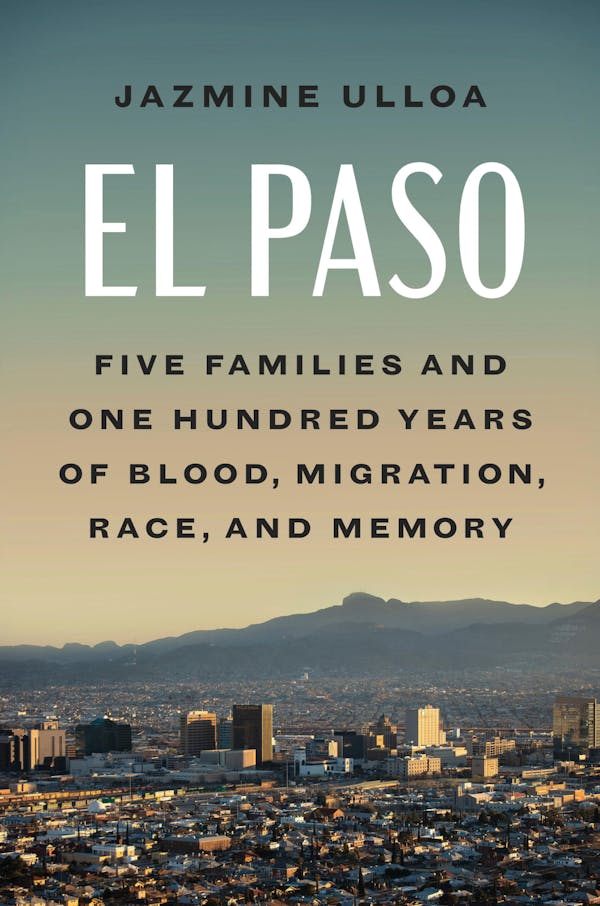
The Walmart massacre had already inspired one book, the late journalist Richard Parker’s The Crossing: El Paso, the Southwest, and America’s Forgotten Origin Story, which was published last March (and included a laudatory blurb from me). Now, almost exactly a year later, we have a second, Jazmine Ulloa’s El Paso: Five Families and One Hundred Years of Blood, Migration, Race, and Memory. In some ways, the two books share a mission: In the wake of tragedy, both writers wish to rescue their hometown from its also-ran status as a city at the edge of an empire. Against that notion, Parker argued that El Paso is an “unacknowledged cradle of American history.” Ulloa similarly asserts that the city “had not been given its due place in the founding mythos of our country.”
Yet the books are very different in method. Parker’s telling spans the millennia, commencing in the primeval landscape of 40,000 years ago. He chronicles the ensuing centuries of conflict, starting from the battles between Indigenous groups and continuing through colonialist incursions, the reverberations of the Texas and Mexican Revolutions, and the Walmart massacre. Throughout, he highlights the resilience of Mexican Americans aspiring to become equal citizens of the United States. Parker ends with a call for El Paso to secede from Texas and join New Mexico, a repudiation of his home state’s hostility to immigrants.
Ulloa, a national reporter for The New York Times, focuses on a narrower time frame—her narrative begins in the nineteenth century—in a work that’s part reportage, part historical chronicle, part memoir. The book’s structure is ambitious: Ulloa interweaves her family’s fraught history along the border with the lives of five El Paso families that arrived from Latin America over several generations. The Martinezes, the Holguins, the Rubios, the Mura’ls, and the Chews came, respectively, from various regions of northern Mexico, the Central American world of the Ixil Maya, and southern China by way of Peru. For all their diverse journeys, the families shared the experience of finding their way to the American dream in the dual worlds of Juárez and El Paso.
I can’t think of another work focused on the twentieth-century borderlands that attempts something at this scale. And as anyone who knows El Paso knows, there’s nothing forced about the disparate choices that Ulloa has made. The city has long been a haven for Mexican, Anglo, Chinese, Jewish, Syrian, Greek, Lebanese, and Slavic workers. The families Ulloa follows are made up of grocers, entrepreneurs, agricultural workers, bus drivers, judges, and elected officials. To her eyes, El Paso isn’t just a site of conflict; it’s a landlocked Ellis Island.
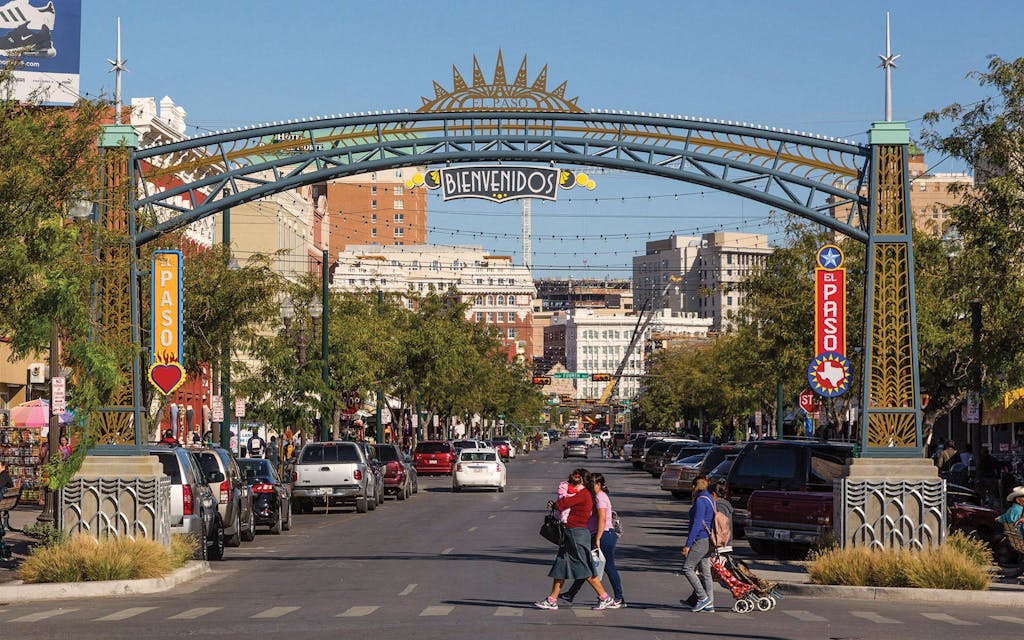 One of the Paseo de las Luces arches on South El Paso Street, which serves as a gateway to Juárez. Charles O. Cecil/Alamy
The saga of the Chew family provides a window into both Ulloa’s methodology and the city’s mosaic-like history. Carlos Wong, the scion of a wealthy family from Guangzhou, China, arrived in Peru in the nineteenth century, where he helped other Chinese immigrants find work building railroads and then became a successful hotelier in Guadalajara. He married a Mexican woman of Indigenous ancestry, and their daughter, Herlinda, married Antonio Chew, a prosperous grocer in Juárez. Chew’s store was a hub for Villista revolutionaries, and Herlinda was famously photographed sporting a bandolier beneath the legend “Yaqui Indian Girl a Revolutionist.” She eventually worked as an advocate for immigrant rights, helping Chinese Mexicans navigate the Chinese Exclusion Act of 1882. Several of her children would become esteemed judges—and her great-granddaughter Linda Chew presided over the Walmart killer’s arraignment.
Those sorts of cultural and political collisions and combinations are hardly unique to the Chew clan. The El Paso that Ulloa portrays is a frontier agora of liberal thought, with a sometimes-prophetic aura. The spiritual healer Teresa Urrea, “la Santa de Cábora,” who made a home in the city late in the nineteenth century, inspired an ill-fated uprising of her believers against the landed elite in Mexico. The politics of the Mexican Revolution took shape, in part, in the neighborhoods of El Paso, where exiled thinkers and activists imagined a country liberated from the exploitation of dictator Porfirio Díaz’s technocratic elites. And, Ulloa argues, El Paso is where the philosopher and
revolutionary-era education minister José Vasconcelos’s vision of Mexico’s mestizo “la raza cósmica,” a race of all races, manifested in the early twentieth century.
Yet decade after decade, reality keeps dragging those dreams down to earth. Calls for mass deportations mount. Immigrants are subjected to delousing baths in Zyklon B. Riots and unrest ensue. If much of that sounds familiar in 2026, Ulloa reminds us that El Paso, and the nation, has been here before.
Despite this litany of setbacks, what emerges from El Paso is the persistent force of “la conciencia colectiva” that Ulloa believes El Paso embraces. It’s an ethic of mutual aid and caring that nurtures the families she follows through all their tragedies and triumphs.
In this sense, perhaps Ulloa has gotten one thing not quite right. She calls her book “an attempt to restore El Paso to its rightful position: at the center, rather than at the margins, of our American story.” But perhaps the margins are exactly where El Paso stands, and not just geographically. The city isn’t the cradle of a particularly American creed; as Ulloa tells it, El Paso challenges our nation’s survival of the fittest ethos, offering a heritage of compassion to which we pay too little attention, much to our detriment.
Ulloa, who, unusually for a daily newspaper journalist, skillfully deploys a lyrical literary voice, portrays El Paso as an emblem of Texan and American imminence. This book—her first and, one trusts, not her last—can be read as a deeply moving record of our fitful attempts to become a state and a nation that welcome people from all over the world. Or, if we don’t heed El Paso’s history and pay attention to its present, that fail to do so.
When you buy a book using this link, a portion of your purchase goes to independent bookstores and Texas Monthly receives a commission. Thank you for supporting our journalism.
This article originally appeared in the March 2026 issue of Texas Monthly with the headline “A Landlocked Ellis Island.” Subscribe today.
Opening image credit: El Paso Museum of History/The Chew Family/University of Texas at El Paso Library Special Collections Department, Eva Ross; retouching: Texas Monthly
When you buy a book using a link on this page, a portion of your purchase goes to independent bookstores and Texas Monthly receives a commission. Thank you for supporting our journalism.
Read Next