
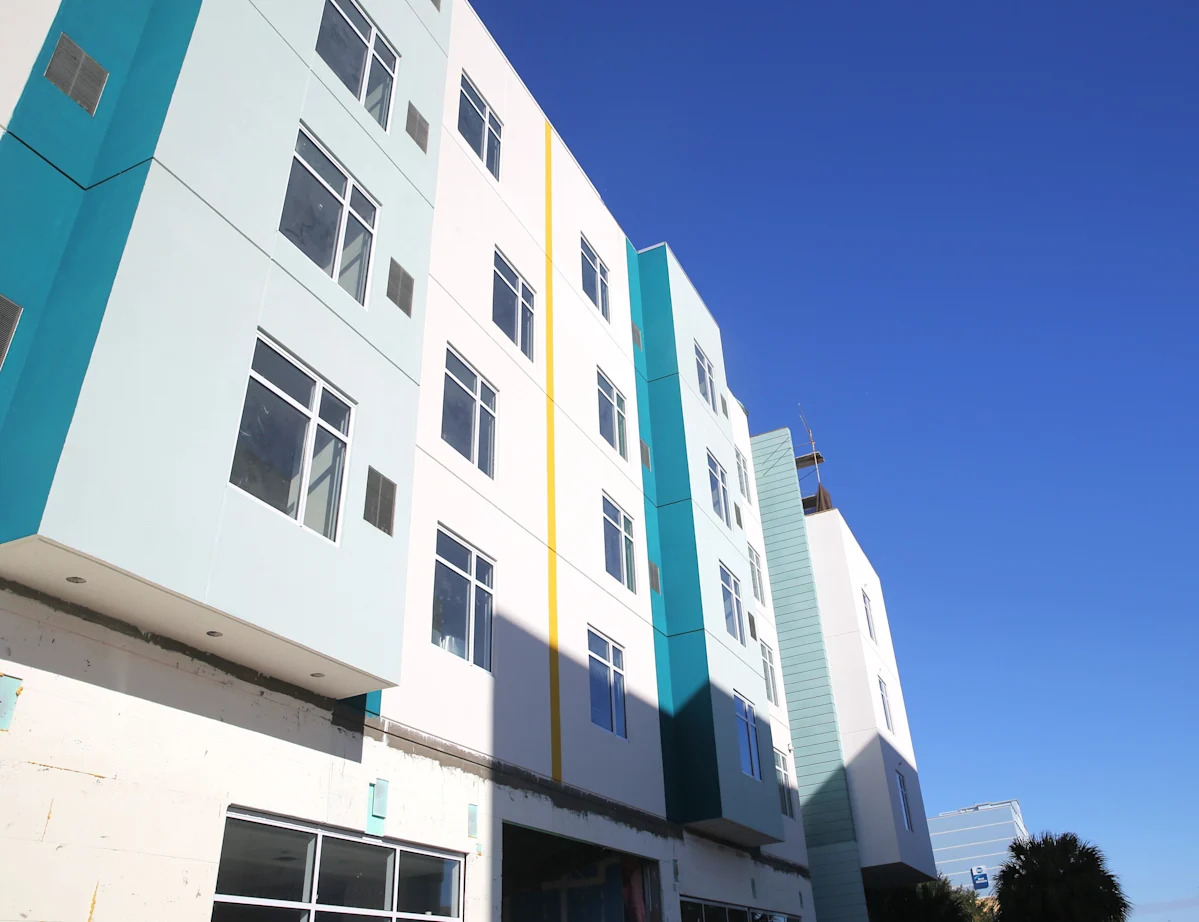
An external administrative investigation into tax incentives for a downtown hotel development found no criminal wrongdoing, according to an attorney hired by the Corpus Christi City Council to look into the matter.
It is the second report in recent weeks that has stated there were no criminal violations involved in the funding for a Homewood Suites hotel.
Federal, state and local law enforcement agencies all closed their criminal investigations by the end of December, according to recently released public documents, and the Nueces County District Attorney’s Office turned down taking up the case.
City Councilwoman Carolyn Vaughn, after viewing both presentations during the City Council’s Feb. 17 meeting, described the reports as saying “the same thing.”
“I don’t think you can go any further than that,” she said, addressing Corpus Christi Police Department Deputy Chief Billy Breedlove. “All I wanted was truth and transparency, and I think that’s what we got from you guys, and that’s all we can ask.”
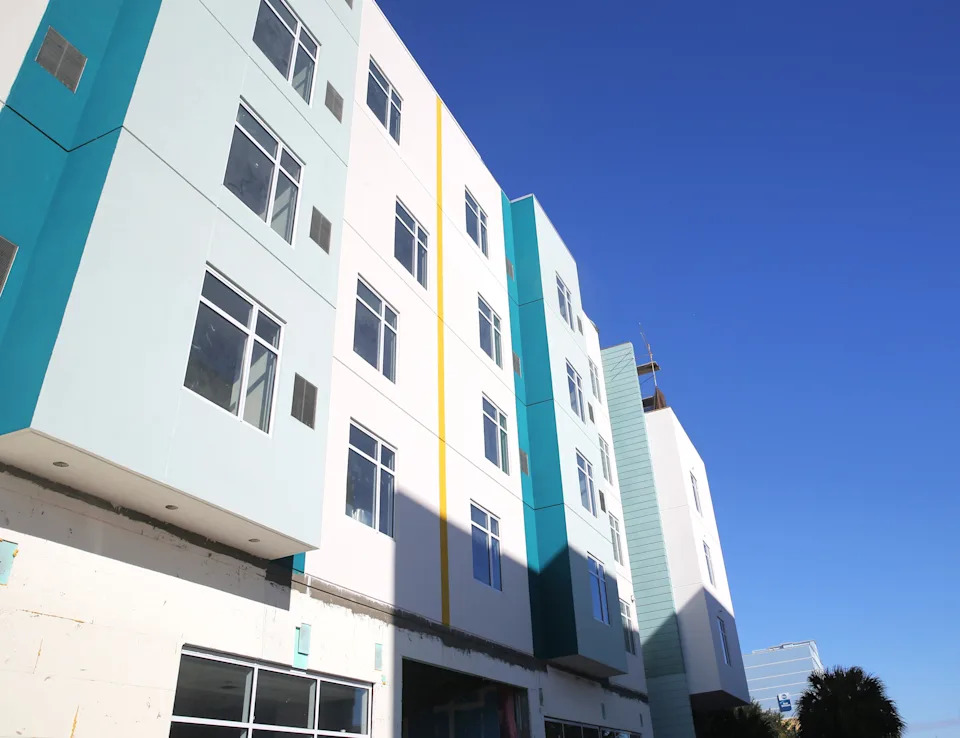
Construction continues on a Homewood Suites hotel in downtown Corpus Christi on Feb. 6.
The controversy
The controversy that both investigations addressed stems from the 2024 approval of about $2 million in tax incentives to support further development of a downtown Homewood Suites.
At the crux of the debate is a slide that had appeared in hotel developer Elevate QOF LLC’s presentation pitching the project to the Type B board, which oversees the allocation of sales tax revenue, and the City Council, which is responsible for affirming or rejecting Type B board agreements.
Timeline of the hotel controversy: Here’s what led up to the now-closed Homewood Suites investigation
The slide contained a screenshot of a page on the Federal Emergency Management Agency’s website showing an April 2022 news release announcing that new flood maps would become official in October 2023.
Neither the date of the news release nor the news release identification number appeared on the slide.
As part of a December 2023 presentation to the Type B board, hotel developers discussed the flood maps, suggesting that the changes had been unanticipated.
The $2 million funding request would go to meeting those requirements, as well as helping build first-floor amenities, said Philip Ramirez, one of the project developers, at the time.
A CCPD investigation report includes a summary accounting of an interview with Ramirez, in which it is stated that Ramirez told detectives that he had created the presentation quickly and did not review it before sending it.
It was a “formatting error,” he told detectives, according to the interview summary.
At the time the agreement was initially approved, then-Type B board President Leah Pagan Olivarri stated the incentives were being approved not because of the FEMA considerations, but instead as consideration that the project would spur new development in the surrounding area.
CCPD Presentation on Homewood Suites by callertimes
City Council discussions in February 2024, when the tax incentives were approved in the first of two votes, revolved largely around the FEMA aspects.
Descriptions in city records for a second vote two months later, in which a split council affirmed the first vote, focused on the project supporting development such as retail, public space and dining areas.
Debate has since ensued over whether the slide was an inadvertent oversight or had been intentionally modified with the aim to mislead — and how much the council and Type B board relied on it in their decision-making.
The administrative investigation
An executive summary of the findings of the external investigation, led by attorney Daniel Ray, was publicly disclosed after an hours-long executive session on Feb. 17.
His inquiry, in part, was aimed at evaluating whether criminal conduct, such as fraud or forgery, had been used to procure the funding and, if so, whether that would invalidate the ordinance approved by the council to award the incentives.
Reaching those answers involved a broad scope of reviewing thousands of pages of documents, as well as existing depositions in pending litigation, and independent interviews, Ray said.
He said that although the slide “appears to have been intentionally altered to cover the dates that appear on the government website,” there had been “no prosecutable criminal fraud or forgery that’s been established.”
It wasn’t a federal document, Ray said, describing it instead as “a presentation slide incorporating a screenshot” that was not ultimately relied upon in the council’s vote.
“The record may reflect poor judgment in presentation practices — up to and including intentional alteration of one of the slides — but the legal threshold for criminal fraud and forgery in a criminal setting has not been met,” he said.
Ray also said that the ordinance remains valid — that although the text of a caption of the ordinance had changed, it was the content of what was in the ordinance itself that would matter — and in this case, that had not changed between the first and second votes.
The funding “rested primarily on economic development metrics,” he said.
City officials have the option of rescinding the ordinance, ratifying and affirming the ordinance, or waiting until the conclusion of a pending civil case, Ray said.
He also provided a short series of suggested improvements.
Among them is policy that those requesting government funding using items such as screenshots be required to provide additional documentation, such as a URL, date and time of the capture of the screenshot, followed by staff verification of the documentation.
The police investigation
An investigation by federal, state and local law enforcement has not resulted in criminal charges, and the Nueces County District Attorney’s Office declined to take the case, according to CCPD documents.
CCPD supervisors on Feb. 17 presented their findings, also, to the council. Their inquiry was intended to determine whether there had been illegal actions, and not “examine any violations of the City Charter, Texas Open Meetings Act, City ethical rules, or any civil law,” according to a PowerPoint presentation.
The investigation “was unable to establish probable cause or otherwise substantiate any violation of applicable State or Federal criminal law,” it stated. “Accordingly, the investigation is hereby deemed closed, with no further criminal inquiry warranted at this time.”
There was “no allegation or evidence of a quid pro quo,” according to the PowerPoint, and an evaluation by the district attorney’s office “concluded the facts and circumstances in this instance did not constitute a criminal violation.”
Litigation
A lawsuit filed related to the award of tax incentives remains pending in the court system. Its plaintiff, Ajit David, was among those who spoke in public comment on Feb. 17.
The competing hotelier filed a petition for declaratory judgment in September 2024, seeking that a judge find the ordinance granting the sales tax incentives to Elevate QOF LLC “void, invalid, and not enforceable.”
The petition also asserted that the council improperly approved the tax incentives as part of an “ongoing false narrative” about Elevate QOF LLC’s awareness of the FEMA maps and the allegedly altered image.
Several people in public comment Feb. 17 did not address the council, but provided what appeared to be compilations of clips from depositions in the civil case, including those provided by Mayor Paulette Guajardo, City Councilman Everett Roy, City Manager Peter Zanoni, then-Assistant City Manager Heather Hurlbert and Mike Culbertson, CEO of the Corpus Christi Regional Economic Development Corp.
This article originally appeared on Corpus Christi Caller Times: Second investigation finds no criminal wrongdoing in hotel case