
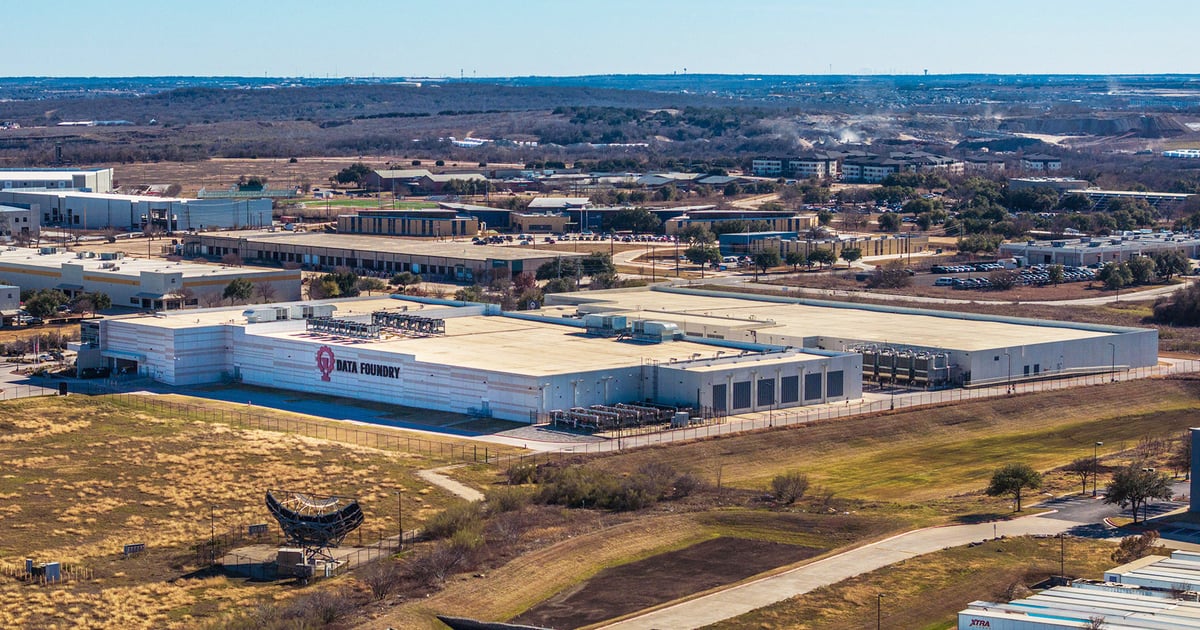
The North American data center industry has entered a new phase of expansion, driven by hyperscale and AI demand that has pushed vacancy rates to just 1% for the second consecutive year, according to JLL’s latest market analysis.
With 39 GW of active capacity tracked across the region and a substantial 35 GW pipeline under construction, the industry is expanding rapidly – but not where it traditionally has.
Nearly two-thirds of new capacity is being built outside established hubs such as Northern Virginia and Silicon Valley, signaling a structural shift in how and where infrastructure is deployed.
Texas is emerging as the biggest beneficiary of this expansion, with 6.5 GW currently under construction – enough to position the state to overtake Northern Virginia as the world’s largest data center market by 2030.
Frontier markets such as Tennessee, Wisconsin, and Ohio are also gaining traction, fueled by access to power, available land, and favorable business conditions. Project scale is accelerating sharply, with more than 10 developments exceeding 1 GW now underway, reflecting the immense infrastructure demands of AI workloads.
Supply shortages are driving significant pricing pressure. Data center rents rose 9% in 2025, bringing the increase since 2020 to 60%, with large deployments above 1 MW seeing increases of up to 13%.
The report noted that most new leases now include annual escalations of at least 3%, and tenants are securing capacity years in advance, often targeting delivery in 2027 or later.
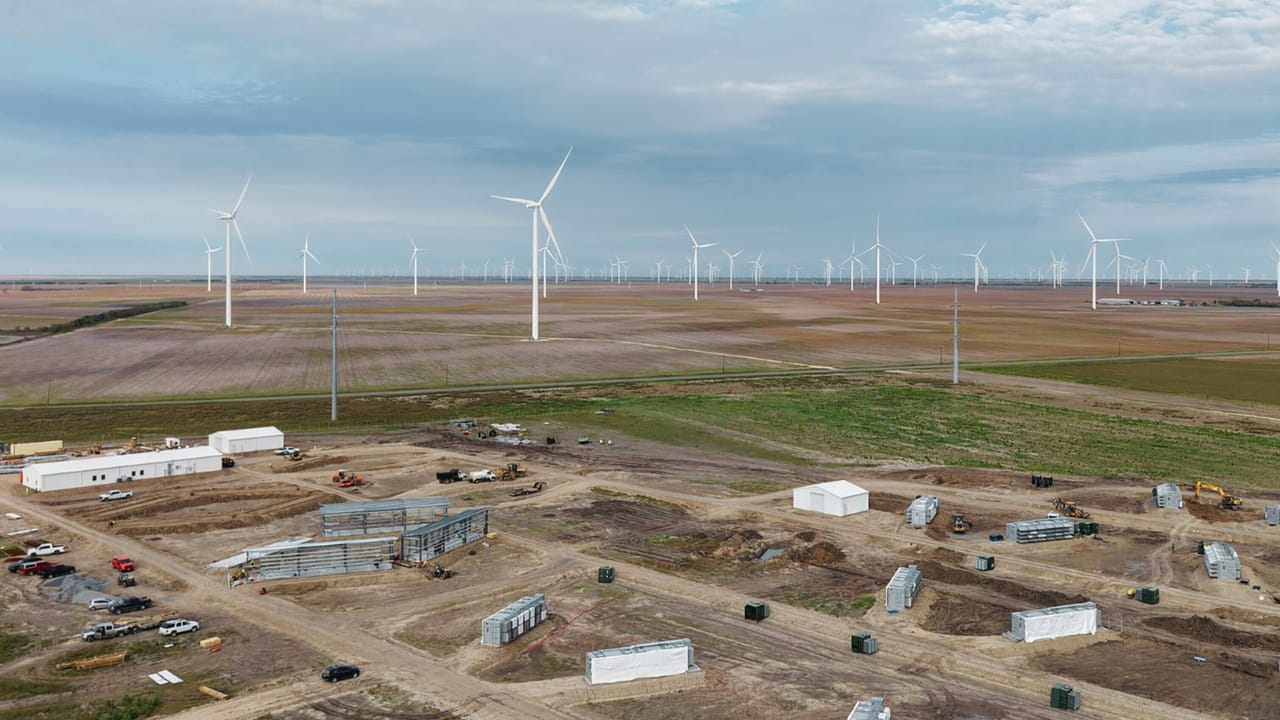
Soluna’s renewable energy-powered Project Kati 2 site under construction in Willacy County, Texas. (Image: Soluna)
Hyperscalers Driving Growth
Hyperscalers remain the primary force behind this growth, with the top five cloud providers planning $710 billion in capital expenditures in 2026 alone – enough to support 35 GW of global capacity. AI firms such as OpenAI and Anthropic accounted for an additional 10 GW in announced projects, while neocloud providers leased roughly 1 GW.
However, power constraints remain a critical bottleneck, with grid connection timelines stretching to four years or more and forcing developers to pursue new markets and interim power strategies.
Curt Holcomb, vice chairman, data center solutions at JLL, told Data Center Knowledge that large-scale requirements for hyperscalers are being pushed out to timelines that align with utilities’ schedules for delivering large-load electric capacity.
“Most new large loads are looking at late 2028 and into 2029 for the first increment of new power capacity being brought to the market by the utilities,” he said.
Holcomb added that large users are reexamining behind-the-meter opportunities that may involve the end users/hyperscalers building their own on-site electric generation to meet their demand timelines.
He pointed out that the data center market is chasing power capacity, so markets that can provide capacity are winning.
“These markets have adequate transmission infrastructure, excess power generation capability, and the ability to bring new generation to market,” he said. “Texas is the best example of a market that has all of the above.”
Texas and more specifically, the ERCOT grid, has more “fuel,” in the form of solar, wind, and natural gas, to more easily add generation than any other region of the US.
Power Availability, Grid Timelines
Bruno Berti, senior vice president of global product management for NTT, told Data Center Knowledge that power availability and grid interconnection timelines are now the “defining factors” shaping AI data center development in 2026, particularly in emerging and frontier markets.
“As demand for high‑density AI workloads accelerates, developers are increasingly following power, prioritizing locations with faster access to firm energy, proximity to generation, or the ability to support dedicated infrastructure,” he said.
Berti added that grid delays are also driving changes in how facilities are built, with more phased deployments, modular campuses, and greater reliance on on‑site generation, microgrids, and hybrid energy strategies to bring capacity online faster.
“In frontier markets, success hinges on early collaboration with utilities and governments, as well as a willingness to co‑invest in energy infrastructure,” he said. “Ultimately, energy strategy and data center strategy have fully converged, making power a core part of how AI capacity is planned, delivered, and scaled.”