
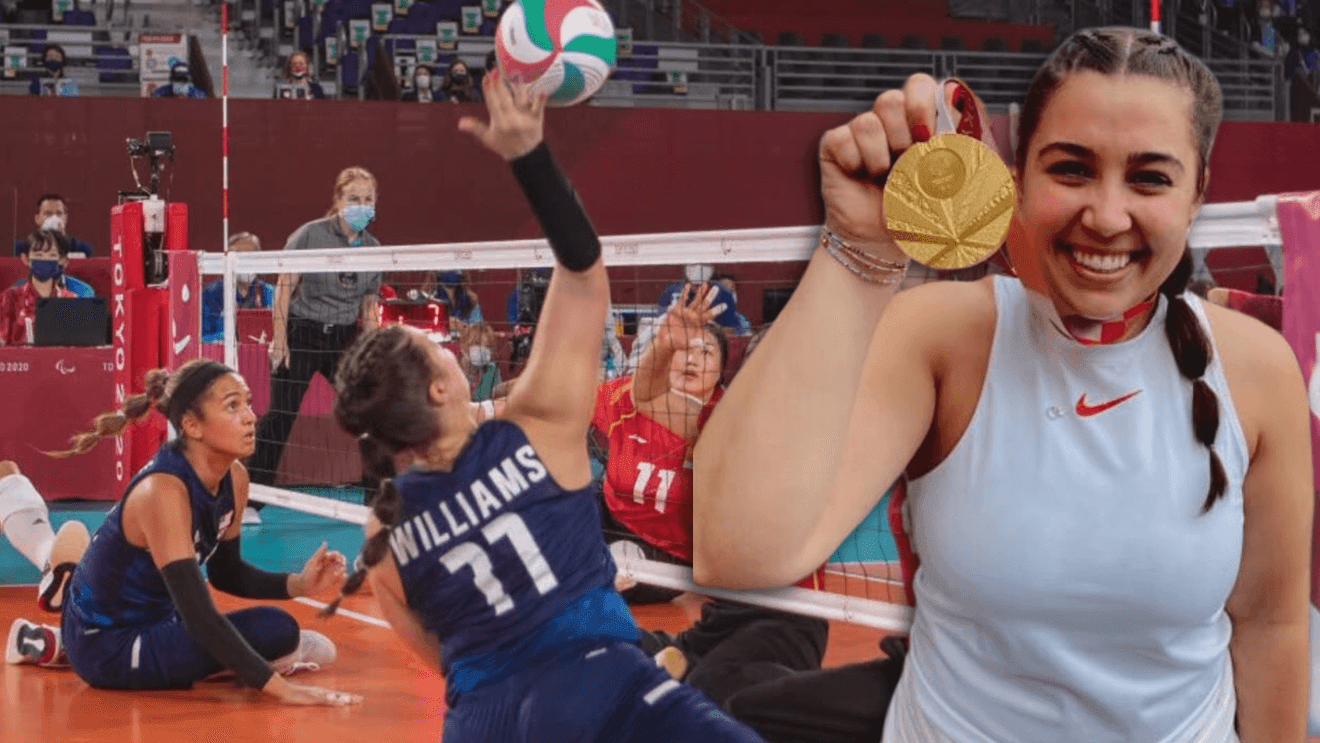
SAN ANTONIO – Every year, about 15,000 children in the United States are diagnosed with cancer, a staggering number highlighted on International Childhood Cancer Day as advocates push for greater awareness and action to help more children survive.
Survival rates vary widely depending on where a child lives. In low- and middle-income countries, only about 30 percent of children survive, while in higher-income countries, survival rates climb to nearly 80 percent.
For Jillian Williams, a Texas woman and Paralympic gold medalist, the fight became personal in 2016 on her 19th birthday, when she was diagnosed with Ewing’s sarcoma, a rare type of pediatric bone cancer that makes up about 1 percent of all childhood cancers.
“I was 19, I was in college, I was finally in the ‘adult phase’ when I was diagnosed,” Williams said.
Doctors say Ewing’s sarcoma can develop in patients as young as 15 and as old as 25. In Williams’ case, the tumor developed in her distal femur near the knee.
“It does commonly present itself near the knee joint, in the knee joint that’s where the femur is, sort of the end of the femur is part of the knee joint, so that’s a very common location for this tumor,” said Dr. Aaron Sugalski, a pediatric oncologist with University Health and UT Health.
Williams was treated at University Health in San Antonio, where doctors discussed options that can include chemotherapy and surgery.
“We treat it with chemotherapy as well as surgery, can be a different variety of surgeries depending on the location of the tumor, as well as motivation of the patient; there’s many different factors that go into that,” Sugalski said.
Doctors ultimately amputated Williams’ leg, removing a small portion of her knee. Williams said the difficult decision was worth it to have a fulfilling life moving forward. After surgery, she set a goal to stay active, joining a sitting volleyball team in college. That determination helped propel her to the top of the sport, where she won a gold medal in sitting volleyball at the 2020 Tokyo Summer Paralympics.
“When I was playing in college, I laughed. I was talking to Elizabeth yesterday that I would have never been a professional athlete with two legs, so being one, with one, has been absolutely amazing,” Williams said.
Williams said her message to other children battling cancer is to never give up, no matter what life brings.
“After being diagnosed, you stare at death in the face at any age, but at that point, you get to choose to live life to the fullest or are you gonna let it take over and let it be your identity? And for me it was ‘I’m gonna live life to the fullest,’” she said.
Doctors say treatment for Ewing’s sarcoma lasts about 10 months and often includes significant inpatient stays and chemotherapy. After treatment ends, follow-up care continues for years.
“Once the patients are off therapy, they come periodically every 3 months for a few years to make sure there is not a tumor recurrence, and then those space out to once a year visits, we call those ‘survivorship visits,’” Sugalski said.
Williams said having a strong support system, including medical staff, is key during treatment and throughout recovery.