
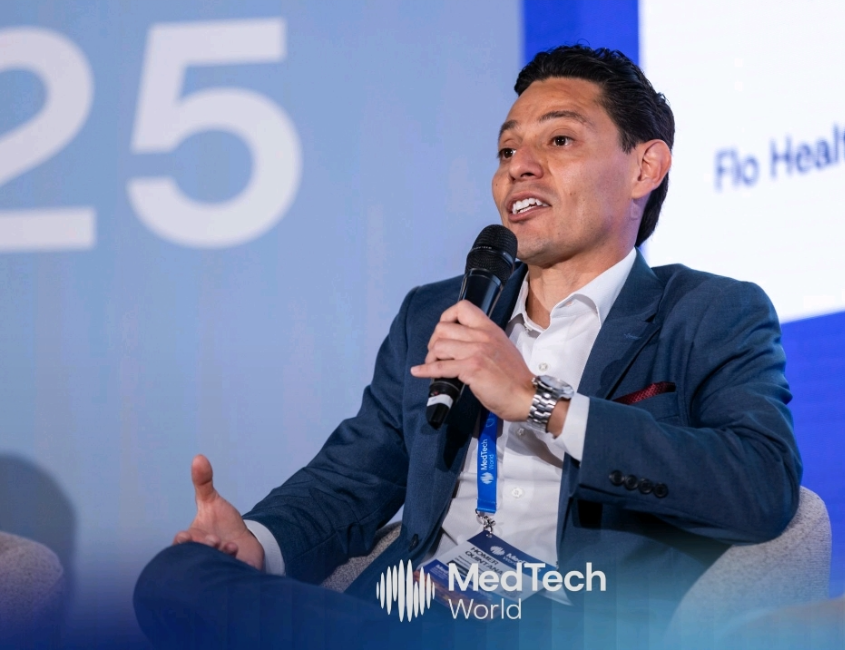
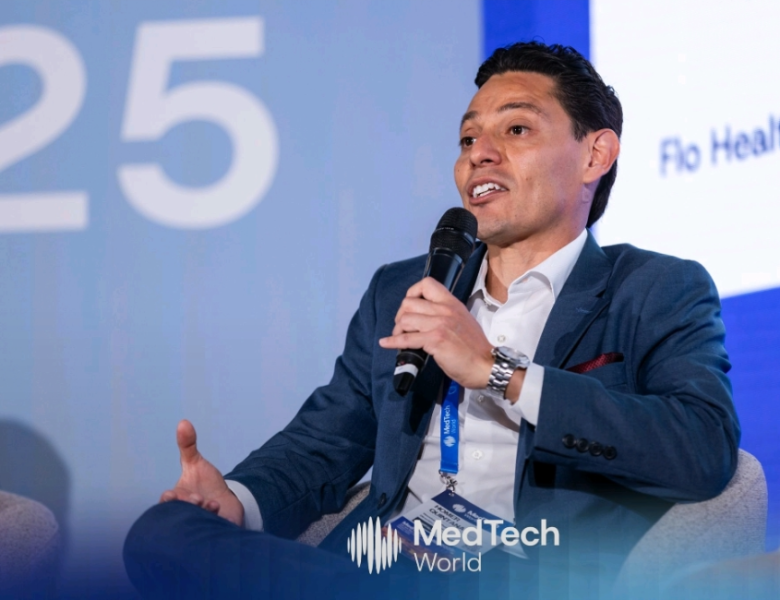
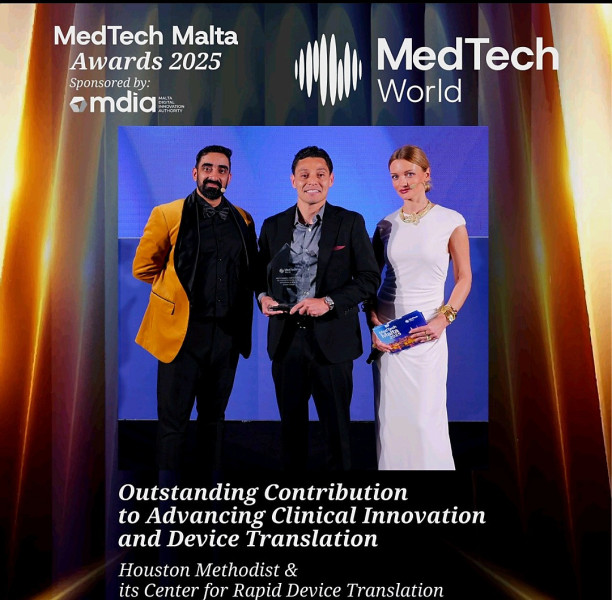
 University of St. Thomas (UST) Alumnus Homer Quintana, MLA and MCTM ‘08, is making ideas come alive as the Program Director for Center for Rapid Device Translation at Houston Methodist. He assists medical device companies as they drive their technology to the clinic with safety, accuracy, and efficiency. Also, Quintana, on behalf of Houston Methodist and the Center for Rapid Device Translation, was honored with an award for “Outstanding Contribution to Advancing Clinical Innovation” at the Medtech World Conference in Malta in November 2025.
Quintana holds two graduate degrees from UST and is an esteemed member of the first graduating cohort of the Master in Clinical Translation Management program in the Cameron School of Business at UST, where he is also an adjunct professor. Quintana also serves as an advisor to biotechnology and life sciences startups in the Houston ecosystem and speaks in local, national and international engagements championing innovation occurring at the Texas Medical Center.
Recently, he joined Senior Director of Communications Bridget Richardson for a special interview about “Why UST” answering five key questions about his experience and his current career path.
Bridget Richardson: Question 1: Why did you choose Cameron School of Business for graduate education?
Homer Quintana: The Master in Clinical Translation Management (MCTM) program offered by the Cameron School of Business (CSB) at UST was jointly developed with Houston Methodist in order to promote a workforce capable of translating innovative technologies from bench to bedside with a summative understanding of the necessary disciplines involved in order to make the arduous road of commercialization a reality for new clinical technologies. The Cameron School of Business is well-regarded with personalized attention to the student given their low student to faculty ratio and academic heritage, and Houston Methodist is the number one hospital in the state of Texas engaged in academic research focused on developing therapeutics, devices, and diagnostics across multiple adult specialties. The MCTM program allowed for real-world engagement with clinicians and scientists developing medical technologies along with faculty trained in all facets involved in taking an idea from concept to commercialization. The MCTM exists at the juncture of innovation and healthcare near the heart of the largest medical complex in the world, the Texas Medical Center filled with innovative institutions and opportunities to impact healthcare. Pursuing the MCTM degree was an unmatched opportunity at the right time and place for my personal and career development goals.
BR: Question 2: Can you share a fond memory of your time at UST?
HQ: I truly value the relationships built with students and professors beyond academic spaces. Taking in a UST Celts basketball game or going to the Black Lab for a pint and catching up with classmates and faculty on what was going on in our lives and discussing interests and hobbies. More importantly, understanding that faculty were available and understood the responsibilities and rigors of life beyond the classroom. These interactions emphasized that I am valued for the whole person rather than just the academic and professional aspects. I will always cherish the conversations and laughter had with Drs. Jack Follis, may he rest in peace, Amy Wright, and other members of the MCTM faculty, particularly when we would get together in Link Lee Mansion with MCTM students and alumni to celebrate the holidays. Community is essential, and UST has a very strong sense of community.
BR: Question 3: What skills or perspectives gained in your CSB program have been most useful in your career?
HQ: The ability to communicate with groups across different areas of expertise and understand and bridge those different groups in a common goal to drive innovation forward. In a world consisting of healthcare providers, researchers, engineers, and a handful of other highly specialized roles, there is a lack of understanding the necessary trajectory for medical technology to reach its end goal: the patient. The MCTM education allows students to not only learn about these roles but communicate with each one in their own relevant expertise, ensuring that nothing is lost along the translational development of a technology. It is so gratifying being able to hold a conversation with the relevant party and contributing to moving that technology forward to patient populations which need new or better solutions.
 BR: Question 4: What is the most important lesson you have learned since graduating?
HQ: It is important to continuously seek education and improvement opportunities in your respective career field but also take the time to learn from fields which may have nothing to do with your expertise. Perspective is tremendously valuable, and sometimes looking into someone else’s tool kit, can help you identify tools or approaches to your own field which you would have not identified had you not explored beyond your comfort zone. At minimum you learn something new and may even foster new connections which may allow for future collaborations or career opportunities. Houston is filled with opportunities for idea exchanges and innovation collisions just waiting to happen given the talented workforce across our city. You must take advantage of those opportunities.
BR: Last question: What advice would you offer current business school students?
HQ: Do not be afraid of opportunities. There is an inherent uncertainty that comes with every opportunity, whether it’s stepping into a new career, networking at social events, or even speaking at a meeting or presenting in public. At the end of the day, this opportunity did not simply present itself on its own but came because someone believed in you and your abilities to take on the challenge. Those individuals, whether mentors, colleagues or friends, see something in you that perhaps you do not. Appreciate their valuation of you and your skills and realize that the opportunity may not be there in the future, so act on it with the goal of getting better with every opportunity that comes your way.
‘;