
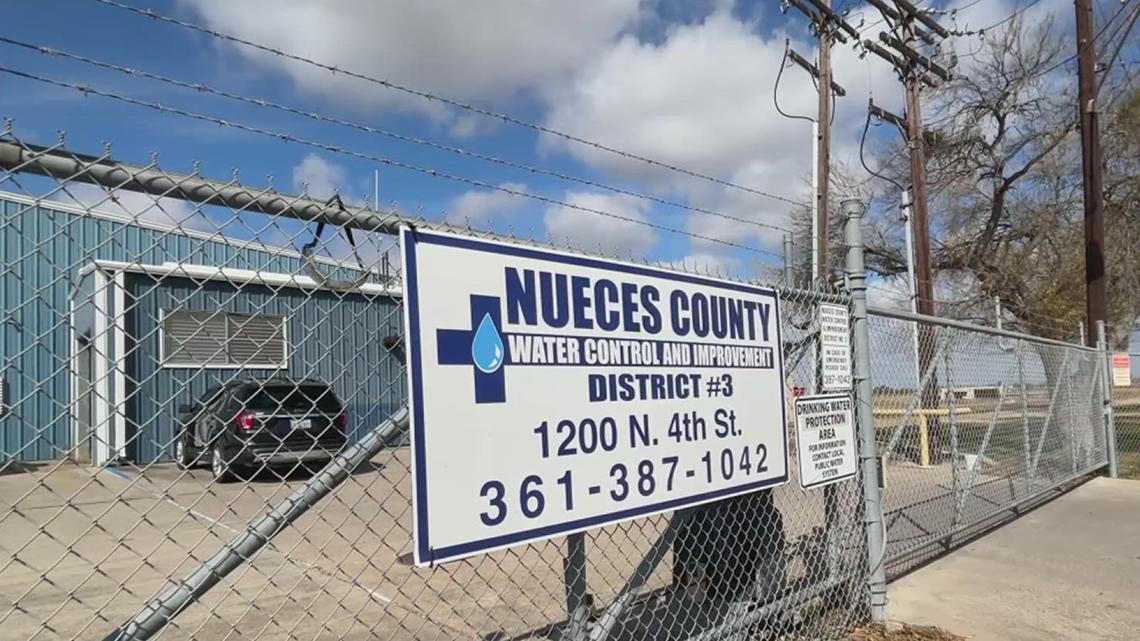
The State says arsenic levels were too high in a January water test, but the local water district says a an independent test came back beneath federal limits.
CORPUS CHRISTI, Texas — State officials say a Robstown-area water system could soon face another drinking water violation after a recent test showed arsenic levels above the federal safety limit. Local water officials say they did their own independent testing which showed the levels were safe.
According to the Texas Commission on Environmental Quality, a water sample collected Jan. 29, 2026 from the Nueces County Water Control and Improvement District No. 3 showed arsenic levels of 0.0115 milligrams per liter.
That is higher than the federal safety limit for drinking water, which is set at 0.01 milligrams per liter — or 10 parts per billion.
Victoria Cann, Media Relations Specialist for TCEQ said the State was notified of the result on Feb. 13 and is now reviewing the system’s compliance for the first three months of 2026.
She said the agency anticipates issuing a violation for that time period soon.
Marcos Alaniz, General Manager for Nueces County Water Control and Improvement District No. 3, told 3NEWS he has heard about the State’s second test result but said the District has not yet received official notice.
Alaniz said the situation may be misleading because of the timing of the testing process. He said the State took one sample in December and another in January — and that district officials had just been notified about the first sample when the second one was taken.
The District conducted its own independent test earlier this month, according to Alaniz.
According to a laboratory report provided to 3NEWS, a water sample collected Feb. 11 showed arsenic levels of 0.0082 milligrams per liter — below the federal safety limit.
To put that into perspective, the January test result was about 15% higher than the federal safety limit, while the District’s February test result was about 18% lower than the allowed levels.
The findings come as communities across the Coastal Bend continue to monitor water quality amid ongoing drought concerns.