
Americans are united in their concern about the cost of health care for their families.
A January poll from the nonprofit health policy organization KFF showed that two-thirds of Americans are concerned about paying for health care, more than are concerned about any other expense.
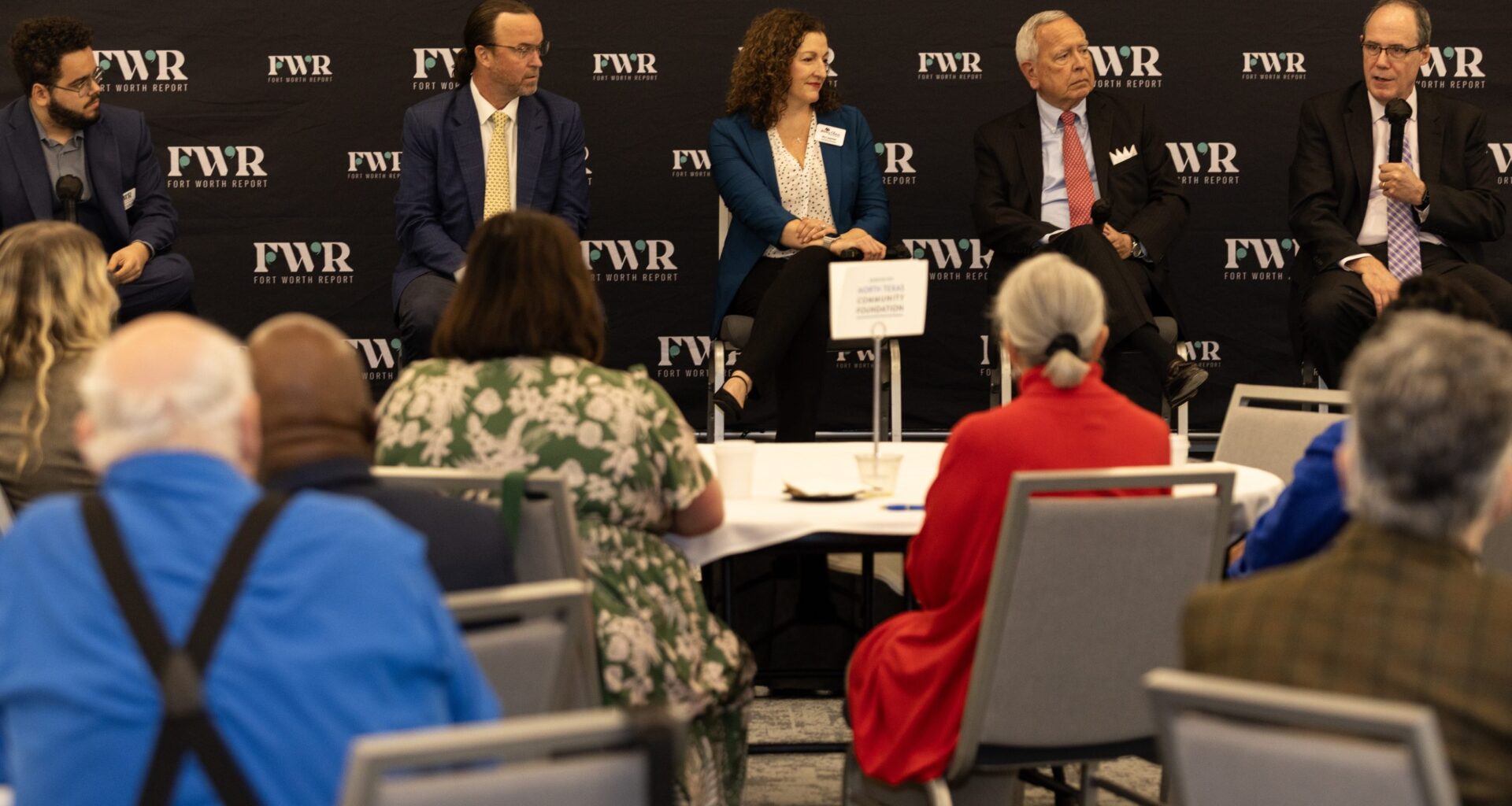
The rising cost of health care and what can be done to address it was the topic of a Candid Conversation hosted by the Fort Worth Report at Texas Wesleyan University Feb. 18.
Panelists included Dr. Jeff Beeson, executive medical director and assistant professor of medical education and health systems science for UNT Health Fort Worth; Aly Layman, executive director of Mercy Clinic; W. Stephen Love, president and CEO of the Dallas-Fort Worth Hospital Council; and Dr. Stuart Pickell, primary care physician and former president of Tarrant County Medical Society.
Good primary care is crucial in preventing patients from incurring high health care bills from emergency room visits and hospital stays, the panelists concurred.
Establishing a relationship with a primary care provider can help patients manage their conditions and avoid a crisis that requires a trip to the emergency room.
“You look at chronic diseases like diabetes and hypertension, there’s decades of disease before any clinical symptomatology really comes,” Beeson said. “If you don’t go and get established, you’re going to show up in my ER and I’m going to do an EKG, and it doesn’t look normal to me, but I don’t know what your normal is.”
But affording a visit to a primary care provider can also be a barrier, especially in a state with the highest percentage of uninsured people in the country.
Mercy Clinic is one of several charitable organizations in Tarrant County that offer free primary care to patients in need. The clinic saw patients through more than 3,000 medical and dental appointments last year, Layman said.
The waitlist to see a medical professional at Mercy Clinic can be long, however. Currently, it takes about a month and a half to see a physician for a check up and about a month for a sick patient to be seen.
“The number of people who need our care way exceeds the amount of care that we can give,” Layman said.
Physicians who work at Mercy Clinic do so on a volunteer basis. One way the clinic would be able to see more patients was if they had more volunteers, Layman added.
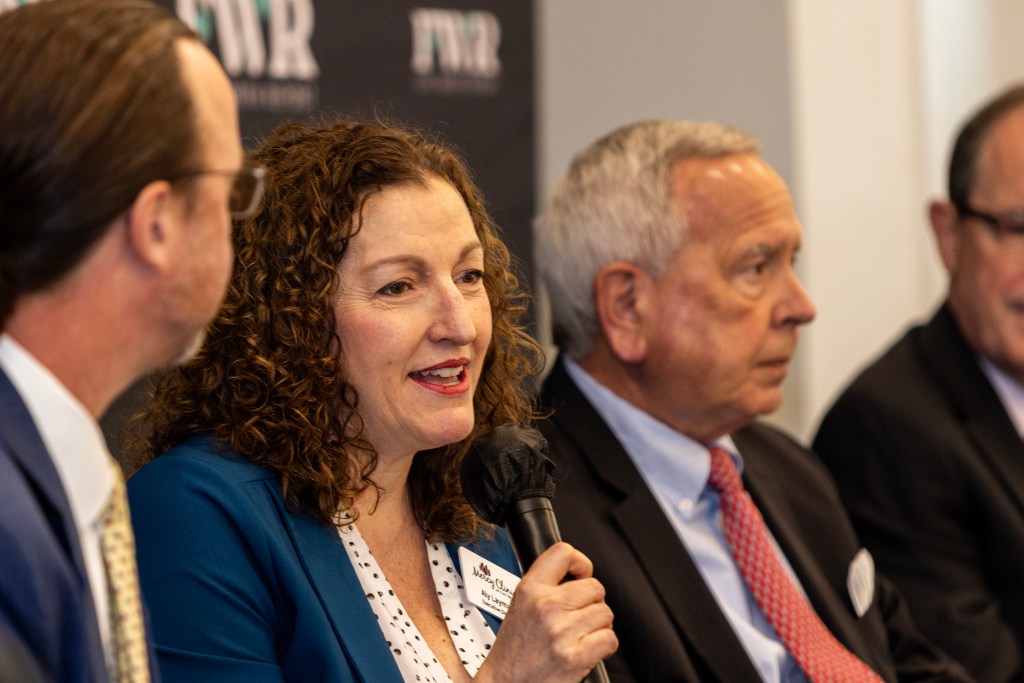 Aly Layman, executive director of Mercy Clinic, speaks at a Fort Worth Report Candid Conversation event about health care costs on Feb. 18, 2026, at Texas Wesleyan University in Fort Worth. (Maria Crane | Fort Worth Report/CatchLight Local/Report for America)
As Mercy Clinic needs more volunteers to offer its primary care, communities also need more primary care physicians in traditional settings.
The high cost of medical school can discourage students with hefty loans from electing to go into family medicine versus higher-paid specialties. Medical students also need primary care physicians as role models and mentors.
“A lot of times there aren’t a whole lot of opportunities for medical students to see healthy primary care practices and make it worth doing,” Pickell said.
Communities can also come together to take ownership of the problem and tackle it, Beeson said, highlighting the Primary Care Pathway Program at UNT Health for rural students who want to practice primary care in their communities.
Students in the program complete an undergraduate degree on an accelerated timeline through studies at Midland College and the University of North Texas in Denton. If they fulfill the requirements of the program, they are admitted to the Texas College of Osteopathic Medicine at UNT Health to attend medical school and will receive clinical training in West Texas.
“Solutions like that could happen right here in Fort Worth, but I think it comes down to defining who owns the problem,” Beeson said.
Beyond strict medical care, resources such as social services can help people stay healthy and avoid high costs.
Love mentioned Cook Children’s Healthy Homes Asthma Program.
“What hospitals are looking at … is, how can we keep people out of the emergency room?” he said.
The Healthy Homes program does this by connecting families of children with asthma with community health workers who talk them through ways to reduce asthma triggers like dust in their home. The community health workers also connect families with resources for other needs such as food or utility assistance.
The results were significant — an 85% drop in emergency room visits by children in the year after their families enrolled in the program.
Other panelists also echoed the importance of community health workers in helping patients navigate the health care system. Panelists also emphasized the importance of health education and literacy.
But you do not have to be a medical professional to make a difference. Actions such as encouraging family members to see their primary care physician and talking to your elected representatives about health legislation can also promote change, Layman said.
“Just because you are not a physician does not mean you can’t help be the solution to these health care costs,” she said.
McKinnon Rice is the higher education reporter for the Fort Worth Report. Contact her at mckinnon.rice@fortworthreport.org.
The Fort Worth Report partners with Open Campus on higher education coverage.
The Report’s higher education coverage is supported in part by major higher education institutions in Tarrant County, including Tarleton State University, Tarrant County College, Texas A&M-Fort Worth, Texas Christian University, Texas Wesleyan University, the University of Texas at Arlington and UNT Health Fort Worth. At the Fort Worth Report, news decisions are made independently of our board members and financial supporters. Read more about our editorial independence policy here.
This <a target=”_blank” href=”https://fortworthreport.org/2026/02/18/health-care-leaders-discuss-reducing-rising-costs-access-to-primary-care/”>article</a> first appeared on <a target=”_blank” href=”https://fortworthreport.org”>Fort Worth Report</a> and is republished here under a <a target=”_blank” href=”https://creativecommons.org/licenses/by-nd/4.0/”>Creative Commons Attribution-NoDerivatives 4.0 International License</a>.<img src=”https://i0.wp.com/fortworthreport.org/wp-content/uploads/2021/04/cropped-favicon.png?resize=150%2C150&quality=80&ssl=1″ style=”width:1em;height:1em;margin-left:10px;”>
<img id=”republication-tracker-tool-source” src=”https://fortworthreport.org/?republication-pixel=true&post=415364&ga4=2820184429″ style=”width:1px;height:1px;”><script> PARSELY = { autotrack: false, onload: function() { PARSELY.beacon.trackPageView({ url: “https://fortworthreport.org/2026/02/18/health-care-leaders-discuss-reducing-rising-costs-access-to-primary-care/”, urlref: window.location.href }); } } </script> <script id=”parsely-cfg” src=”//cdn.parsely.com/keys/fortworthreport.org/p.js”></script>