
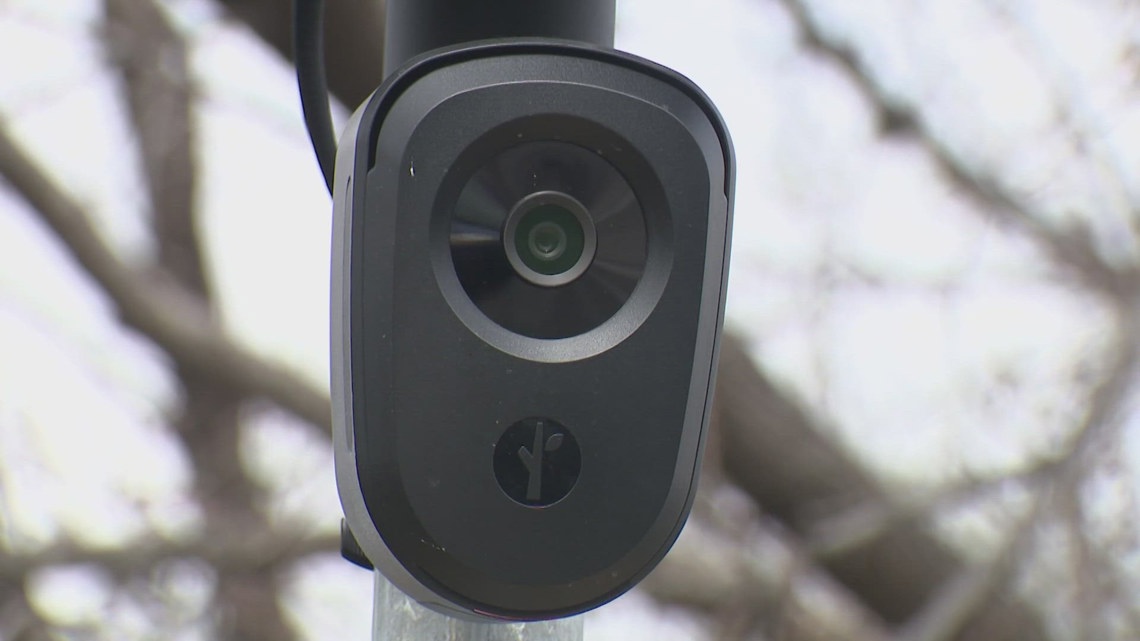
A spokesperson tells KVUE the cameras were installed Feb. 2 within several state rights-of-way.
AUSTIN, Texas — You may have noticed new cameras popping up along Austin roads, even though the city ended its controversial license plate reader program last summer.
The Texas Department of Public Safety (DPS) confirms it installed automatic license plate reader cameras, known as ALPRs, along several state rights-of-way on Feb. 2 after receiving approval and permits from Texas Department of Transportation (TxDOT).
The move comes months after Austin City Council voted to end the city’s contract with Flock Safety following community pushback over privacy concerns.
One of the new cameras sits on South Lamar Boulevard near Riverside Drive, mounted above a sign saying “DPS Is Watching You.”
Michael Knight said he pulled over during his motorcycle ride around midday on Wednesday after noticing that sign and one of the cameras.
“I was kind of curious as to what it is,” Knight said. “Especially with us riding around the way we do, there’s always the ‘police are watching you’ stigma in the bike community.”
In a statement to KVUE, a DPS spokesperson said the cameras are “part of continued efforts to improve public safety.”
According to DPS policy, ALPRs can be used to:
Identify stolen vehiclesLocate wanted or missing persons, including AMBER AlertsAssist with criminal investigationsSupport homeland security effortsEnhance security at critical infrastructure and public events
DPS said images and data collected by the cameras will remain in Flock Safety’s database for 30 days. Limited metadata will also be stored in a TxDOT database for up to one year. The agency said access to the system will be restricted and subject to regular audits.
When asked which agencies can access the data and where the cameras are installed, DPS directed KVUE to submit a public information request. The department did also not answer questions on where the cameras are installed.
Mackenzie Rhine, a board member with Electronic Frontier Foundation Austin, said community members had to dig to learn about DPS’ $24 million contract with Flock.
“There’s no oversight for this massive amount of data being shared across the country,” Rhine said.
She worries about how the data could be used, including whether immigration officials could gain access.
“Unless we really come together and say, ‘This is what we want with our data,’” Rhine said, “it will just be this Wild West … where people can install cameras overnight.”
Supporters argue the technology helps law enforcement agencies that are short-staffed solve crimes more efficiently.
Michael Bullock, president of the Austin Police Association, said the state has jurisdiction to install the cameras along state roadways.
“I firmly believe that in today’s day and age, there are ways to protect this kind of information that still empowers officers to utilize technology to make them more efficient, to make our city safer, while also making sure that privacy is protected,” Bullock said.
For now, the cameras are up and running on Austin streets. Rhine said any future battles will take place at the state level.
Whether they remain and how the data is ultimately used will likely continue to spark debate between privacy advocates and law enforcement in the months ahead.