
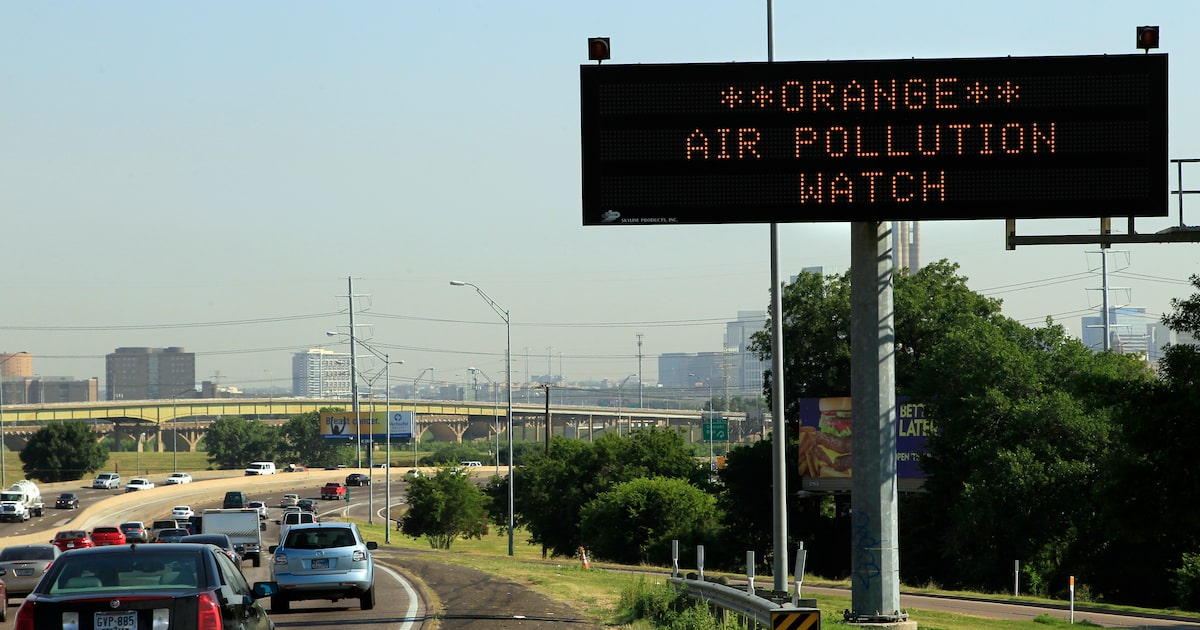
Dallas may be known for its business and food culture, but not necessarily for fresh air. Based on its number of poor air quality days, Dallas has worse air quality than 92% of Texas cities, according to First Street, a climate risk modeling company.
Now, a new national study adds concern: long-term exposure to fine particle pollution is associated with a higher risk of Alzheimer’s disease in older adults. While the research doesn’t prove air pollution causes Alzheimer’s, it adds to growing evidence that dirty air may harm more than the lungs and heart. Here’s what you need to know.
Impact on the brain
Air pollution is the mix of gases and tiny particles from wildfires, traffic or burning fossil fuels. It has been linked to a range of health problems, especially in the lungs and heart. Studies suggest it can weaken immune defenses in older adults and may raise the risk of certain cancers.
News Roundups
It has also been linked to a higher risk of Alzheimer’s disease, the most common form of dementia affecting an estimated 7.2 million Americans ages 65 and older. In Texas, about 460,000 people in that age group were living with the disease as of 2020. But it has been unclear whether pollution raises Alzheimer’s risk directly or through conditions such as hypertension, stroke and depression — all of which can affect brain health.
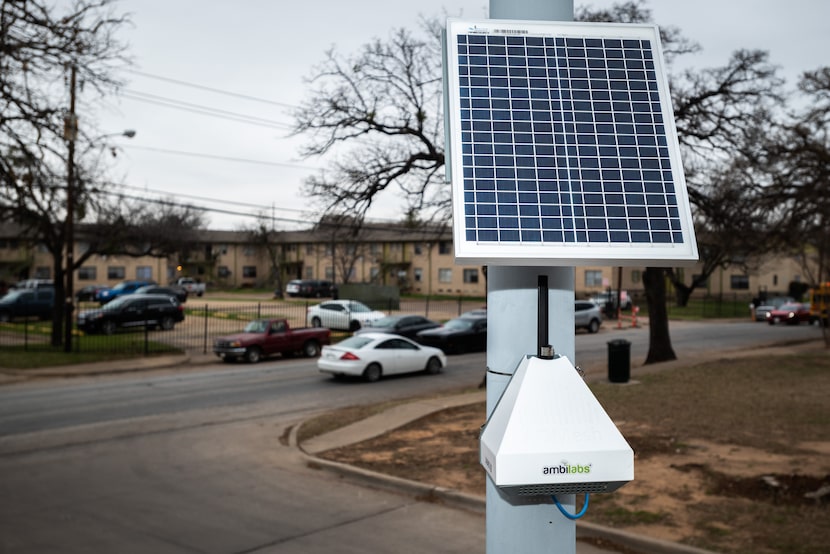
An air monitor in use at the Larry Johnson Recreation Center in Dallas, on Friday, Feb. 24, 2023.
Ben Torres / Special Contributor
The new study sheds more light on air pollution’s influence on the brain. For the study, which was published Tuesday in the journal PLOS Medicine, researchers at Emory University in Georgia analyzed data from more than 27.8 million U.S. Medicare recipients ages 65 and older from 2000 to 2018. They compared participants’ five-year average exposure to fine-particulate air pollution — known as PM2.5 — with whether those people developed Alzheimer’s. PM2.5 refers to particles 2.5 micrometers or smaller that can be inhaled deep into the lungs, enter the bloodstream and contribute to serious health problems, according to the Environmental Protection Agency.
The researchers accounted for common chronic conditions that can raise dementia risk — including hypertension, stroke and depression — to see whether those illnesses helped explain the link between pollution and Alzheimer’s disease.
Greater exposure to PM2.5 was associated with a higher risk of Alzheimer’s disease. The association was slightly stronger among people who had experienced a stroke, but overall the results suggested the relationship was not driven by the common chronic conditions, the study’s authors said in a news release. “Our findings suggest that individuals with a history of stroke may be particularly vulnerable to the harmful effects of air pollution on brain health, highlighting an important intersection between environmental and vascular risk factors.”
The researchers added that their results indicate improving air quality could be an important way to help protect older adults and reduce dementia risk.
Local impact of air pollution
What these findings could mean locally may depend on where people live in Dallas.
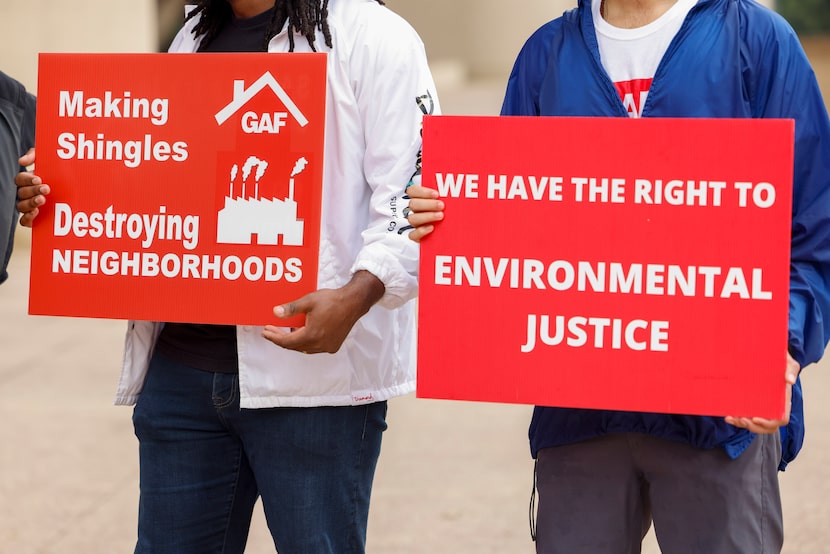
People hold signs during a news conference to announce Toxic Twins: Fund the Fund Campaign outside Dallas City Hall, Monday, July 14, 2025, in Dallas. The campaign pushes for the removal of a pair of shingle plants through the city’s nonconforming use fund.
Elías Valverde II / Staff Photographer
In late 2023, a study showed that residents of southern Dallas’ Joppa neighborhood were exposed to two to three times as much air pollution and experience higher rates of respiratory illness than the rest of the city, The Dallas Morning News reported. During the study, conducted by scientists from Texas A&M University in 2022, one or more Joppa air monitors exceeded the EPA’s national 24-hour particulate matter exposure standard an average of once a week.
Air pollution in Joppa has been tied to nearby industrial sources, including an asphalt shingle plant, a railroad switchyard and other facilities. In late 2025, Dallas officials agreed to consider shutting down the shingle plant.
Air pollution concerns have also been raised in West Dallas over a shingle plant that had been identified as the second largest source of PM2.5 pollution in Dallas County in 2020, according to a report by Paul Quinn College. The company behind the plant has said it plans to leave West Dallas by 2029.
Miriam Fauzia is a science reporting fellow at The Dallas Morning News. Her fellowship is supported by the University of Texas at Dallas. The News makes all editorial decisions.
 Texas AG sues another Dallas doctor over ban on gender-affirming care for minors
It’s the fourth lawsuit Paxton has filed over the transgender care ban. Three are against Dallas-area doctors.
 Concussions may be underreported in Dallas-Fort Worth schools, study finds
A UT Southwestern analysis of more than 6,300 sports-related concussions suggests reporting varies by geography and school income level.
 Thirty-four lives saved: One year later, Dallas Fire-Rescue blood program marks successes
As program expands, blood will become available in minutes to patients across Dallas.
 Colossal’s techy new HQ helps Dallas startup be ‘in your face’ with de-extinction mission
The startup provided a look into its new home, and it’s got everything Colossal needs for its future.