
 article
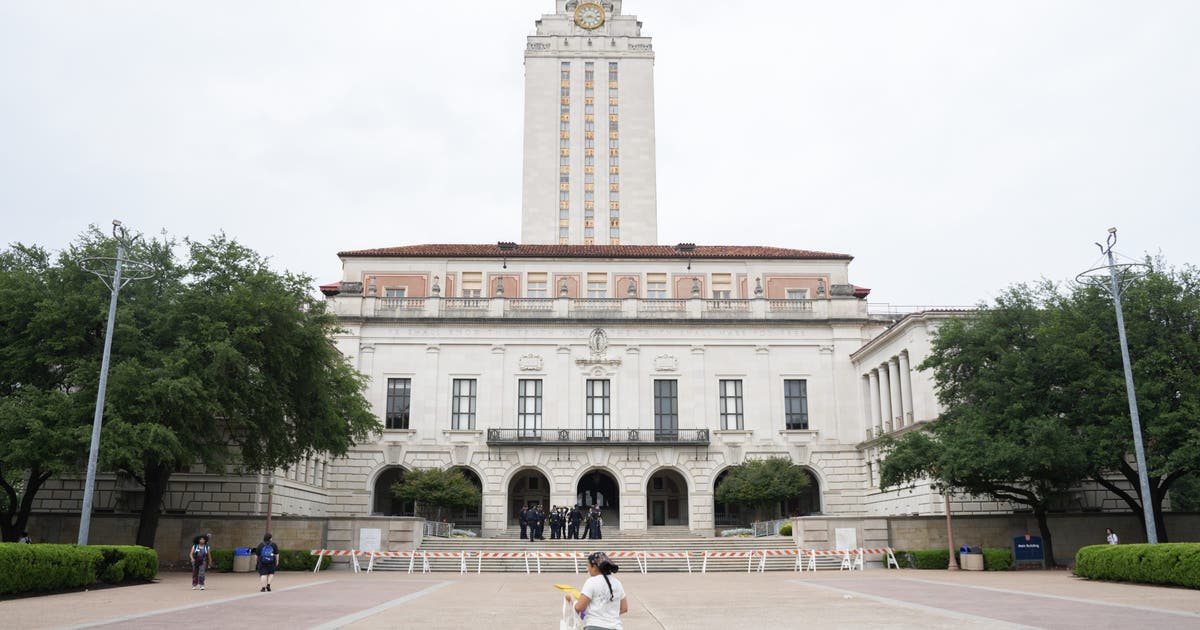
AUSTIN, TEXAS – APRIL 25: Law enforcement and barricades block the area in front of the UT Tower on the campus of the University of Texas at Austin, Thursday, April 25, 2024, in Austin. Students walked out of class on Wednesday as protests over Gaza
AUSTIN, Texas – University of Texas System students are now free to graduate from college without learning “unnecessary controversial subjects” after a Thursday meeting of the board of regents.
The board passed a new rule for the system broadly defining the freedoms students and educators have to teach and learn undefined topics.
New UT System rule
What we know:
The new rule, which passed unanimously by the board after about 40 minutes of public objection, ultimately decides that students in the school system can get an education without learning “controversial” subjects that don’t necessarily apply to their field of study.
In addition, instructors are required to “carefully consider” their material and “exclude unrelated controversial or contested matters.” Similarly to the recent changes to Texas A&M System and Texas Tech standards, UT professors now have to get their course content approved by administrators and stick faithfully to the sanctioned syllabi.
Finally, when coursework includes controversial or contested issues, instructors are required to use “a broad and balanced approach” when dealing with them. Again, this somewhat reflects the A&M and Tech updates, where professors are banned from “advocating” certain topics in favor of presenting multiple viewpoints.
What we don’t know:
Unlike the recent changes at other state schools, UT’s new rule forgoes explicit definitions of terms or instructions for their enforcement.
“Controversial and contested” issues have no parameters. While A&M and Texas Tech are prevented from teaching “race and gender ideology,” these specific issues are not outright included in UT’s restrictions.
It’s unknown who exactly will be guiding professors on following the rule going forward, or how, when or where the line will be drawn on the omission of content.
Public concern over new rule
What they’re saying:
One second-year PhD student referred to a development in recent weeks, in which the race, ethnic and gender study programs were “consolidated” into a single department. He referred to it as multiple departments being eliminated and replaced, thereby losing autonomy and decision-making powers. He believes the new rule could cause a similar instability.
Dr. Alex Karner, a UT Austin professor, expressed concerns over the undefined terms, and especially the fact that the new rule assigns no one to make judgment calls in specific use cases when they arise. In Karner’s opinion, applying open-ended restrictions to ambiguous topics creates more problems than it solves.
“Overall, this policy will not protect students,” Karner said. “Even if you do not intend to limit discussion, policies that rely on vague and subjective standards predictably lead instructors to self-censor and avoid risk, narrowing classroom inquiry in ways that are difficult to detect or correct.”
Karner said he and his colleagues believe these effects are being felt already at the university, and they fear the new rule could worsen courses being forced to walk on academic eggshells. Further, experience in his field leads him to believe that “controversial” subjects are often necessary for real-world work.
The other side:
Board Chair Kevin Eltife responded to the qualms over specificity with an apparent nod to the changing landscape of Texas’ higher education.
“We are in difficult times,” the former state senator said. “Vagueness can be our friend.”
Changes to Texas university courses
Big picture view:
The changes to Texas schools seemingly began when state and federal lawmakers tightened the definition of gender at the beginning of President Donald Trump’s second administration, including an executive order last January.
In September, an A&M student started an online controversy with a video of her confronting a professor over this EO during a lesson regarding gender studies. That controversy, fueled by state lawmakers leading a social media crusade against “woke leftist professors,” led to that professor being fired, administrators being demoted, and the former school president stepping down.
A&M soon redefined race and gender ideology and restricted when and how it could be taught. Texas Tech followed suit not long after.
Since then, an A&M philosophy professor made national headlines by having Plato readings pulled from his coursework over the new rules, and Melissa McCoul, the professor fired at the start of it all, has sued the school for allegedly violating her constitutional rights and harming the future of her academic career.
Texas A&M gender controversy backlog
The Source: Information in this article comes from a public meeting of the University of Texas System Board of Regents, and previous FOX Local reporting.