

Levi Belnap, executive director of the Center for Applied Entrepreneurship and Innovation at Mays Business School. Photo by Hiroko Sumikura/Texas A&M]
Texas A&M University’s Mays Business School has launched a new center focused on training students to start and acquire companies, with Dallas-Fort Worth positioned as a primary market.
Based in College Station, the Center for Applied Entrepreneurship and Innovation sits at what Mays describes as the “geographic center” of the Texas Triangle—the corridor connecting Dallas-Fort Worth, Houston, Austin, and San Antonio. The region includes energy, healthcare, advanced manufacturing, logistics, and technology sectors that are growing across the Triangle, according to Mays’ announcement.
“At Mays, we see entrepreneurship and innovation as powerful engines for advancing the growth and competitiveness of Texas,” said Mays Dean Nate Y. Sharp.
The center, which serves undergraduate and graduate students at all stages, will bring together emerging technologies, market insight, and real-world application to prepare students for entrepreneurship as it is practiced today—through venture creation, acquisition, and “AI-enabled transformation of existing firms,” he said.
AI as a core focus
An experienced startup founder with multiple successful exits, Levi Belnap has joined Mays as executive director of the center. In addition to leading student programming, he will collaborate with faculty, industry partners, and former students across Texas A&M University and the Texas A&M System to expand applied entrepreneurship pathways.
“Successful entrepreneurship demands disciplined execution, rigorous market testing, and thoughtful acquisition strategy,” Belnap said. “We are building an applied platform where students build, buy, and transform companies in real markets, under real constraints, with AI strengthening their preparation and judgment.”
The center will run programming in venture creation, entrepreneurship through acquisition, industry collaborations, venture labs, mentorship tied to active deals, Texas-focused opportunity discovery initiatives, and AI-based experimentation challenges, Mays said.
Each initiative is designed, according to Mays, to expose students to real operating constraints and build what Belnap calls “transferable entrepreneurial judgment.”
An operator with startup experience
Belnap previously co-founded FindIt, a venture-backed mobile search startup that went through Techstars Chicago, raised roughly $700,000 in seed funding, and built an app that indexed hundreds of millions of user emails and files across Gmail, Google Drive, and Dropbox, according to his LinkedIn profile.
He most recently served as CEO of Merlyn for Education, a business within AI edtech company Merlyn Mind, where he joined early—when the company was still in stealth—and helped build its AI-enabled classroom technology business. He has also held roles scaling platforms including Wyzant.
AI efforts already underway
The center builds on an AI initiative Mays launched in 2025, when it created the role of assistant dean for artificial intelligence.

Arnold Castro, assistant dean for AI, May Business School [Composite image: Photo, Texas A&M; DI Studio]
Arnold Castro, an Aggie alum with more than 25 years in emerging technology and data, was appointed to the role to lead Mays’ AI initiatives across teaching, research, and industry engagement. In university materials, Mays describes the position as “the nation’s first Dean of AI,” a role it says was created at Texas A&M University Mays Business School.
Castro oversees two national AI competitions (which opened applications earlier this month), the development of an AI-and-business minor, and a Flex Online AI and Business program for working professionals launching this year.
“I envision Texas A&M graduates as industry leaders who use AI to maximize efficiency, automate routine tasks, and focus on high-value strategic work,” Castro said in July. “AI is not eliminating jobs. It is elevating the skills required to remain competitive.”
A&M Fort Worth campus taking shape
The center’s launch announcement this week comes as the A&M System builds out an urban research campus in downtown Fort Worth.
The A&M System is constructing a multi-building research campus in downtown Fort Worth anchored by an eight-story, $180 million Law and Education Building set to open in 2026. A Research and Innovation Building remains in the design and pre-construction phase at an estimated cost of up to $260 million. The urban campus has already drawn engagement from more than 70 North Texas companies, according to the Fort Worth and Tarrant County Innovation Partnership. A Texas A&M Innovation Summit in Fort Worth last summer drew companies including Lockheed Martin, American Airlines, and Cook Children’s Health Care System.
Don’t miss what’s next. Subscribe to Dallas Innovates.
Track Dallas-Fort Worth’s business and innovation landscape with our curated news in your inbox Tuesday-Thursday.
R E A D N E X T

Data scientist Anmolika Singh put Dallas on the global AI Tinkerers map. At the first meetup, more than 30 pros—founders to Fortune 500 technologists—showed up to trade ideas, projects, and solutions.
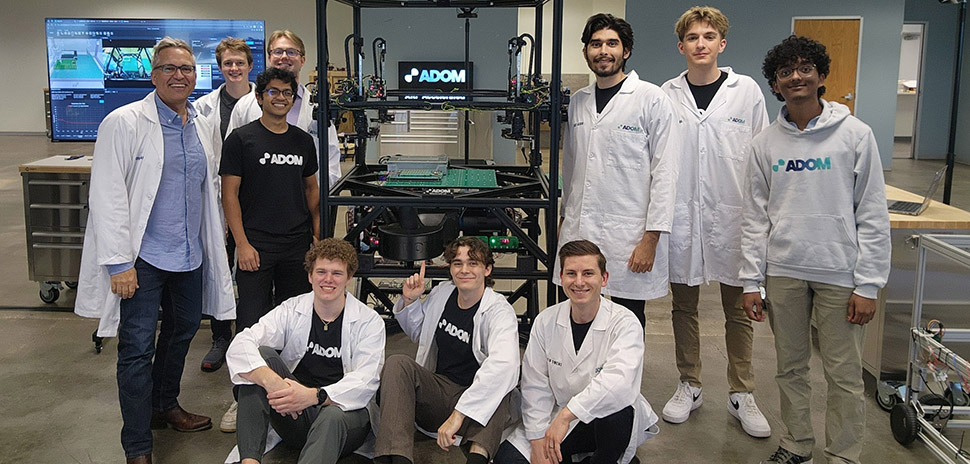
The stealth-stage startup, led by tech entrepreneur John Lauer—who sold his last company for nearly $1 billion—is developing what it calls the world’s first cloud-connected electronics prototyping factory. “This will be one of the most high-tech factories in the world,” said Lauer.
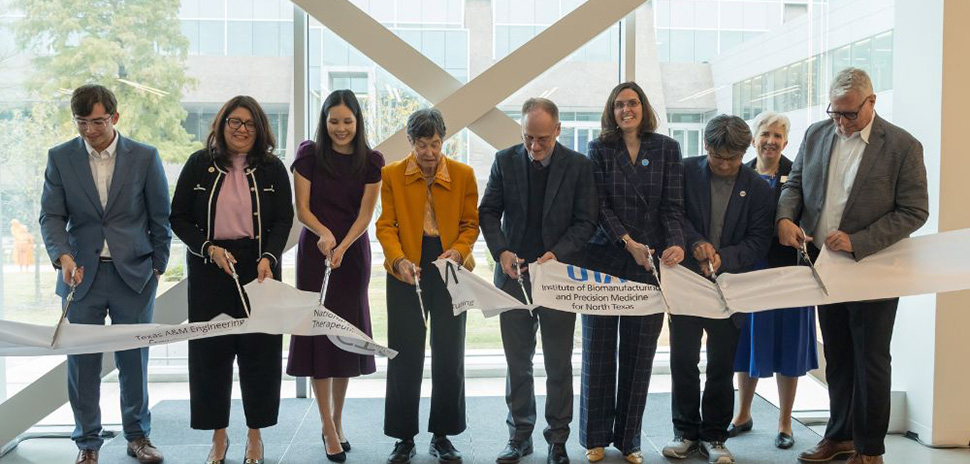
A new satellite campus is adding hands-on training, lab capacity and startup support to Dallas’ growing life sciences ecosystem.
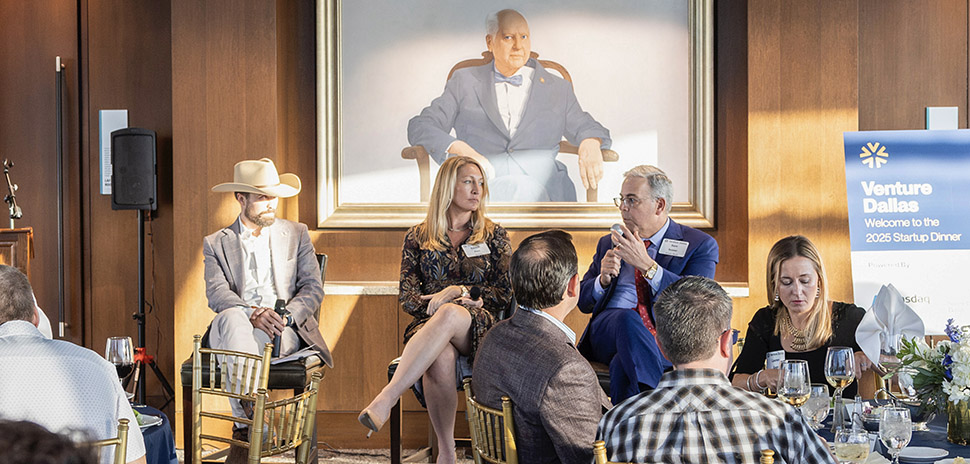
Top executives at Nasdaq and Susser Bank celebrated high-growth potential companies contributing to region’s rise in entrepreneurship and innovation
![A NASA illustration depicts the idea of a future air taxi hovering over a municipal vertiport. [Rendering: NASA/Lillian Gipson and Kyle Jenkins]](https://www.newsbeep.com/us-tx/wp-content/uploads/2025/10/DRC-NTCOG-NASA-970-970x464.jpg)
The federal research laboratory slated for Texas A&M-Fort Worth will be focused on innovative aviation technologies—including drones, air taxis, and supersonic and hypersonic aircraft.