
AUSTIN, Texas — The week of Valentine’s Day 2026 has been warm and sunny in Central Texas, a marked contrast to the same week five years ago, when a severe winter storm strained the state’s electrical grid and left lasting consequences that Texans have not forgotten.
“It was a devastating storm,” said Matt Thompson, who lives in Brushy Creek Park. Vicki Packheiser of Cedar Park recalled her concerns during a recent cold snap, saying, “No, no, I was worried when we had this last cold snap that we would have a repeat.”
In February 2021, demand on the Texas electrical grid rose sharply as temperatures dropped across the state. Ed Hirs, an energy fellow at the University of Houston, said consumers increased their electricity use as they tried to stay warm. “So what happened with the grid that night is we began to have lots of consumers turning on the heat and doing everything they could to stay warm,” Hirs said. He recalled the moment the power went out: “1:38 in the morning on February 15.”
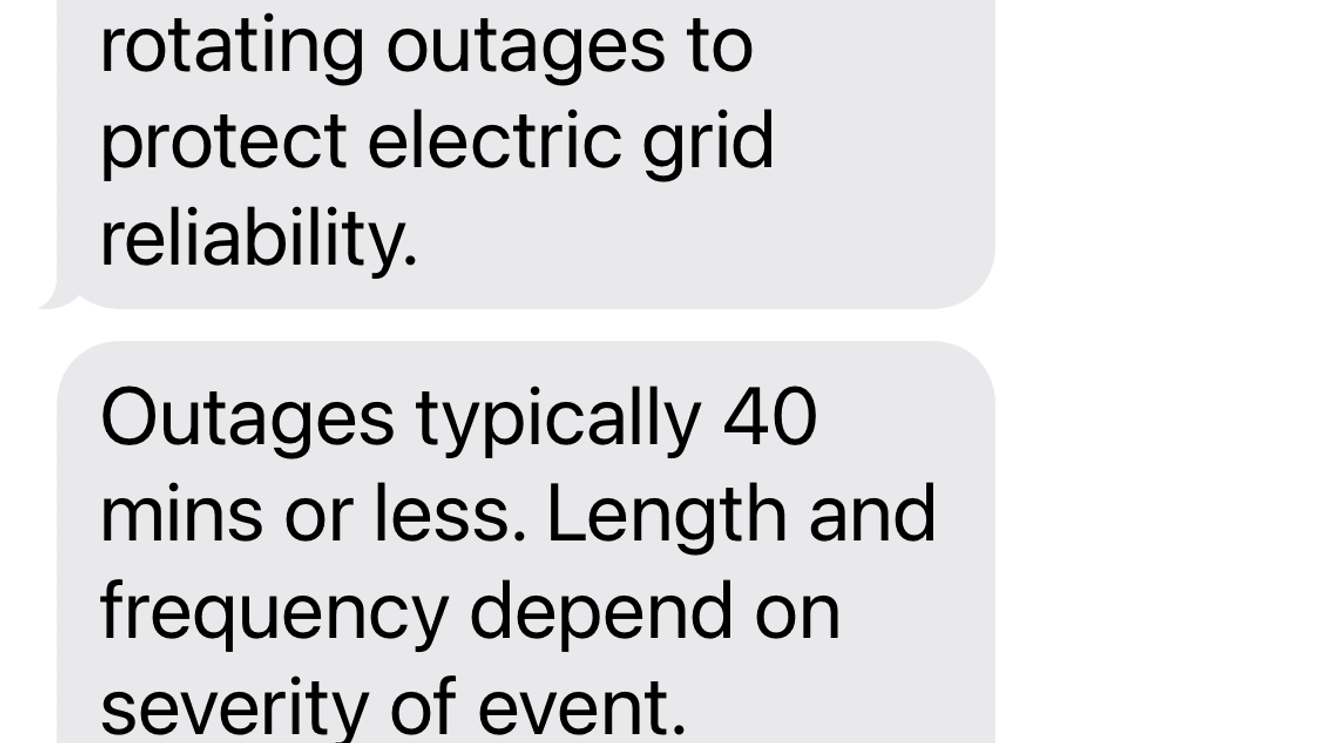
At 2:15 a.m., the Electric Reliability Council of Texas sent a text alert. It said outages would be temporary; instead, they lasted for days. At its worst, the state was short 52 gigawatts of power. “Fifty-two gigawatts is a huge amount,” Hirs said.
The outages lasted for days. Hundreds of people died, and thousands of homes were damaged. “That’s definitely because of the failure of the grid,” Hirs said.
Five years later, capacity on the ERCOT grid has increased. Hirs said the supply has grown due to the expansion of wind and solar generation and the addition of battery storage. ERCOT has stated that capacity is higher than it was in 2021, but Hirs cautioned that more capacity does not necessarily translate into greater reliability. “ERCOT doesn’t know how much of that is deliverable,” he said.
The market structure that was in place during the 2021 storm remains unchanged. “This market still rewards scarcity. The ERCOT market model has not changed,” Hirs said.
Residents continue to reflect on the consequences of the storm. “People being without electricity is preventable,” Packheiser said.
Hirs said the possibility of another major grid failure remains. “We’re not out of the woods at all,” he said.