
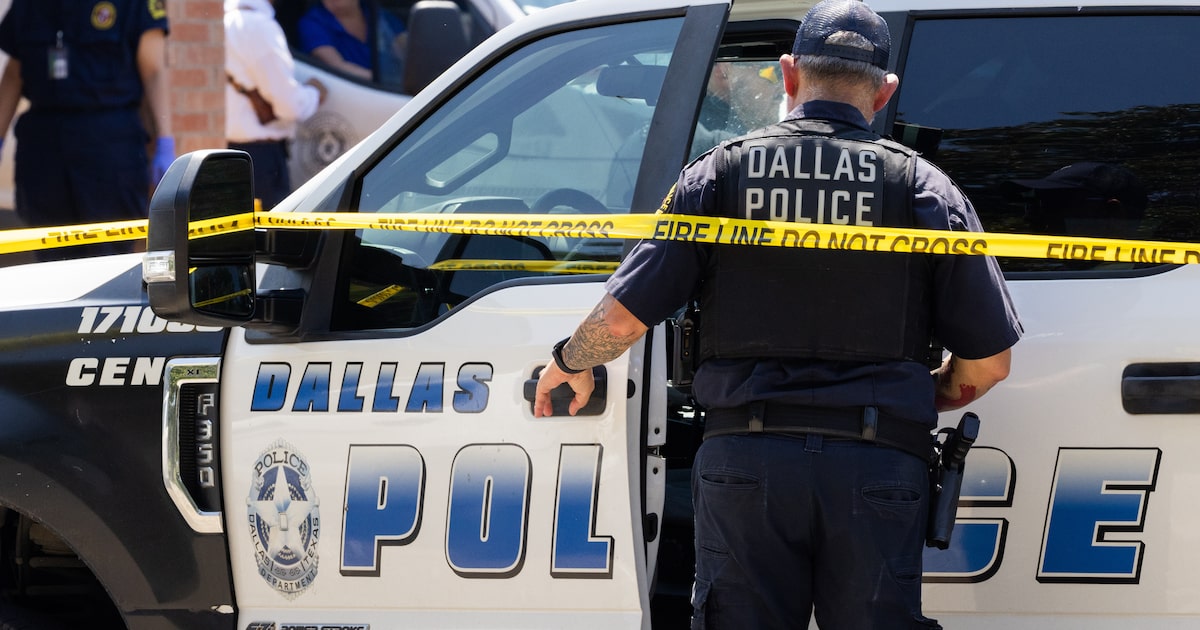
Earlier this month, Dallas police reported that increased police presence across the city and more focused policing paid off. In 2025, the city saw declines in reports of violent and nonviolent crime, and the lowest number of homicides in a decade.
Crime is slowly coming down, and the city’s efforts to get ahead on enforcement and lower response times are yielding results. Take downtown, for example. Last year, the police department created a Downtown Patrol Division in hopes of responding to calls faster by having officers consistently assigned to the area rather than rotating in and out.
And these improvements are happening across the board, not just downtown. Overall, Dallas police reported about a 10% decline in total offenses based on their year-end report. In 2025, there were 48,862 total offenses, down from 54,524 in 2024. That’s a substantial shift and shows Dallas is starting to move the needle on crime.
Last year, survey results found that residents wanted the city to put investments in police and social services at the top of their list. This drop in crime shows the city is committed to hearing residents’ concerns and working on ways to make Dallas safer.
Opinion
While these statistics are a nod to good work, and that Dallas is making a dent in the tally of incidents, the numbers don’t always capture people’s perceptions of crime and safety.
For example, last years’ survey found that while a majority of residents feel safe in their neighborhoods, restaurants, retail areas and parks during the day, some worry about parks and downtown, as well as property crime, when the sun sets.
Crime might be on the decline, but people may still be hesitant to walk after dark, fill up their car at the gas station on the corner or go for a run around their neighborhood by themselves. Perceptions matter because they influence how people go about their day-to-day lives.
A more visible police presence, which we have seen downtown, is one way to start changing these perceptions. Another is simply having more people milling about on the street, on their way to work or the local coffee shop.
Attracting more people should be part of conversations about the future of downtown. Making the central city safer, not only in terms of drops in crime, but making it feel safer, includes more housing, more restaurants and more reasons for people to spend time downtown. Policing is a key piece of the puzzle, but it works best alongside thoughtful urban planning and investment.
The latest crime data shows progress. The next challenge for Dallas is making sure residents not only are safer, but feel safer too.
We welcome your thoughts in a letter to the editor. See the guidelines and submit your letter here.
If you have problems with the form, you can submit via email at letters@dallasnews.com