
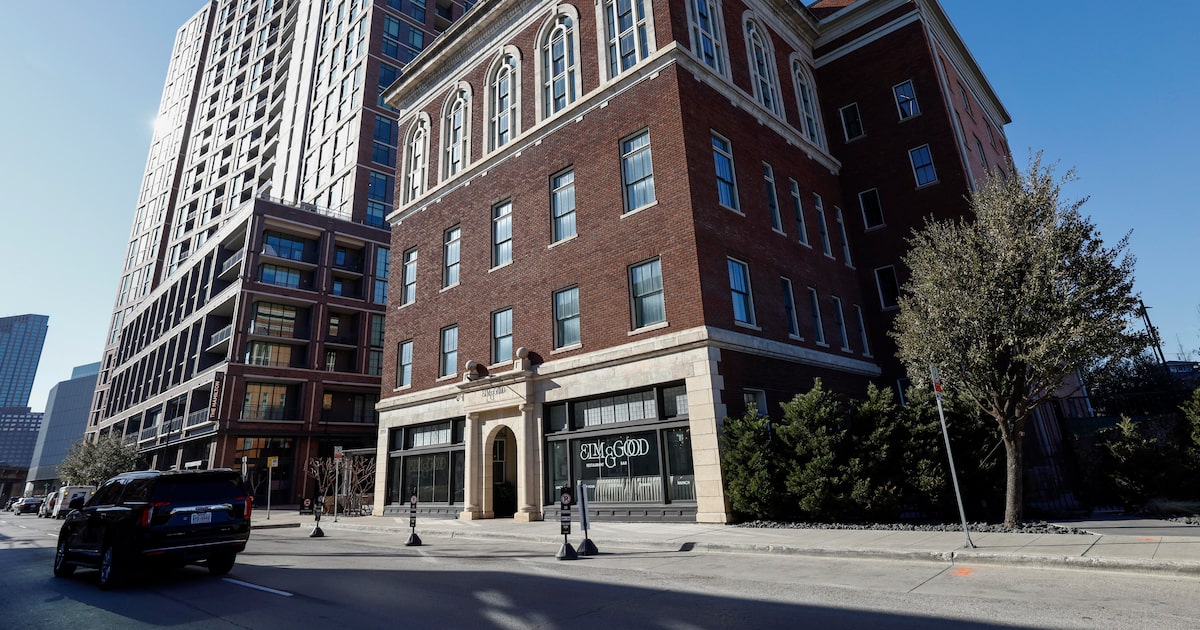
The Kimpton Pittman Hotel in Deep Ellum promises its guests the stay of a lifetime, but what they may not know is they’re staying in a former temple that symbolizes historic firsts for Texas’ Black community.
William Sidney Pittman, the first practicing Black architect in Texas, designed the building in 1916 as the state headquarters for the Colored Knights of Pythias.
February marks Black History Month and a chance time to examine historic monuments in Dallas that still hold significance for the city’s African-American community.
The Knights of Pythias, founded in 1864, is an international, non-sectarian — not relating to a specific religion — fraternal organization that follows the principles of friendship, charity and benevolence. The Black chapter of the organization was founded in 1880 after the original U.S. chapter refused membership to people of color.
The former temple was Dallas’ first commercial building to be designed, built and paid for by African Americans, Paul Calvin, director of sales and marketing for the Pittman Hotel, said.
News Roundups
Cathryn Colcer, 47, with the Deep Ellum Foundation, said the building sat adjacent to the Texas and Pacific train yard and the Black business district.
The four-story building provided office space for several prominent Black professionals, including Marcellus Cooper, the first Black dentist in Texas; Benjamin Bluitt, the first Black surgeon in Texas; Ammon Wells, attorney and civil rights leader; and John Chisum, optometrist and civic leader, according to the National Park Service website.
“This was a building of many firsts, which makes it exceedingly special,” Calvin said. “The preservation of its history was really important to us, but it was especially important for the Black community.”
During Pittman’s practice in Texas, he designed 15 known projects across Dallas, Fort Worth, Houston, San Antonio, Waco and Waxahachie. He designed over 50 buildings total during his 28-year career.
Building a landmark
The Grand Lodge of the Knights of Pythias authorized the construction of the temple for $100,000 in 1912. Construction was completed by July 1916, according to the Texas Historical Foundation website.
The building was designed in an eclectic Beaux-arts style, which was popular in the U.S. from the 1880s to the 1930s. The style tied French, Greek, Italian Renaissance and Roman architectural elements together. Common features included grand arches, decorative molding and pilasters, which are vertical columns that project from walls. Beaux-Arts was mostly used for public and institutional buildings.
The temple served as a social, professional and cultural hub for the city’s Black community, according to the city of Dallas website. It hosted lectures, meetings, conventions and dances, and also housed the offices of countless local Black professionals.
The temple remained in service until after the Great Depression, when the organization was unable to maintain payments and sold the building for $6,500 in 1944.
About 10 years later, the Physicians Life and Accident Company of Texas acquired the building before selling it to Union Bankers Insurance Co. in 1959.
The insurance company vastly altered the building during its ownership, removing many of the decorative features, replacing the wooden windows with metal ones, and painting the entire building gray.
Despite the changes to its appearance, the building was named a Dallas landmark in 1989 due to its architectural and cultural significance to the Black community.
Union Bankers served the neighborhood for more than 30 years before moving out in the mid-1990s, according to the historical foundation website.
It then sat empty and neglected for almost 20 years.
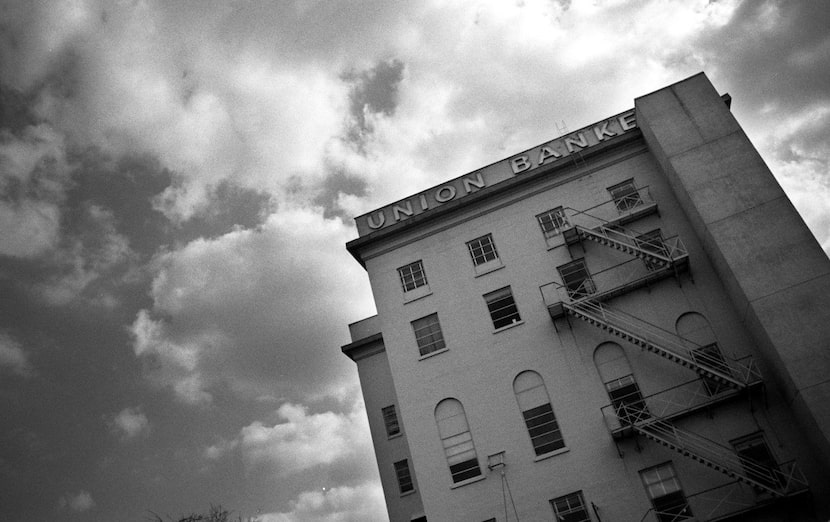
The Union Bankers Building on Elm Street was once the Pythian Temple. The building was built in 1916 and was headquarters of the Grand Lodge of the Colored Knights of Pythias.
1995 File Photo / Staff
“When I was growing up, the building was surrounded by a wooden fence covered in graffiti, and it was painted white like a ghost,” Colcer said. “The windows were broken for so long I thought there would be too much water damage to restore it.”
It was bought by Westdale Properties in 1998, though redevelopment plans didn’t take shape until the mid-2010s when the company decided to combine the building and the adjacent plot of land.
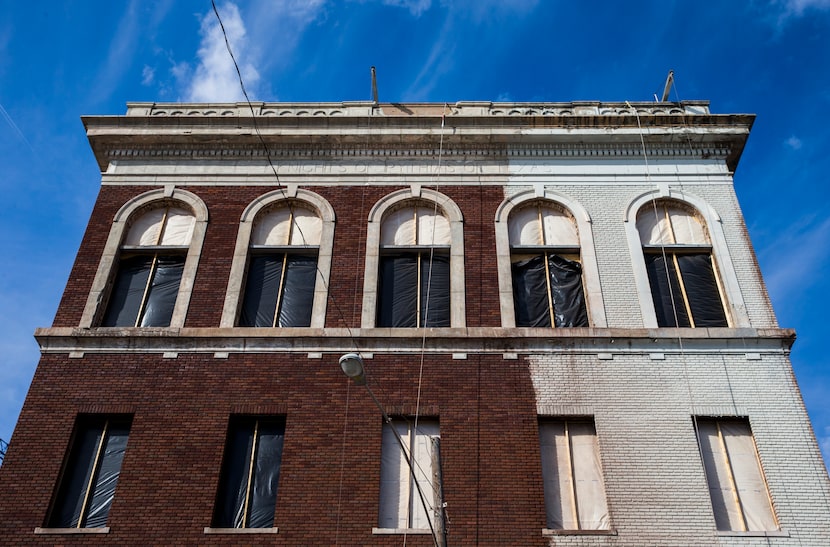
The Knights of Pythias building undergoes renovations on Wednesday, Feb. 7, 2018, in Dallas.
2018 File Photo / Staff
It opened as the Pittman Hotel in 2020.
‘Beautifully done’: The Pittman now
The features that remain from the original design can be seen in the fourth-floor ballroom and outdoor facade of the building. These include arched windows, original brick and stone, cornices and engravings of the temple’s name.
The hallways leading through what is now the hotel’s restaurant, Elm & Good, are adorned with black and white photographs, each one detailing a piece of Deep Ellum’s history.
Calvin said blues and jazz music, much like what was once performed live in the ballroom and the first clubs to dot Deep Ellum’s streets, regularly plays over the speakers to create a nostalgic atmosphere.
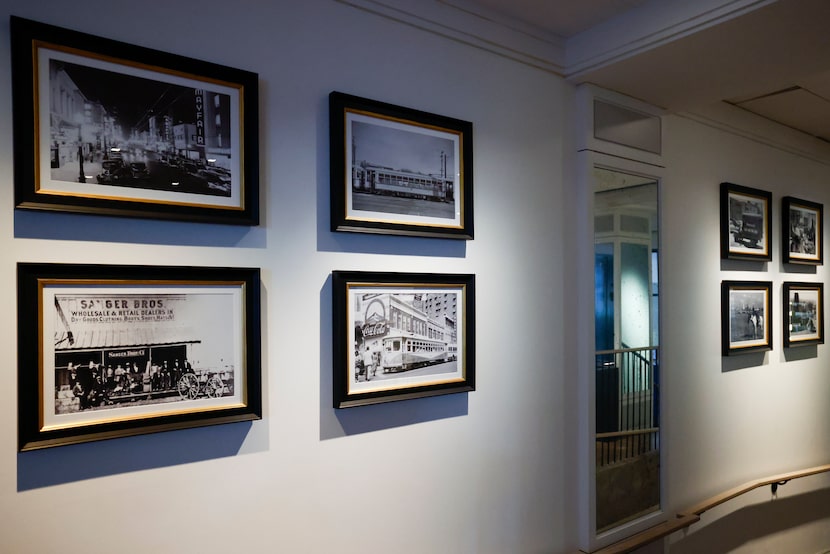
Historic photos of Dallas are seen in a hallway at the Kimpton Pittman Hotel, Wednesday, Feb. 11, 2026, in Dallas.
Elías Valverde II / Staff Photographer
The ballroom has a 24-foot ceiling. Each wall is lined with arched windows that provide a perfect view of the city’s skyline and spread beams of light across the plush, pale blue carpeted floor.
Calvin said the architects were able to reconstruct the windows after they found an original one tucked between two walls by a previous owner. The buildings’ original wooden stairwell sits to the left of the ballroom entrance and was refurbished during the hotel’s preservation process.
“We’re big believers in preserving the past,” Calvin said.
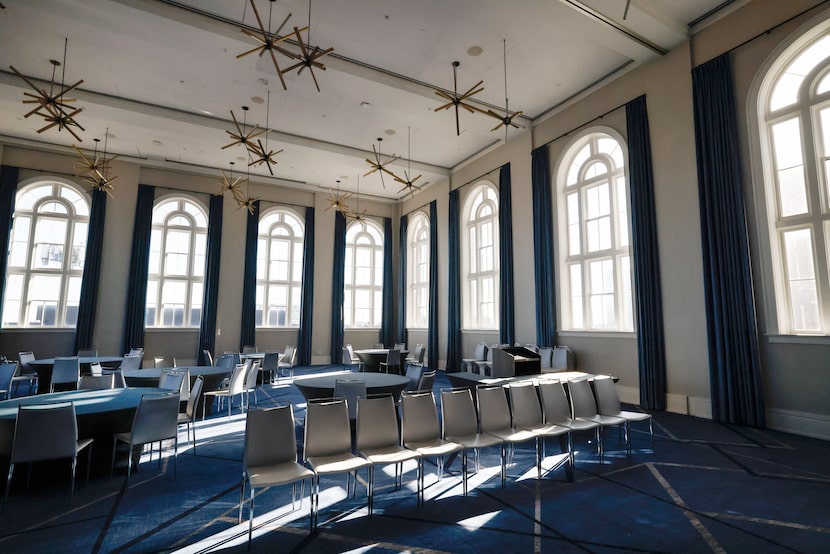
Large arched windows line the ballroom of the Kimpton Pittman Hotel, Wednesday, Feb. 11, 2026, in Dallas.
Elías Valverde II / Staff Photographer
Deep Ellum and The Pittman are on the National Registry of Historic Places. The original structure is part of a walking history tour held by the Deep Ellum Foundation, which takes place every Saturday at 3 p.m., Colcer said. The tour is free and can be signed up for on Eventbrite.
The buildings’ warm red brick and cream-colored cornices, a type of decorative molding, look much like they did when it first opened. The engraved lettering that spells out “Knights of Pythias” has been restored along with the large “P” emblem at the buildings’ peak, and an array of plaques cover the brick wall near the entrance.
The hotel combines the original brick and cast stone structure with one made of steel and glass. Calvin said the two together act as a symbolic representation of a doorway between Deep Ellum’s history and the innovative feel of downtown.
Though some might say the buildings’ original use has been masked by a new, modern feel, the reminders of its historical significance remain.
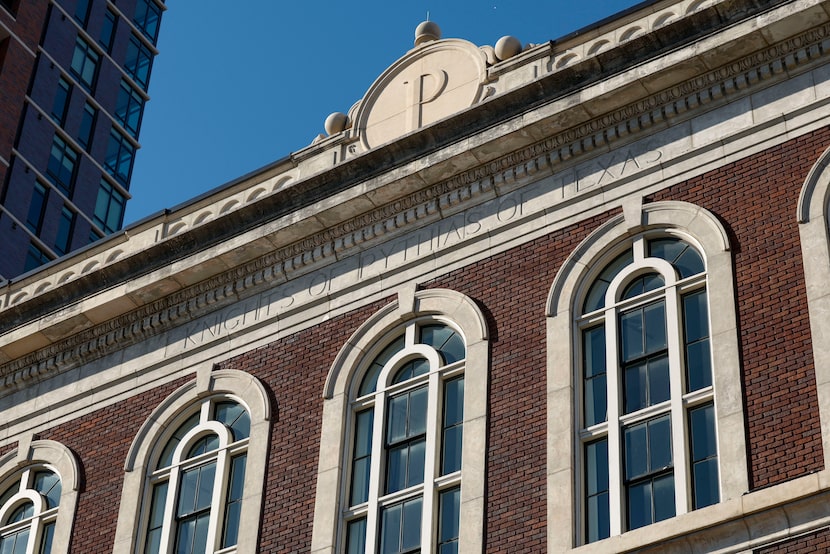
A large “P” is seen atop the Kimpton Pittman Hotel along with “Knights of Pythias of Texas,” Wednesday, Feb. 11, 2026, in Dallas.
Elías Valverde II / Staff Photographer
“The building is meant to complement the old structure, not copy it,” Calvin said. “We built the hotel to pay homage to its namesake and represent the connection of old and new.”
“It has been so beautifully done,” Colcer added.
Pittman’s life
Pittman was born in Alabama in 1875. He attended segregated schools before enrolling in the Tuskegee Institute, where he was taken under the wing of Booker T. Washington, according to the historical foundation website.
After graduating with a degree in architectural drawing, Pittman completed his education at Drexel University. He completed the five-year program in three years and was the first African American to graduate from Drexel.
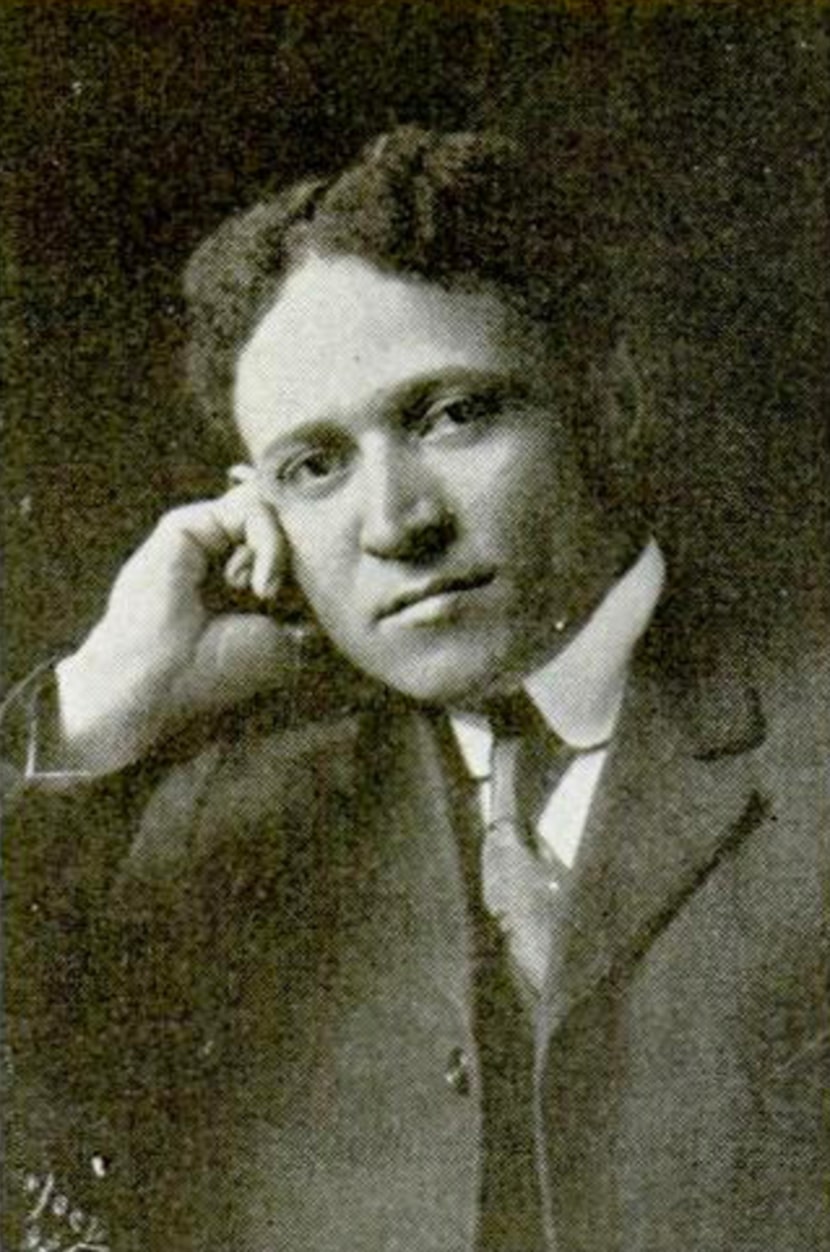
William Sidney Pittman, circa 1916, was the architect who designed the original historic building which is now part of the Pittman hotel. At various times the building has been called the Knights of Pythias Temple, the Pythian Temple, and later the Union Bankers building, located at Elm St. and Good Latimer Expressway in Deep Ellum.
Wikimedia
Pittman went on to teach and design buildings at Tuskegee, where he met Washington’s daughter, Portia. He lived in Washington, D.C., for two years before the two got married, had three children and moved to Dallas in 1912, according to the website.
Pittman stopped practicing architecture in 1928 and founded a weekly newspaper called The Brotherhood Eyes, which led to his conviction in 1937 for criminal libel. He served two years in Kansas’ Leavenworth Penitentiary and returned to Dallas upon his release.
He died in 1958 at 82 years old and was buried in Glen Oaks Cemetery in South Dallas.
 Civil rights leader the Rev. Jesse Jackson dies at age 84
Jackson, a protege of the Rev. Martin Luther King Jr., led the Civil Rights Movement for decades, ran for president twice.
 Employers want soft skills. Here’s how Paul Quinn, Toyota help students prepare for jobs
HBCU students in Dallas tackle teamwork and problem-solving drills in a hands-on leadership lab to grow job skills.