
Dallas-Fort Worth residents can expect to see mixed-use developments continue to drive residential and commercial growth across the region, local real estate leaders say.
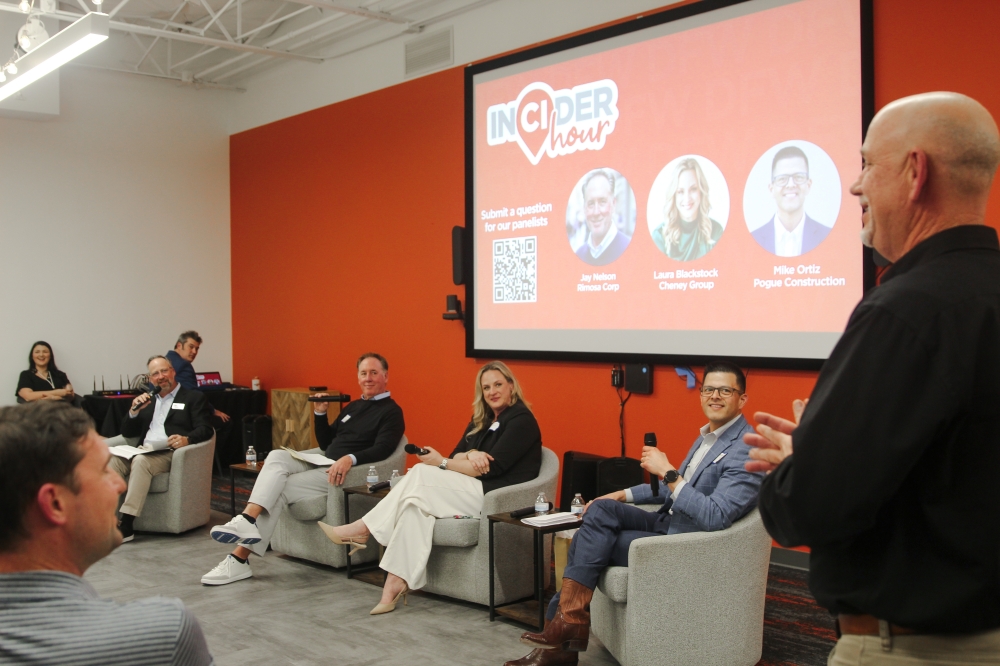
Community Impact Founder and CEO John Garrett sat down with local real estate experts for a panel discussion Feb. 17 for the company’s first InCIder Hour event in Dallas-Fort Worth.
The panel included Michael Ortiz from Pogue Construction, Laura Blackstock from The Cheney Group and Jay Nelson from Rimosa Real Estate Services.
Work, live, play
Blackstock, who moved to Frisco in 2002, said she has seen the priorities of buyers in the area shift toward functionality over square footage over that time period.
“The buyer now is not looking for a formal living area or a grand staircase,” Blackstock said. “We’re seeing town homes, mixed-use developments, things like that. They want lifestyle over big, sprawling spaces.”
Buyers today are looking for opportunities to work, live and play all in the same area, she said.
Ortiz highlighted Grandscape in The Colony and Legacy West in Plano as examples of this trend. These kinds of developments create “micro-cities,” where residents have everything they need in close proximity, he said.
“You can buy your groceries, put gas in your car, drop your kids off and get your nails done all in the same place,” Ortiz said. “It’s all about convenience.”
Nelson said master-planned communities and other mixed-use developments often include green spaces, because they are both a city and resident priority.
“Cities love the green spaces because their citizens love the green spaces, so they’re always incorporating green spaces into the developments, some bigger than others,” Nelson said. “These master-planed communities are so well funded… We’re talking billions of dollars here.”
Schools and rooftops grow together
Panelists emphasized that housing growth in North Texas rarely happens without parallel conversations about schools.
In Collin County, residential developers and school districts often track one another closely, Nelson said. New rooftops generate enrollment projections, and those projections help determine when and where new campuses are built. In turn, the reputation and performance of a district can directly influence the pace of home sales within a community.
“Collin County public schools have always been top notch and have always lured the residential developers, and then, of course, the retail developers follow,” Nelson said.
As master-planned communities move north into cities such as Prosper and Celina, school districts are expanding alongside them, purchasing land years in advance and timing bond programs with anticipated population growth.
In many cases, school sites are incorporated into development plans early, ensuring campuses are centrally located within neighborhoods.
Some communities on the west side of the metroplex are seeing similar trends. In Argyle ISD, enrollment has surged alongside new housing, prompting discussions about portable classrooms and future campuses to accommodate students, according to previous Community Impact reporting.
Corporate relocations accelerate regional growth
Another factor driving growth in North Texas is large corporations moving to suburban areas, Ortiz said, such as PGA moving into Frisco.
“Just last year, 10 more corporations moved to DFW,” Ortiz said. “It’s going to keep happening. I think [corporations] are not strictly focused on downtown Dallas or Frisco, but where the communities are being built and where their employees live.”
The region’s workforce pipeline also plays a role, Ortiz said.
“In DFW alone, there are 70 accredited college campuses, and that is a direct source of talent that’s educated to fuel their organizations,” he said.
The metroplex’s location also plays a role in corporations relocating to the Dallas-Fort Worth area, Nelson said.
“We are also in the central part of the country,” Nelson said. “The corporations are here because they can easily travel to both coasts.”
Looking ahead
Blackstock said she thinks individuals will see a revitalization of some of the older suburbs in the area.
“I think McKinney is going to be an up and coming place, too,” Blackstock said. “That’s an area where we’ll see a lot of reinvestment.”
Ortiz said he expects to see more micro-communities and master-planned development in DFW in the coming years.
“Retail is going to follow the rooftops,” Ortiz said.
Learn more
Founded in 2005 by John and Jennifer Garrett, Community Impact was built on the belief that all residents deserve to be informed about what’s happening in their communities. The newsroom covers transportation, business updates, school and county information and development.
Community Impact’s free monthly print newspapers and daily digital products share this information in a direct, unbiased style while containing depth and usefulness.
“We help people connect to their communities,” Garrett said. “We’re trying to help local businesses thrive.”
To learn more about The InCIder reader membership program and support Community Impact’s mission, click here. To sign up to receive Community Impact’s morning email newsletter, go here.