
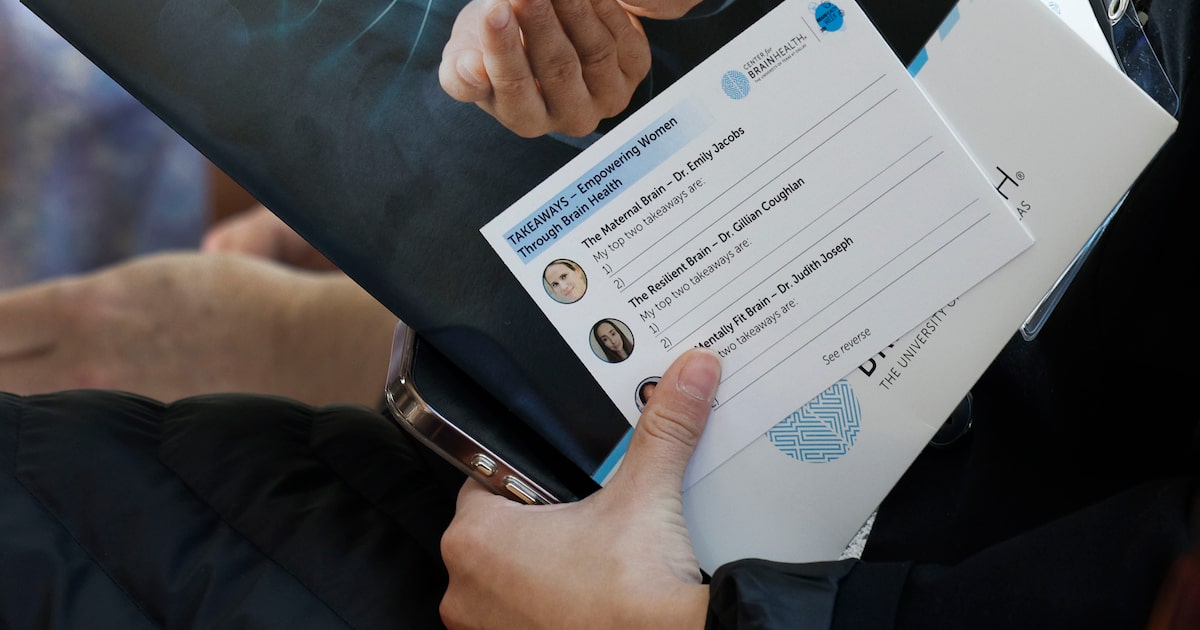
The University of Texas at Dallas is bringing back its BrainHealth Week for a fourth year.
The conference will run from Feb. 23-28 and offer a slate of public events aimed at translating cognitive neuroscience into strategies people of all ages can use in daily life. Programming will feature talks and sessions with scientists from Dallas and around the world, highlighting new research on brain performance with an emphasis on resilience, Sandra Bond Chapman, founder and chief director of UT Dallas’ Center for BrainHealth, said in a news release.
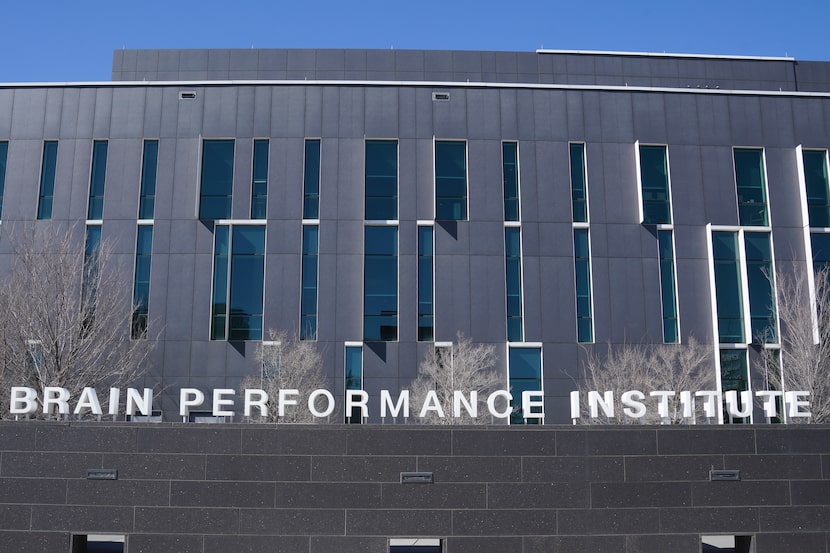
Outside the Brain Performance Institute, Tuesday, Feb. 14, 2023, in Dallas. The institute is part of UT Dallas’ Center for BrainHealth.
Rebecca Slezak / Staff Photographer
“BrainHealth Week was founded to bridge the gap between scientific discovery and the daily habits that can improve brain health,” Chapman said. “We are highlighting that proactive brain health isn’t just about fixing problems, it’s about building capacity, adaptability and longevity so we can function at our best every day and protect against future decline.”
News Roundups
The conference kicks off on UT Dallas’ Richardson campus with the Brain Health Prize celebration, spotlighting student ideas for improving stress on campus.
Other events will be held at the Center for BrainHealth in Dallas, including a panel on brain health in business and an expert discussion on strengthening brain health to support longevity. The speaker lineup includes University College Cork’s John Cryan, whose research explores links between mental health and the microbiome — the community of microorganisms that live in and on the body — as well as University of Oxford sleep scientist Russell Foster. Neuroscientist Emily Rogalski of the University of Chicago will discuss what researchers are learning from “super-agers,” older adults who maintain unusually strong memory and cognitive skills.
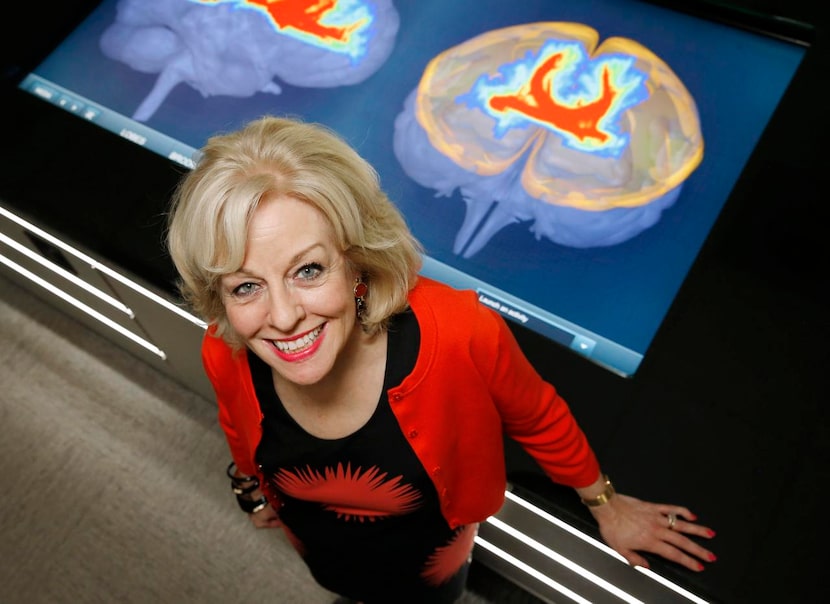
Sandra Bond Chapman, founder and director of UT Dallas’ Center for BrainHealth.
Vernon Bryant – Staff Photographer
A tech expo will showcase emerging biosensor technology designed to track and monitor brain health. And neuroscientists and other researchers will share their latest findings during a science summit. The schedule also includes a family fair, inviting families to bring children for hands-on brain-themed activities, including brain-healthy games, food and arts and crafts.
The expert discussion on strengthening brain health and the tech expo together cost $250 to attend. The rest of the events are free, though online registration is required. For more information, including a full schedule of events, visit centerforbrainhealth.org/events/brainhealth-week.
Miriam Fauzia is a science reporting fellow at The Dallas Morning News. Her fellowship is supported by the University of Texas at Dallas. The News makes all editorial decisions.
 What is ALS, the disease that killed actor Eric Dane?
Here’s what to know about amyotrophic lateral sclerosis, also known as Lou Gehrig’s disease.
 Alzheimer’s risk tied to air pollution. Here’s what you need to know in Dallas
A national study found long-term exposure to fine particle pollution is associated with a higher risk of Alzheimer’s disease in older adults.
 Texas AG sues another Dallas doctor over ban on gender-affirming care for minors
It’s the fourth lawsuit Paxton has filed over the transgender care ban. Three are against Dallas-area doctors.
 Concussions may be underreported in Dallas-Fort Worth schools, study finds
A UT Southwestern analysis of more than 6,300 sports-related concussions suggests reporting varies by geography and school income level.