
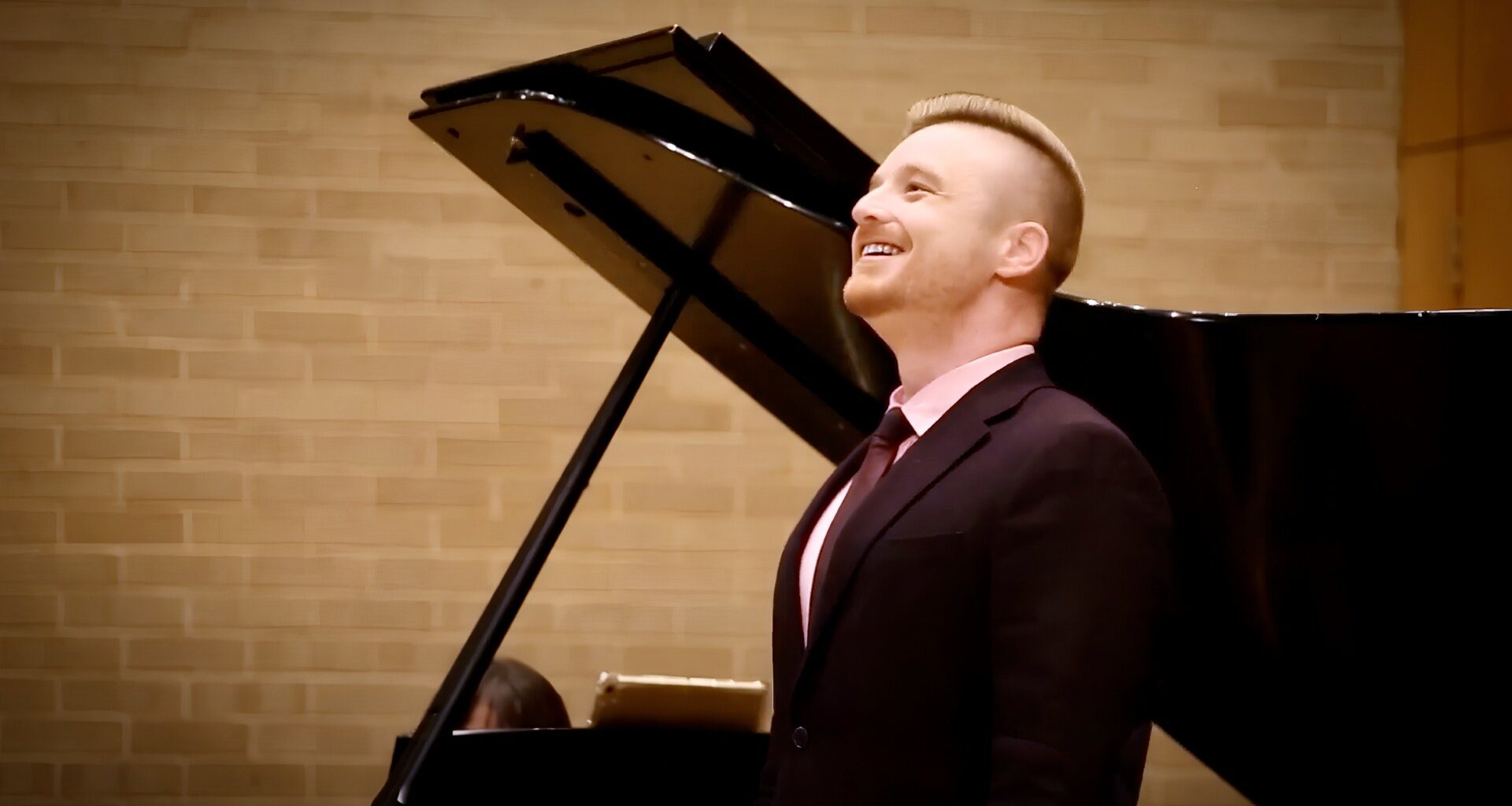
The Megan and Victor Boschini Music Center is scheduled to host “Into the Mind of the Poet,” a faculty recital, in the Van Cliburn Concert Hall on Saturday, Feb. 21, at 5 p.m.
The recital is open to all TCU students, faculty and the Fort Worth community with free general admission.
Eric Lane, assistant professor of voice in the TCU School of Music, will sing tenor, accompanied by Cecilia Lo-Chien Kao, a staff pianist, and Michael Bukhman, associate professor of collaborative piano and chamber music.
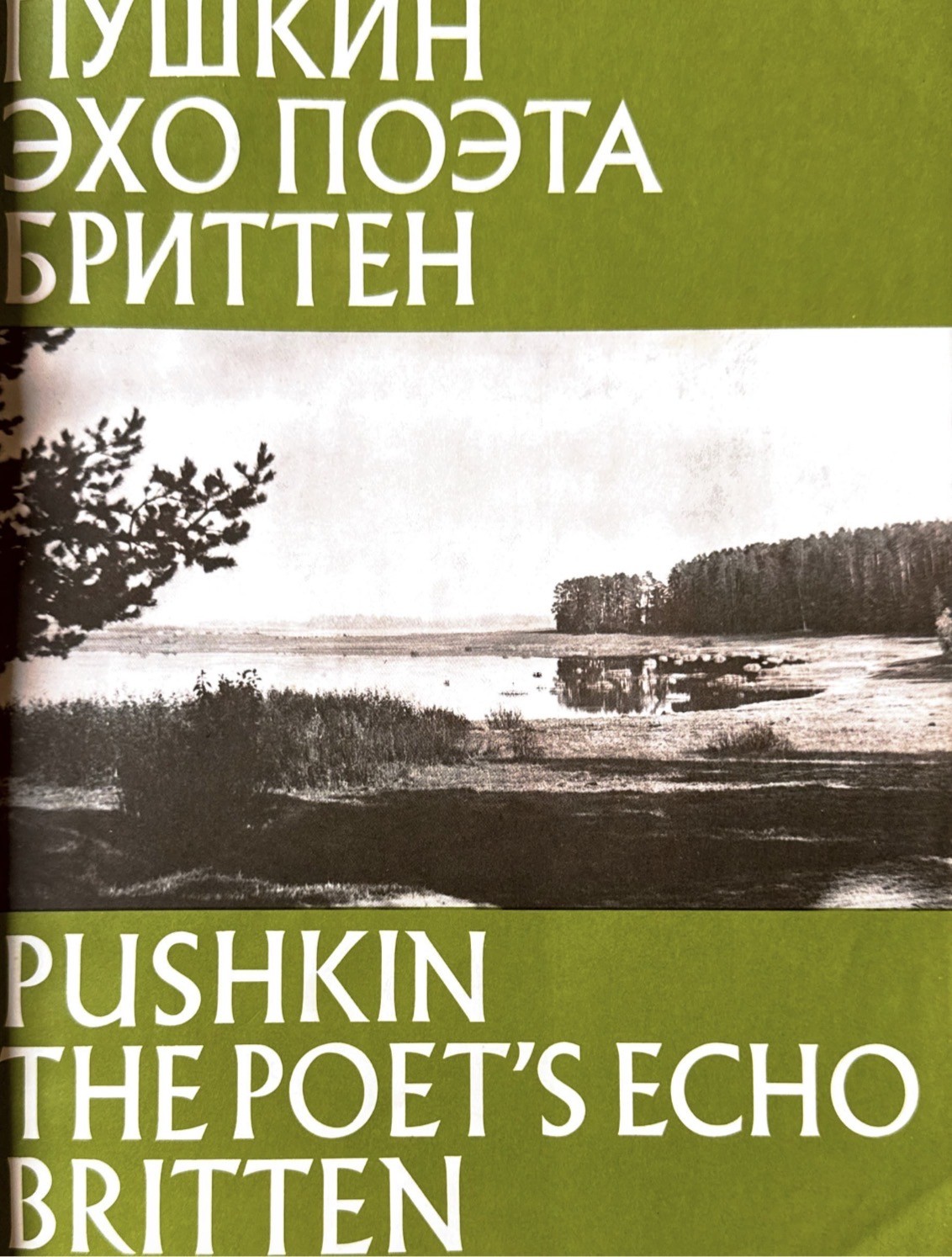
The Poet’s Echo Britten by Pushkin. (Photo Courtesy of Eric Lane)
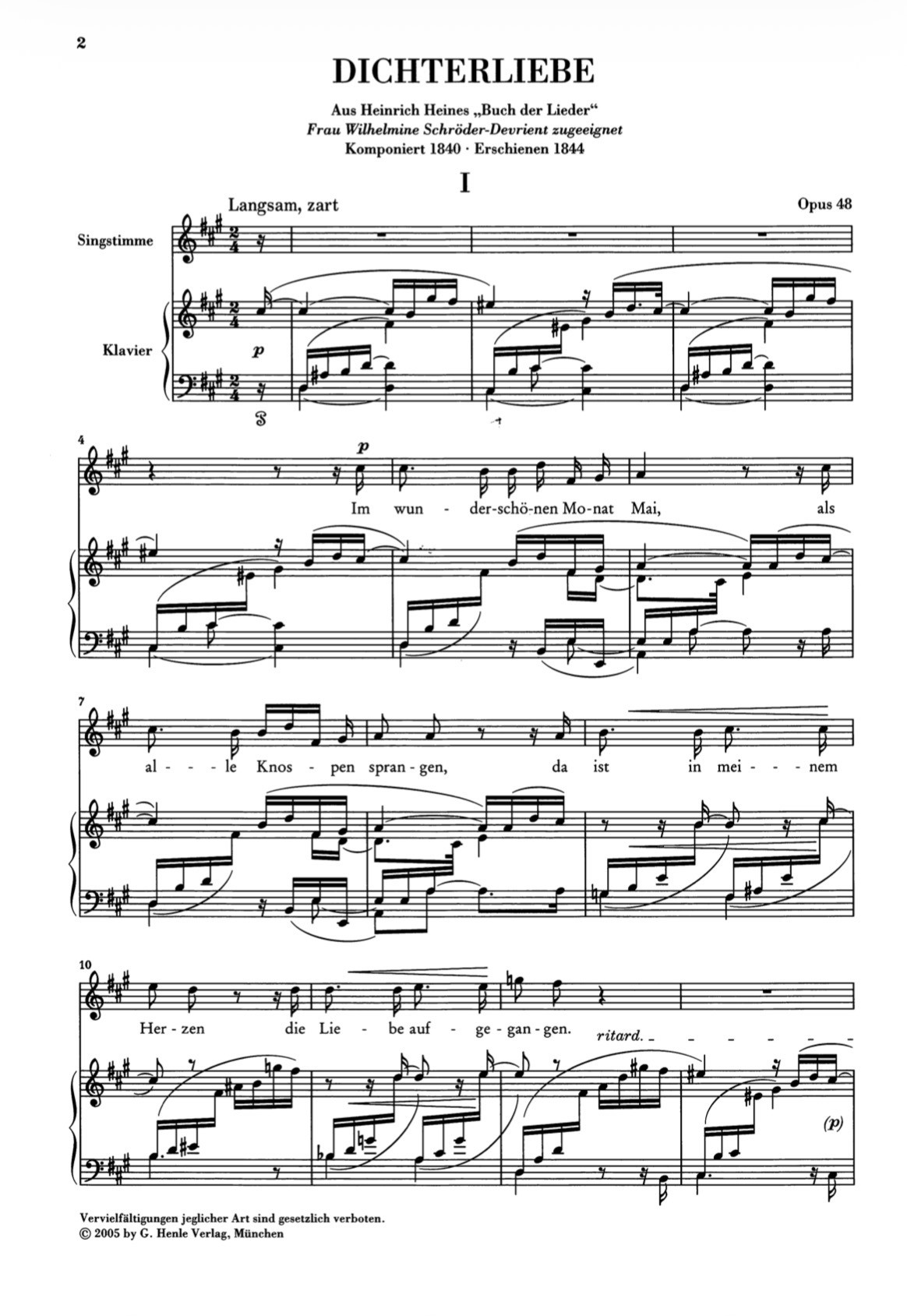
Dichterliebe, a piece intended to performed during the recital. (Photo Courtesy of Eric Lane)
Directly translated as “To Be Happy or Not to Be,” one of the pieces intended to be performed during the recital. (Photo Courtesy of Eric Lane)
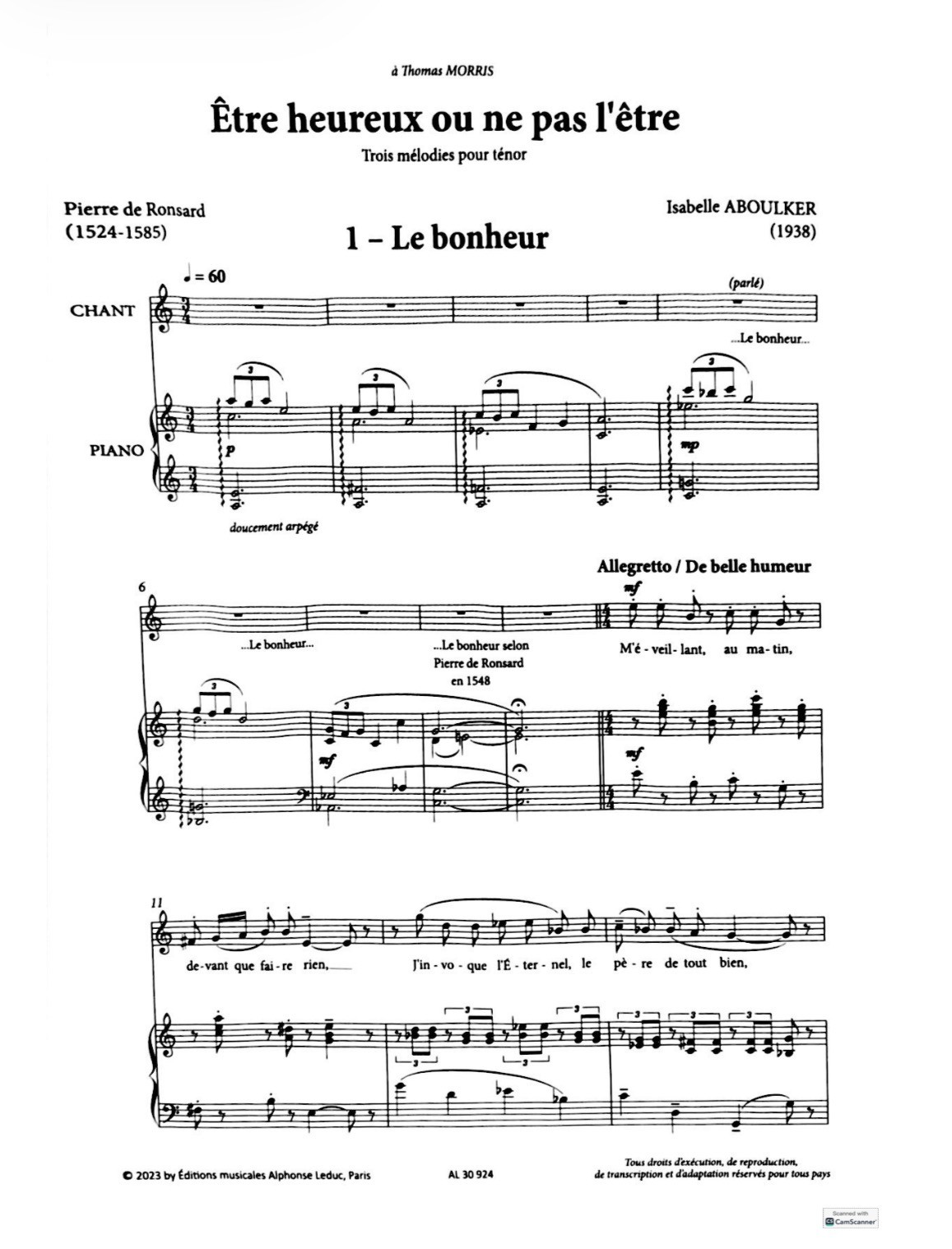
Lane plans to sing three works, “Être heureux ou ne pas l’être” (To Be Happy or Not to Be), “Ekho Poeta” (The Poet’s Echo) and the song set “Dichterliebe” (A Poet’s Love).
Lane and Bukhman were already familiar with two of the pieces.
“In terms of rehearsals, we had one or two in total,” Bukhman said. “This may sound crazy, but it is an absolutely common practice in the professional classical music performance field.”
Finding that all three pieces shared a common theme, Lane selected them to explore the recurring questions around poetry.
“Each of the three named parts of pieces is an answer to what is poetry and what is inside the mind of a poet,” Lane said.
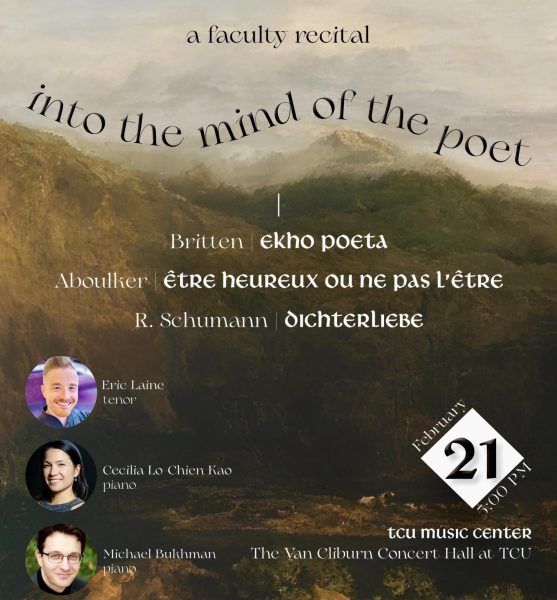 Into the Mind of the Poet poster (Photo Courtesy of Eric Lane)
With pieces in foreign languages such as Russian and German, Lane incorporated visuals and translations to unify the performance. Paired with artwork from the 1800s to the present, each song will feature visual works alongside translations in English and Spanish.
“I like my recital programs to be as immersive and as interactive as possible,” Lane said. “As many ways as I can get people to make sense of this, the better.”
Lane structured the program to guide listeners through contrasting musical styles.
The opening piece, a modern work from the 1950s, is intended to challenge audiences, while the second, set by a French composer, shifts to a cabaret style with more relaxed, approachable melodies.
The final work is designed to immediately engage the audience, with piano taking on a central storytelling role.
“I hope the listeners open their ears and hearts to be touched by this music the way the composers intended; it’s quite the experience,” Bukhman said.