
You know, I was talking with a music scholar recently over from Texas State and he really knows this stuff inside and out. And I was taking about how Tejano has struggled a bit as a genre, in part because of the decline of Tejano-specific radio stations, regional radio. Also, of course, the death of Selena was huge.
But the challenges in that if somebody in Texas isn’t picking up this baton and building on it, I believe he sort of saw a danger of it sort of passing into history and not being a kind of alive sound.
And in part, when you think of some of the Tejano classics, I think a lot of people would go back to the ’90s sound, or the ’80s, as being sort of the height of Tejano music in Texas. And a big part of that was because it incorporated sounds that were very much a part of the discovery of synthesizers and electronic music and their prominence in pop music.
Nowadays it’s sort of different. You find the use of electronic instruments often lower in the mix in popular music, but it’s such a prominent part of Tejano music. It’s so important having that particular sound. And I think he was sort of concerned that nothing’s being done to preserve or advance, even, Tejano music.
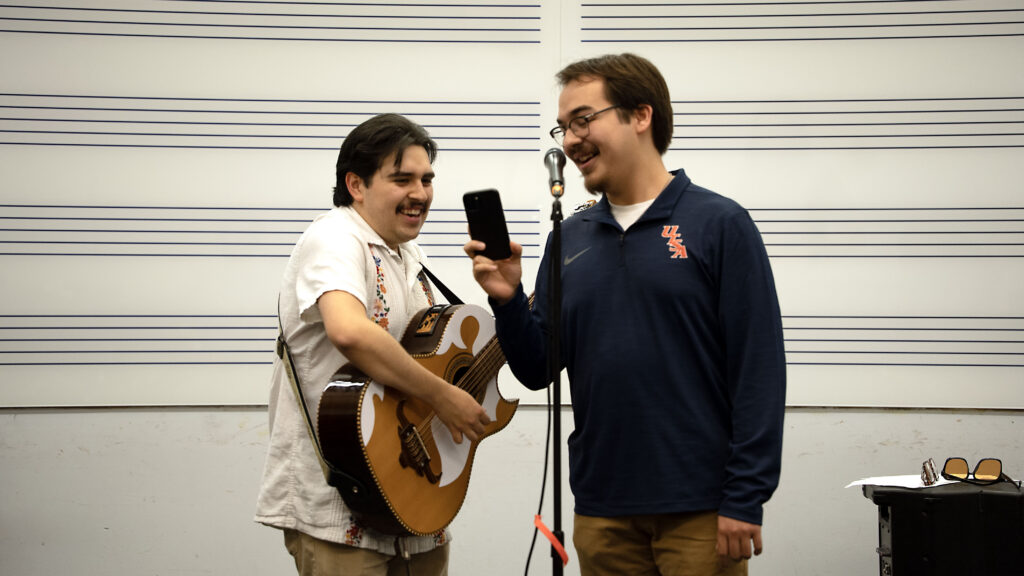
And I’m wondering, Michael, I wanted to hear a little bit more from you, what this means to you now, as someone in the academy. You know, you’re part of the culture of higher education. And what this means to have Tejano studies, an integral part of what you’re doing.
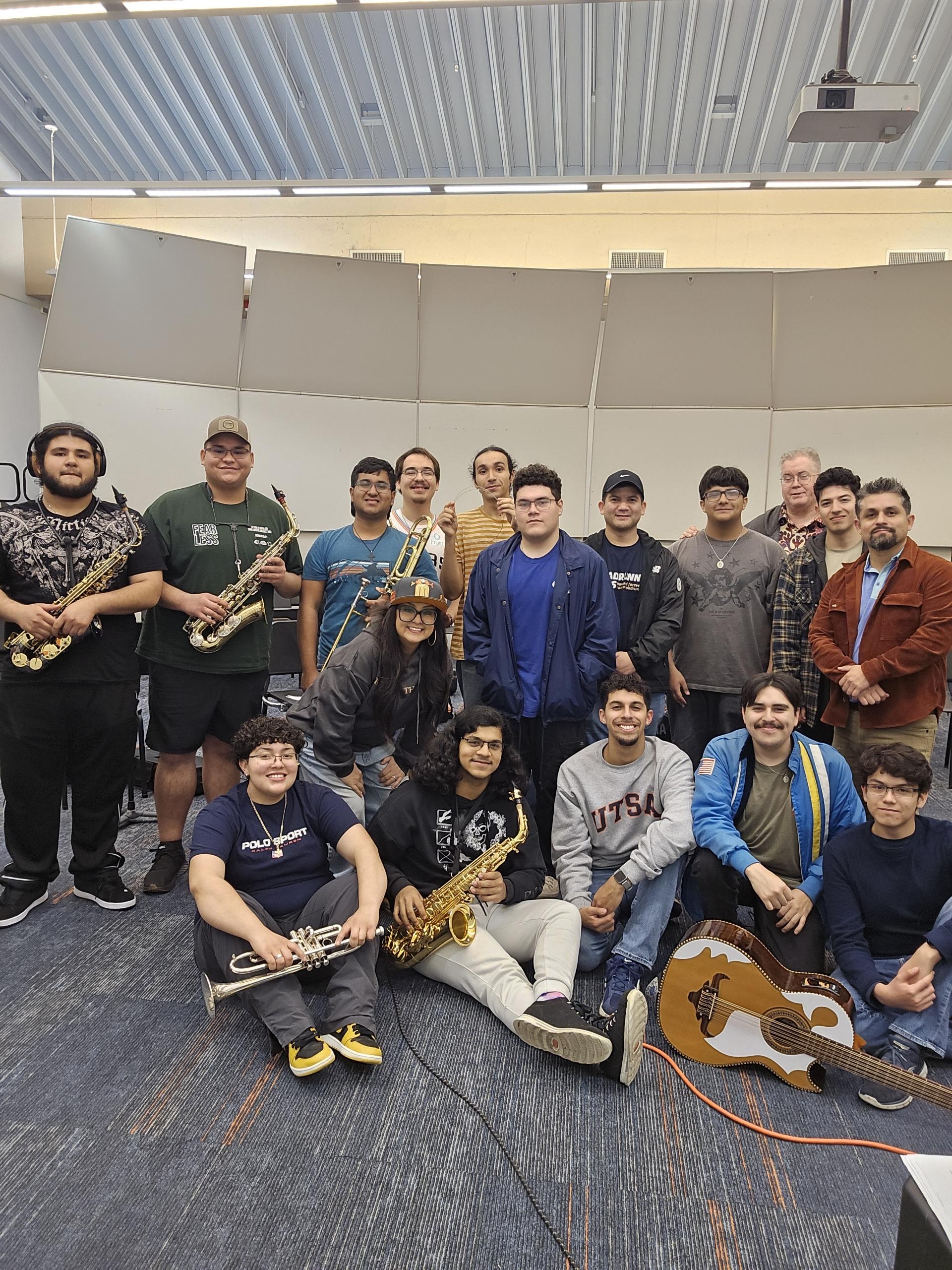
UTSA’s Sonido Tejano ensemble. Courtesy of UT San Antonio
Michael Acevedo: This is huge. When I took this position as the mariachi director at UTSA a couple years ago, one of the visions that I had was bringing Latin music of some sort, not just mariachi, but having at some point at the university level different ways that students can connect with Latin music, different types.
So, to me, having this… You know, the first was the mariachi ensemble. Then there was a second mariachi ensemble, which means more students were interested. So adding this, which is the third, you know, Latin, essentially, ensemble in the program, and one of the first ones at the collegiate level has just been amazing, because it’s part of that vision, you know?
And as you know, when you have a vision, you need supporters, you need help – someone that will back you up. And I feel like that’s where we’re at right now. And then bringing Shelly in the mix has been just a huge, you know, it’s like I’m on a booster seat right now with it, because Shelly has paved the way so much in this genre.
So having it at the university level and showing the other professors there that might’ve not ever heard of Tejano music, may have just kind of passed by, just kind of educating them on what it is and how important it is to our community and to music in itself, I think that is one of the coolest things that we can do, is educate people about it. That’s how we keep it alive.
» RELATED: San Antonio remains integral to conjunto and Tejano’s legacy, even as the genres evolve
What is “mission accomplished” for you, Michael? What do you hope to accomplish with the program overall?
Michael Acevedo: The program overall, I guess, is having a Latin degree studies at UTSA, which means there’s salsa music, there’s Tejano music, there’s Conjunto music, Latin jazz… You know, there are so many different Latin genres.
So I don’t know when, where, but you know I’m calling it into existence – is we will have a Latin Studies program at UTSA to keep all these traditions alive, to push them forward and push them out there for a new generation to continue moving that forward.