
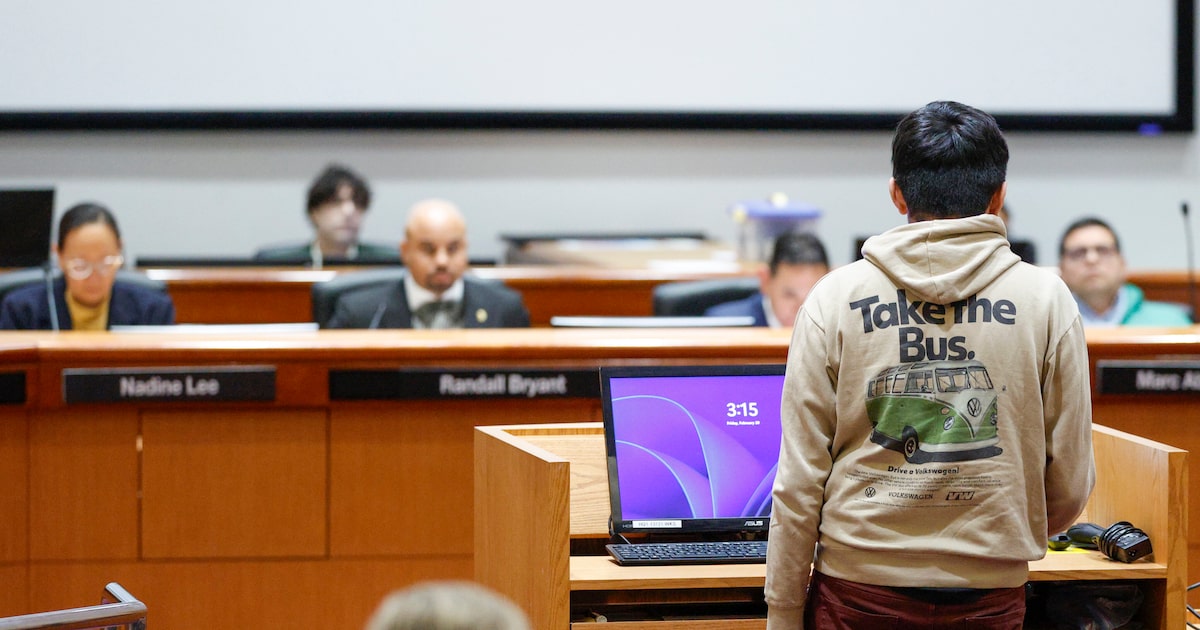
At a special called meeting Friday, Dallas Area Rapid Transit’s board of directors approved a plan that several cities have said could convince them to call off elections to leave the public transportation system.
The compromise is a saving grace for an agency thrown into uncertainty this year but comes at the cost of a chunk of DART’s funds, which some are concerned will spell harmful service cuts.
“This is not going to change anything,” said DART board member Enrique MacGregor before Friday’s vote. “It’s only going to put a Band-Aid on the problems that the cities have. But it is going to hurt DART and the region significantly, because there will necessarily be a reduction in service for the entire region.”
MacGregor, who represents Cockrell Hill and Dallas, was the sole no-vote on the resolution.
Breaking News
Under the resolution approved Friday, DART would return some sales tax to 13 member cities over six years, starting at 5% of annual sales tax collections in the 2026 fiscal year and gradually increasing. Cities that agree to the funding plan will use that money for local mobility needs, according to the resolution.
For each subsequent fiscal year through 2031, the return of sales tax will increase up to 7.5% on DART’s part. The Regional Transportation Council has agreed to match some of the funds returning to cities — $75 million over six years — to help return 10% of DART’s annual sales tax collections to cities by 2031.
Plano, Irving, Farmers Branch and Addison leaders have indicated the plan could be enough to have them cancel May elections to cut ties with the agency. University Park is going forward with its election, and Highland Park’s town administrator hasn’t commented on the town’s plans.
Plano’s DART representative, Anthony Ricciardelli, said the funding deal doesn’t go far enough for cities and favors DART and its riders, but supported the agency extending the offer to members.
“Our work is not done,” he said from the board’s dais. “If we pass this deal and the member cities accept it, we still have a long way to go to create a regional transit system that works for everyone.”
Plano stands to gain more than $61 million back from DART through 2031 under the proposed terms, and Irving could see nearly $54.5 million in returns. In total, DART’s 13 member cities would see more than $434 million returned over the next six years, contributed by DART and the RTC.
The refunds come after complaints that cities outside of Dallas pay too much for the services they receive in return. DART is funded by a one-cent sales tax from 13 member cities — Dallas, Plano and Irving pay over $100 million annually to DART.
For example, Plano staff report the city spends more on DART than police and economic development combined. A 2024 report by the firm EY showed Plano contributed more than $109 million in fiscal year 2023, though DART spent about $44 million on services in the city.
Plano and other suburbs have considered microtransit alternatives to DART, including Via, the on-demand transportation provider Arlington uses in lieu of mass transit.
Along with the refunds, DART is pursuing other funding strategies to attempt to give the equivalent of 25% of sales tax back to members — a threshold some city leaders have supported in the past.
Those strategies include seeking to create a new independent management authority for regional rail in the state Legislature and pursuing a new revenue stream to fund DART.
The agency is also reforming on other fronts. Dallas leaders agreed to give up some power on the agency’s board of directors to appease smaller, suburban cities who say they don’t have a fair seat at the table on the 15-member governing body.
The Dallas City Council approved a proposed governance framework that would shrink the city’s voting power on the DART board to at least 45%, marking the first time in the agency’s more than 40-year history that Dallas would no longer hold majority control.
Related

The plan also would guarantee each of DART’s 13 member cities at least one board seat, replacing a structure that now gives only Dallas, Irving, Garland and Plano at least one board member all to themselves.
Past agreements to refund sales tax have fallen through — of seven eligible cities, none signed an agreement offered last year to join a 5% sales tax refund program with DART. Some submitted revised proposals, and Plano asked for up to 25% of sales tax returns: the same threshold failed in the state Legislature and leaders have said that blow could kill the agency.
After months of renegotiating and six City Council decisions to schedule withdrawal elections, DART’s board of directors executed a new agreement for the sales tax refunds, which must be signed by cities by the end of April in order to participate.
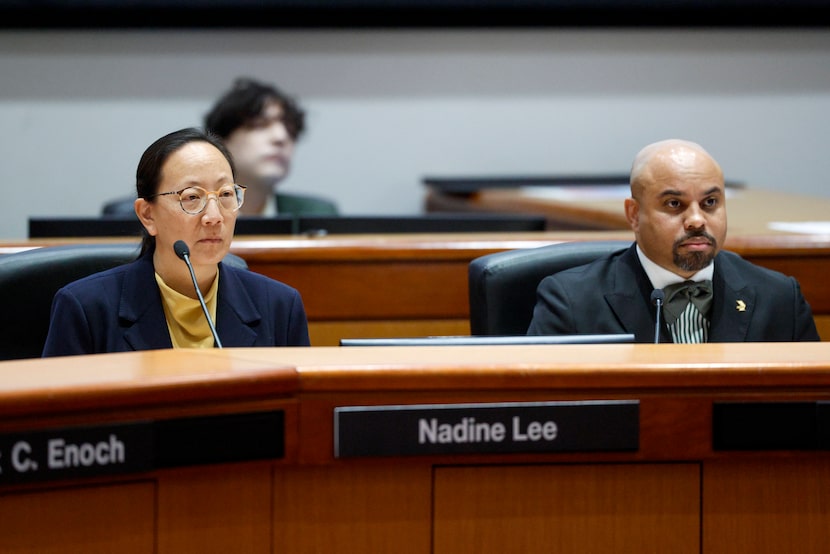
DART President and CEO Nadine Lee (left) and Chair Randall Bryant listen to public comment during a special-called DART board of directors meeting, Friday, Feb. 20, 2026, in Dallas.
Elías Valverde II / Staff Photographer
However it’s just one piece of the puzzle in a multifaceted, last-ditch effort to keep cities in DART.
Plano’s council will vote on approving the agreement with DART on Monday. The council will also consider supporting a reform in DART’s governance structure and requesting legislative action to implement it. Addison and Farmers Branch will consider canceling their elections on Tuesday, and Irving is scheduled to consider the funding agreement and canceling its election on Thursday.
DART’s Hail Mary funding plan comes just days before counties across North Texas reach deadlines to finalize ballot wording for the spring. It might save DART from a mass exodus of members, but transit advocates still have concerns.
DART CEO Nadine Lee has said the agreement will have significant financial impacts on DART and its services, and she hopes cities use refunded sales tax to benefit riders.
More than a dozen people spoke to the board before their vote Friday, pleading with directors to save the services they rely on. Some residents and transit advocates lauded the proposal as a good effort at compromise, but highlighted concerns that subsequent cuts will hurt those who use DART.
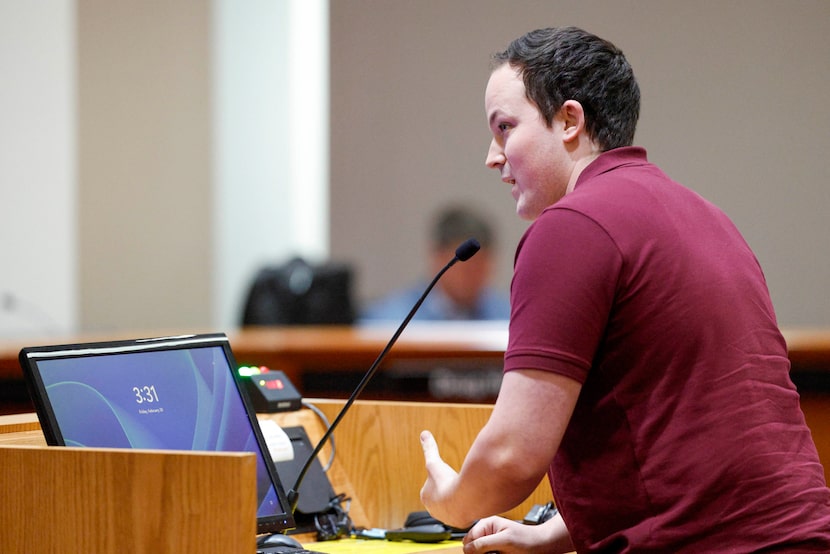
Tyler Wright, vice president of the Dallas Area Transit Alliance, speaks during public comment during a special-called DART board of directors meeting, Friday, Feb. 20, 2026, in Dallas.
Elías Valverde II / Staff Photographer
“We are the ones that are going to be the most impacted by whatever changes need to be made,” said Plano resident Alex Flores. “Talk to us, open up town halls in the individual cities and figure out what services are the ones that are actually being used.”
Some were not optimistic about what the compromise will mean for DART and asked for stricter parameters around the agreement.
“How is this nothing but the beginning of a death spiral for this agency?” asked Dallas resident Alexander Dunn. “Are we just here to preside over the death of this agency … over the course of six years?”
Some criticized the agency for working through “backroom deals” behind closed doors. Speaker Hexel Colorado urged the board to reconsider the funding proposal.
“What these suburbs have demonstrated for us is that if you are willing to walk away, you can get what you want,” he said to the board. “Be willing to walk away at the eleventh hour, just like Plano and Irving and half the member cities have demonstrated they’re willing to do.”