
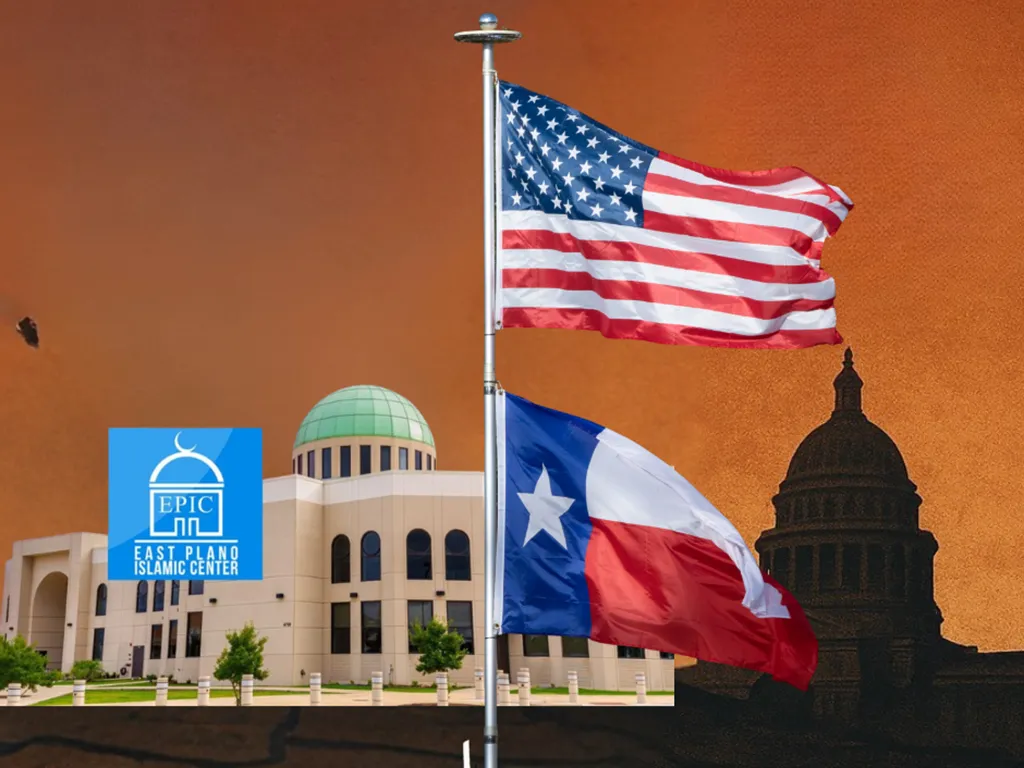
Texas is home to nearly 650 Islamic nonprofit organizations, more than any other state and roughly 8 percent of all Islamic nonprofits in the United States. The vast majority of these institutions serve their communities without controversy. However, a recent report by the Middle East Forum (MEF), a Philadelphia-based think tank focused on U.S. policy in the Middle East, has identified what it describes as significant Islamist influence across a portion of these organizations, triggering legislative investigations, federal action, and ongoing national debate.
The Middle East Forum Report
MEF’s February 2026 publication, “Islamism in Texas,” identifies six major Islamist networks operating in Texas, which the organization claims collectively wield hundreds of millions of dollars in annual revenue and exert influence over approximately one quarter of Islamic nonprofit institutions in the state. An earlier MEF report published in January, “The Islamist Schools Industry in Texas,” examined private religious schools operating under the auspices of these networks and their eligibility for Texas’s new school voucher program. Following its publication, several schools were removed from the state’s database of voucher-eligible institutions.
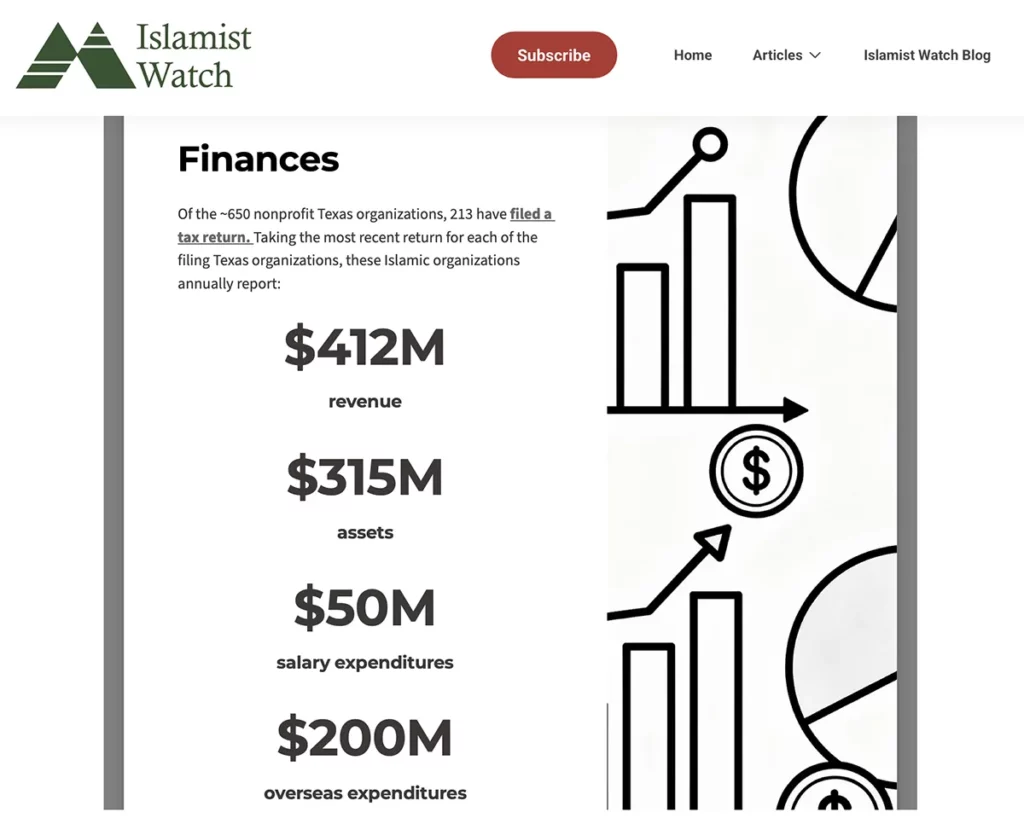 Screenshot of “Islamism in Texas” report (Source: Middle East Forum)
The “Islamism in Texas” report was cited and read from on the floor of the U.S. House of Representatives Committee on the Judiciary on February 10. MEF researcher Sam Westrop presented the findings at an event hosted by the Texas Public Policy Foundation, drawing particular attention to the Deobandi movement, a South Asian Islamic revivalist tradition linked to the Taliban in Afghanistan.
“The Taliban is the best expression of Deobandi Islamism,” Westrop said. “And yet not a single federal policymaker or security service person I’ve spoken with even knows the term ‘Deobandi.’ U.S. policymakers failed to understand the underpinning ideology.” He identified Deobandi madrassas operating in Sugar Land and Dallas as training grounds for imams being deployed to mosques across the country, calling the network the single greatest Islamist threat in Texas.
MEF executive director Gregg Roman stated that Texas represents “a blueprint for the rest of the country,” and called for the creation of a Texas Commission on Islamism to investigate the identified networks, refer groups for criminal prosecution or regulatory review, strip public funding from radical organizations, and empower moderate Muslims to contest extremist influence within their communities.
The East Plano Islamic Center
Among the institutions drawing scrutiny is the East Plano Islamic Center (EPIC) in Plano, Texas. EPIC and affiliated entities have attracted attention over plans to develop a large-scale Islamic community project – referred to originally as “EPIC City” and subsequently as “The Meadow” – involving the purchase of over 400 acres of land and the planned construction of more than 1,000 homes, along with mosques and Islamic educational facilities.
 Proposed development renderings of EPIC City, now referred to as The Meadow (Source: EPIC City)
On February 13, the U.S. Department of Housing and Urban Development (HUD) announced it had launched a formal Fair Housing investigation into EPIC Real Properties, Inc., and Community Capital Partners, LP, the developers behind The Meadow. HUD Secretary Scott Turner stated the development “may have violated the Fair Housing Act by engaging in religious and national origin discrimination.” The allegations, arising from a complaint filed by the Texas Workforce Commission, include marketing materials that promoted the development as an exclusively Muslim community, financial structures requiring lot owners to subsidize Islamic religious institutions, and a two-tiered lottery sales system that allegedly gave preferential access to buyers on a religious basis.
EPIC’s imam, Nadim Bashir, has pushed back on characterizations of the project as exclusionary or threatening. He has described sharia — a term central to much of the criticism directed at EPIC – as “a personal moral code of life, that’s all it is. Standing up for people, serving people, taking care of your family, being honest – this is all part of Shariah.” The word itself means “the correct path” in Arabic, and Islamic scholars broadly describe it as a framework governing personal conduct and communal ethics rather than a state legal system.
The Council on Foreign Relations notes that while most of the world’s Muslim-majority countries reference sharia in their legal codes, there is wide variation in how it is interpreted and applied. A small number of countries retain provisions for corporal punishment under traditional interpretations of Islamic law – including flogging in Iran, Indonesia, the Maldives, and Qatar, and amputation in Iran, Nigeria, Saudi Arabia, and Sudan – though scholars emphasize that evidentiary thresholds for such punishments are stringent, and most Muslim-majority nations do not administer them in practice.
EPIC also is a hot topic in the midst of the Texas Republican primary, set for March 3, between incumbent Senator John Cornyn (R-Texas), his top primary opponent, Texas Attorney General Ken Paxton, and Representative (Rep.) Wesley Hunt (R-Texas). Sen. Cornyn called for the DOJ’s investigation into EPIC City, while Attorney General Paxton launched multiple probes and filed a securities fraud lawsuit against the development in December 2025.
Political and Legal Responses
The MEF reports, along with related coverage from other outlets, generated significant political reaction in Texas over the past year. State legislators launched investigations into institutions identified as receiving public funds through state agencies. The governor’s office designated the Muslim Brotherhood a terrorist organization. Criminal inquiries and civil lawsuits have been initiated against certain Salafi mosques, including EPIC. The HUD investigation into EPIC represents the second federal investigation after the Department of Justice closed its investigation in July 2025, finding The Meadow to be consistent with the Fair Housing Act. There also have been four state investigations.
On February 10, Congressman Chip Roy (R-TX-21) led a House Judiciary Subcommittee on the Constitution and Limited Government hearing titled “Sharia-Free America: Why Political Islam & Sharia Law Are Incompatible with the U.S. Constitution.” The hearing examined efforts to establish sharia-based legal and civic institutions in the United States and whether such institutions conflict with federal law and the Constitution.
Rep. Roy attempted to frame the hearing’s scope narrowly, stating: “Let’s be clear, this is not about having the freedom of worshiping a religion of one’s choosing such as Islam, but forcing a foreign legal code that is incompatible with our laws and legal system that provides unwanted consequences to the American people.”
Ilya Somin, Professor of Law at George Mason University’s Antonin Scalia Law School, who offered a pointed constitutional counterargument. Somin testified that “almost all Muslims to some degree or another are Sharia law adherents because Sharia law is simply the religious precepts of Islam,” and warned that any law targeting sharia adherence would function as a law targeting Muslims as a religious group; comparable, he argued, to targeting Jews through laws aimed at Talmudic law or Catholics through laws aimed at canon law.
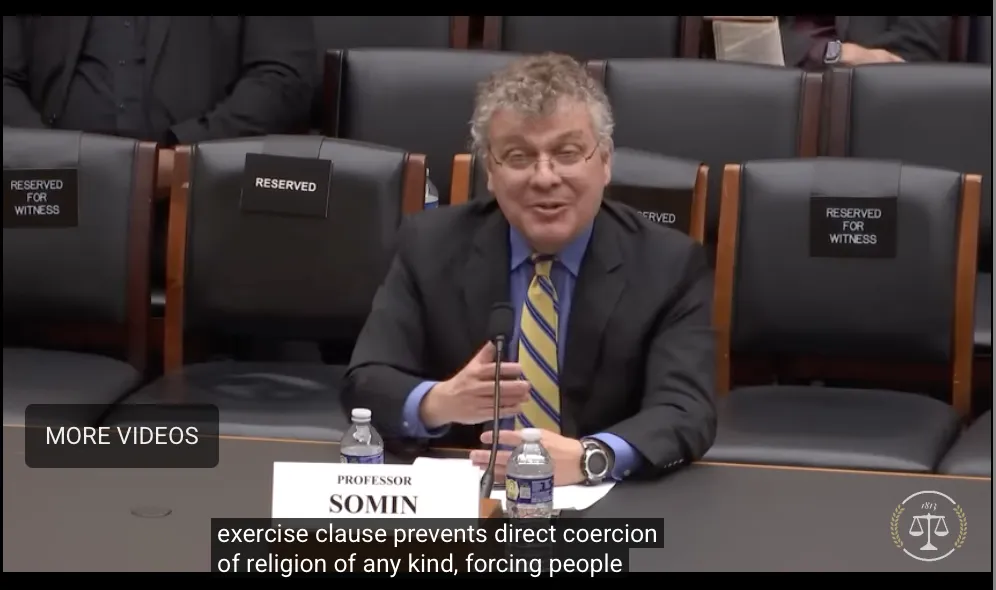 Screenshot of Professor of Law Ilya Somin during February 10 House Judiciary Subcommittee on the Constitution and Limited Government hearing titled “Sharia-Free America: Why Political Islam & Sharia Law Are Incompatible with the U.S. Constitution.” (Source: judiciary.house.gov)
He argued such a law would violate both the Establishment and Free Speech clauses of the First Amendment, and emphasized that “there is no immigration exception to the First Amendment,” meaning constitutional protections would apply even to noncitizen immigrants. Somin further noted that survey data consistently shows the vast majority of Muslim Americans do not support terrorism or the imposition of an Islamic theocracy, and that many Muslim immigrants in the United States are themselves refugees who fled radical Islamist regimes, including those of Iran and the Taliban.
The other witnesses – Stephen Gelé of the Pelican Institute for Public Policy, Robert Spencer of the David Horowitz Freedom Center, and Krista Schild of the RAIR Foundation – offered perspectives more aligned with the hearing’s stated premise that political Islam and sharia pose a structural threat to constitutional governance.
The hearing highlighted the central tension in an ongoing national issue: the distinction between Islam as a religious faith protected by the First Amendment, and Islamism as a political ideology that critics argue seeks to impose religious law as a governing framework. Where that line falls – and who has the authority to draw it – remains deeply contested among legal scholars, policymakers, and Muslim communities alike.
Context and Competing Perspectives
The MEF’s conclusions have not gone without challenge. Critics of the organization note that it is an advocacy group with an explicitly stated mission to counter Islamism, and argue that its framing risks conflating mainstream Muslim religious practice with extremism. Civil liberties advocates have raised concerns that investigations targeting Muslim institutions based on religious affiliation could infringe on First Amendment protections.
Supporters of the investigations counter that the concerns raised are about funding, political ideology, and foreign influence networks, not religious practice itself. In fact, supporters argue that moderate Muslim communities are among those most harmed by the dominance of Islamist organizations over American Muslim civic life.
The HUD investigation into EPIC, notably, does not focus on religious ideology but on fair housing law; specifically whether a residential development may have illegally discriminated against non-Muslim buyers, a legal question independent of broader debates about Islamism.
Looking Ahead
Texas finds itself at the center of a national conversation about the intersection of religious freedom, national security, foreign influence, and civil rights. With congressional attention, federal investigations, ongoing state-level inquiries, and competing legal actions all converging, the outcomes in Texas are likely to shape how these questions are addressed across the country. How policymakers, courts, and Muslim communities themselves respond will be closely watched.