
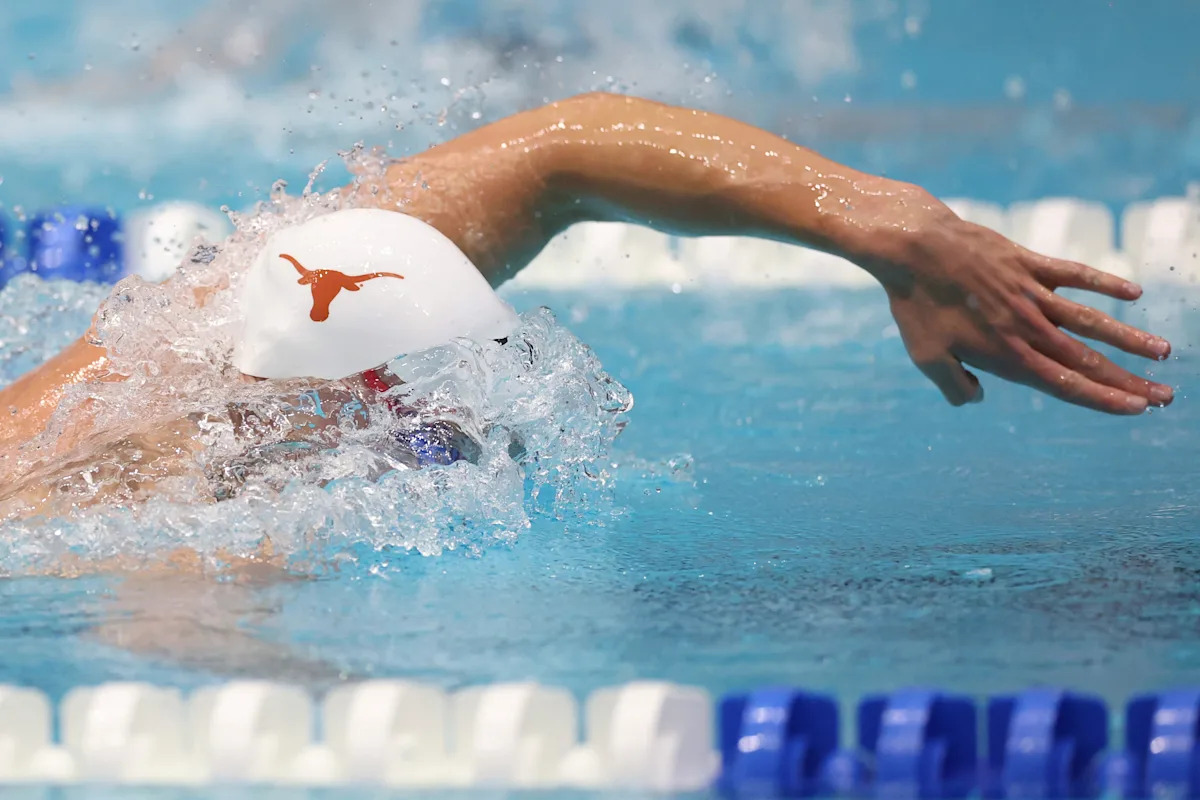
KNOXVILLE, Tenn. — Since joining the Southeastern Conference, the Texas Longhorns have taken the league by storm.
In two years, they’ve won all four team titles in swimming and diving.
Texas was the biggest change to the league in 2025, and although it once again swept the championships, the SEC looked different in 2026.
Advertisement
The meet was defined by a lack of COVID-19 fifth-years, new roster limits, top-end speed and a new event schedule.
Here are the main takeaways from this year’s SEC swimming and diving championships:
Texas cements itself as the kings and queens of the SEC
A year ago Texas took over the SEC in the pool and on the boards. In 2026, the Longhorns pulled off another sweep, winning both the men’s and women’s title.
The scariest part: The squad from Austin still had room to improve.
The Texas men left no doubt, holding down first place from the start. The women’s meet was close through three days of competition, but the Longhorns’ elite depth proved to be too much for the rest of the conference.
Advertisement
The Texas men are the blueblood of collegiate swimming. With 16 national championships to their name, the Longhorns have been title contenders for the past four decades. They have also won 28 consecutive Big 12 titles, which is every single year of the league’s existence until they left for the SEC. It’s no surprise they have taken over the conference.
Hubert Kos’ SEC performance encapsulated the dominance of the Texas men. The 2024 Olympic 200-meter backstroke gold medalist won two of his three events. His most impressive feat is that he swam two championship finals on Saturday night and won gold in the 200-yard IM and silver in the 200-yd backstroke, with only about 45 minutes of rest between the two swims.
To put it simply, Texas has the talent of a pro roster. Whether it’s young stars or veteran leadership the Texas men have it.
On the women’s side the Longhorns were fueled by the pure depth of the roster.
Advertisement
Campbell Stoll and Angie Coe both won two of their three events. Stoll swept the 100-yd and 200-yd butterfly while Coe swept the 200-yd and 400-yd IM’s.
The Longhorns freshman and sophomore classes reinforced the team’s strengths and were a major factor in their seven wins this week.
“Great competition, a lot of fun…this environment brings out the best in our team,” Texas women’s head coach Carol Capitani said after the meet.
Texas will now set its sights on the NCAAs in March where the women look to compete for another top-three finish and the men look to repeat as national champions.
Florida’s Josh Liendo chases history in the 100-yd butterfly
For four years Florida’s Josh Liendo dominated SEC waters.
Advertisement
He’s a 19-time All-American, two-time Olympian, and, as of this week, an 18-time SEC champion.
Liendo stole the show at this year’s SEC championships. After winning his fourth straight 100-yd butterfly and first 50-yd freestyle title this week, Liendo has cemented himself as one of the most successful swimmers in SEC history.
He swam the 100-yd butterfly in 43.06 seconds, the second fastest of all time behind Caeleb Dressel. That morning he swam the fastest preliminary time in history in 43.26 seconds.
Liendo has broken SEC records, posted the fastest splits in history, and led relays to multiple NCAA championships in NCAA record fashion. However, he has never broken an individual NCAA record.
Advertisement
Still eluding Liendo is what many considered an untouchable record. Dressel holds the national record in the 100-yd butterfly at 42.80 seconds. Achieving that mark would move Liendo into the top tier of all-time collegiate swimmers.
Liendo ended his SEC career on a low note, falling to LSU’s Jere Hribar in the 100-freestyle final, spoiling his perfect week. Hribar’s win was the breakout swim of the meet, stealing the gold, posting the fastest time in the country this year and breaking Liendo’s SEC meet record.
Regardless, all eyes will be on Liendo come March. The senior will be the focal point of the NCAA championships, and he has a chance to become one of the most recognizable names in collegiate swimming history.
Tennessee women find success a year ahead of schedule
As the final race came to a close, Texas wasn’t the only team celebrating its week in Knoxville.
Advertisement
The Tennessee Lady Volunteers left their home pool with smiles on their faces and momentum on their side. The Lady Vols have only two seniors on the roster, and were able to jump up to second in the team standings after a third-place finish in 2025.
Camille Spink dominated the sprints, sweeping the 50-yd, 100-yd and 200-yd freestyle for the second year in a row. She won the 50-yd freestyle in SEC meet-record fashion, becoming the sixth woman to ever break 21 seconds, stopping the clock at 20.87.
Spink is now the fourth-fastest performer of all time in the 50-yd free and fifth fastest in the 100-yd freestyle.
“Nobody does it like a Tennessee Vol,” Spink said in her postrace interview after winning her third straight SEC 50-yd freestyle title.
Advertisement
Tennessee won three of the five relays and set two SEC conference records in the process in the 200-yd and 400-yd medley relays. Japanese Olympian Mizuki Hirai, junior world record holder in the 100-meter butterfly, was the catalyst Tennessee needed for championship season.
Tennessee has the No. 1 signing class arriving next fall and the Lady Vol sophomore class stacked up 12 medals this week, including two individual golds. With only two seniors graduating in 2026, the Lady Vols are set up for success in the near future.
A new era of SEC swimming and diving has arrived
SEC records were falling throughout the week, but one of the biggest takeaways from the week was the way the depth of the conference fluctuated in 2026.
Advertisement
The meet saw success by a new wave of freshmen and sophomores, noted by Capitani in her postmeet interview on ESPN. The field was young and extremely talented, but also inexperienced.
There was no lack of speed from the top-end talent in Knoxville, but the overall conference depth took a hit in 2026.
In the men’s 400-yd IM, it took a time of 3:52.26 to get a second swim in the finals session. In 2025, swimmers had to be 3:47.63 to be in the top 24. That’s a 4.63-second difference year-over-year.
The men’s 50-yd freestyle field was impressive, which saw nine men break the 19-second barrier. However, the majority of events saw that times for 24th place were slower than a year ago.
Advertisement
That raises the question: Why? There are a number of factors. In the past year, men’s rosters in the SEC were limited to 22 and teams were forced to cut a significant chunk of their rosters. This means smaller training groups, less margin for error and less depth on a team-by-team basis.
Additionally, the SEC reordered the event lineup for the meet in 2026, changing the flow of a typical swimming and diving championship meet event order.
The final factor could be the turnover in athletes. Last year was the final time COVID-19 fifth-year swimmers dominated finals, as the majority of the class that were freshman in 2022 aged out of college athletics.
Overall, there are a lot of moving parts in non-revenue sports, and the SEC experimented in many different ways in 2026.
Advertisement
Full team results
Men
Women