
By Sheldon Munroe
Photography By Sheldon Munroe
Reporting Texas
 Technology venture capitalists from around the world who converged in Austin recently say the Texas tech ecosystem is still young and creating distinctive investment opportunities in a rapidly expanding digital economy.
“What I found in Texas in the last few days, I felt these venture capitalists are so patient and they are looking for solutions that solve real-world problems.” said Susan Akbarpour, managing partner at Candou Ventures in the San Francisco Bay Area.
She contrasted this with California, where she said VCs often chase trendy pitches in popular technology concepts, funding flashy ideas good for hype but not built for lasting enterprise impact.
“In Texas you build companies to last,” she said.
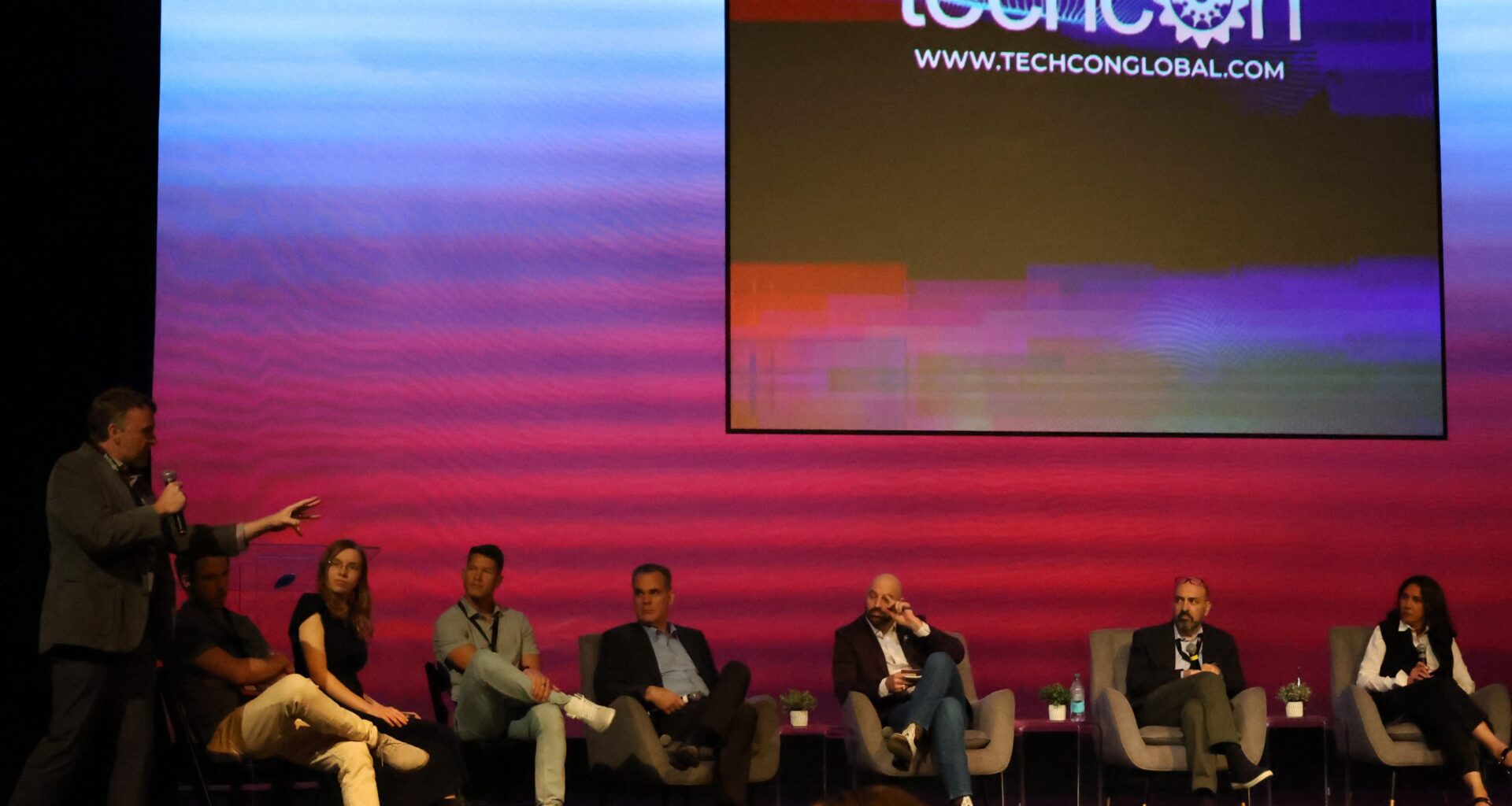
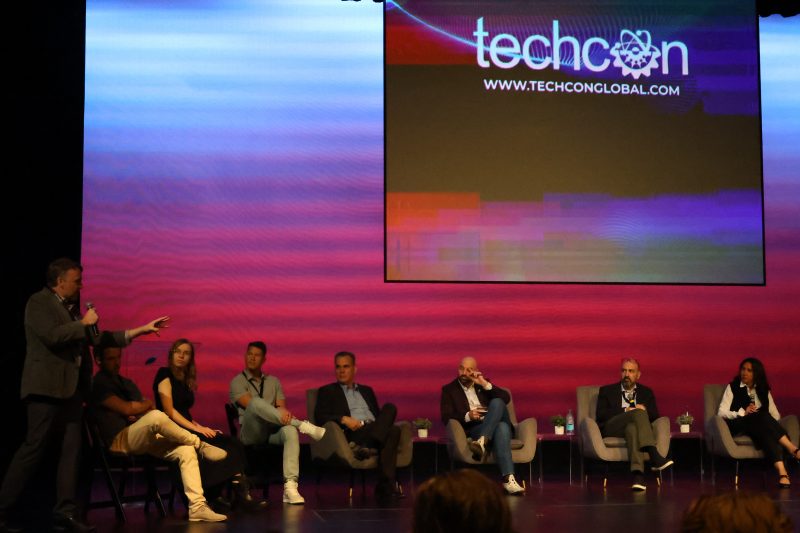
Akbarpour and more than 100 other venture capitalists were in Austin this month for the inaugural TechCon Southwest conference at the Bullock Texas State History Museum.
The event, presented by TechCon Global, focused on the next wave of tech innovation, such as AI, semiconductors and biotech. It is designed to connect startup founders, early-stage investors, industry executives and community supporters.
In the intense race for creation and application of increasingly capable AI systems, a major focus for companies is where to obtain funding. This makes venture capitalists some of the most important people in the tech space right now.
Silicon Valley has reasserted itself as the dominant leading area in artificial intelligence and venture capital funding following a notable exodus of tech labor and VC funding between 2021 and 2024. Over the past year, however, Silicon Valley pulled in a record $178 billion in venture capital, roughly 52% of all U.S. venture capital amid an “AI gold rush.”
Texas is attracting venture capital attention for a different reason.
“Having spent time on both coasts and moving to Austin … you meet people and you really see their depth,” said Nikos Iatropoulos, managing partner at IA Global Ventures. “You see their devotion to what they are doing and that really translates into their businesses as well. They are looking for real customers and real problems and there is less glamor.”
Examples of such companies are Supersafe Intelligence headquartered in Palo Alto. In June 2024, the company launched with the focus of researching how to ensure artificial intelligence is friendly and safe towards humans. By 2025, the company had raised $2 billion, most recently at a $32 billion valuation. By 2026 the company is yet to have a product, customers or revenue.
In contrast, AlphaRose, an Austin-based company, was featured at the TechCon conference for its use of AI to spot rare genetic diseases. Using direct patient involvement, it designs affordable, effective genetic medicines for the millions affected by rare, untreated genetic disorders. It is generating revenue and currently raising $10 million on a $30 million pre-money valuation.
Many analysts, such as Steve Brotman, a venture capitalist and founder and managing partner of Alpha Partners, and Deedy Das, a tech investor and partner at Menlo Ventures, believe that venture capitalists in the Bay Area are driven by a fear of missing out on investment opportunities, even when those companies may not be profitable anytime soon.
Many Texas-based tech companies are using their AI applications directly in healthcare, aerospace and energy and have access to talent without the coastal pressures of boom-and-bust cycles. Such companies include Autonomize AI which streamlines manual health care processes using specialized AI agents, and CesiumAstro, a global leader in advanced connectivity for space and defense.
“I think there’s an appreciation that founders here may seek out to solve a real but modest problem,” said Mike Marcantonio, a partner at LiveOak Ventures, a venture capital firm based in Austin.
He noted that Texas investors are comfortable backing these smaller initial markets under the expectation that success will lead to larger “act two and three” expansions, unlike Silicon Valley, where many investors demand substantial scale from the outset.
In the past month alone two Texas companies raised massive capital. Apptronik, a University of Texas spinoff based in Austin building humanoid robots, extended its initial round of investments to over $935 million. This included a $520 million extension in early 2026 based on a $5 billion valuation with backers such as Google, Mercedes-Benz, AT&T Ventures, John Deere and Qatar Investment Authority.
Another Texas-based company, Saronic Technologies, based in Austin and focused on autonomous naval vessel defense technology, raised $600 million in Series C, or late-stage financing, at a $4 billion valuation.
“Ten to 15 years ago that would have been unheard of for a company that is still based here. Everyone would have to go to the Bay Area to get that kind of money,” said Nikos Iatropoulos, managing partner of Austin’s IA Global Ventures, said when speaking on Apptronik’s recent capital investment.
Prerna Sharma, an Austin-based general partner at Antler Venture Capital, said the Bay Area startup environment “has a lot of noise to it” that must be sifted through. “If there is a founder sitting in Houston and building something awesome, they will invest in you over a SF-based founder,” she said.
Many venture capitalists and executives at TechCon pointed to the ethos of the Austin and Texas tech scenes as a key component of their venture capital attraction.
“Most of the companies that I see are grounded in deep tech and are doing very complex problem solving. Their valuations are reasonable, and there are good schools Rice and UT-Austin,” said Faisal Mushtaq, the founder and CEO of TechCon Global.
Austin’s tech ecosystem laid its foundation between the 1950s and 80s with Texas Instruments, IBM and Motorola establishing a strong presence in the state focusing primarily on defense and semiconductors. In the 1980s the founding of Dell Computer solidified Austin in the nation’s tech scene. By 2025 Texas has witnessed the expansion of Google, Meta, Samsung, Apple, Oracle and Tesla into the state while local leaders Dell, AMD and Silicon Labs provide stability.
Many executives feel that the Texas tech scene is just beginning in regards to venture capital investment opportunities.
Darin Brannan, CEO of Austin-based Terminal Industries, noted that roughly 100 people are moving daily from the Bay Area, and the recent arrival of preeminent Silicon Valley executive search firm Lonergan Partners in Austin signals an important threshold crossed. “This means that they feel there is enough talent here to help these VC’s.”
“I’m telling you, Austin is still in its infancy,” he said.