
Find something else to do
So, how do you counteract the urge to doomscroll?
It can help to understand where the impulse comes from. Many patients and caregivers report feeling a loss of control after a cancer diagnosis. Seeking information online feels like a simple and easy way to reclaim it. Unfortunately, it doesn’t always work that way. Instead of the reassurance you’re hoping to find, you end up finding its opposite.
In those situations, I recommend unplugging completely and doing something restorative just for you. Go outside and feel the breeze on your face, do some journaling, or just sit quietly and sip some tea for a few minutes.
If you’re an MD Anderson patient, you can also schedule self-care activities through MyChart without a referral. Current offerings at the Integrative Medicine Center include:
Some of these classes are exclusively virtual, but they’re still interactive and involve other people. So, they’re a much better choice than doomscrolling.
Set time limits on various apps
Avoiding screen time altogether is unrealistic — especially since a lot of us use computers and phones in our jobs. But you can take steps to control your recreational screen time and set some healthy limits.
If you find yourself wasting hours on social media every day, for instance, use the controls on your device to set timers. Give yourself a 10- or 15-minute limit per day before each app shuts off automatically.
Also keep in mind that what you’re using a screen for matters.
A video chat with a friend, for instance, is much better than consulting Dr. Search Engine or AI for advice. And, doing an online puzzle to counteract chemobrain is not nearly as bad as doomscrolling through endless newsfeeds. That’s especially true if you’re looking at a screen while sitting or lying down. People tend to become very lethargic in those situations, and being too sedentary is not good for anyone.
Restrict your screen time before bed
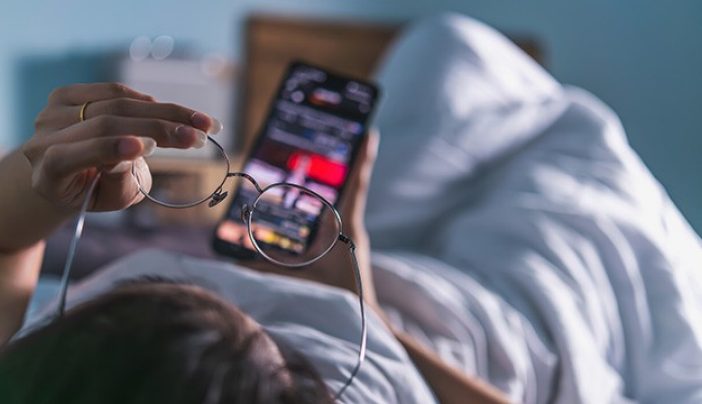
At night time, you’re not scrambling to make your next appointment, trying to get the laundry done, or rushing to get the kids to soccer practice. So, when you get caught up in doomscrolling late at night, it can be particularly bad for your health.
The blue light from screens can disrupt your sleep cycle, making a pre-existing condition worse if you’re already dealing with cancer-related fatigue. And, not getting enough sleep can negatively affect your immune system, as well as perceived pain levels and even cognitive function. So much of what you see online is not even real these days, due to filters and AI, that your body image can become distorted, too.
That’s why I recommend making your bedroom a no-screen zone. If that’s not possible, try not to look at any screen for at least an hour — or ideally, two — before bedtime.
Seek more connection with loved ones
Nobody ever looks back at their life and thinks, “If only I’d had a few more minutes to watch cat videos….” Doing things we enjoy with the people we care about most is what gives life meaning. So, why not give yourself more of those experiences now?
Even if you can’t go on your dream trip just yet, you can still read guidebooks together and discuss possible destinations.If you’ve always wanted to learn how to knit or do needlepoint, take a class or ask a friend to teach you, then bring the supplies to your next medical appointment.
The bottom line is that there are much better ways to spend your time than staring at a screen. If you focus on what you could be doing instead — and with whom — your screen time will most likely drop off naturally.
Catherine Powers-James, Ph.D., is a licensed clinical psychologist in our Integrative Medicine Center.
Request an appointment at MD Anderson online or call 1-877-632-6789.