
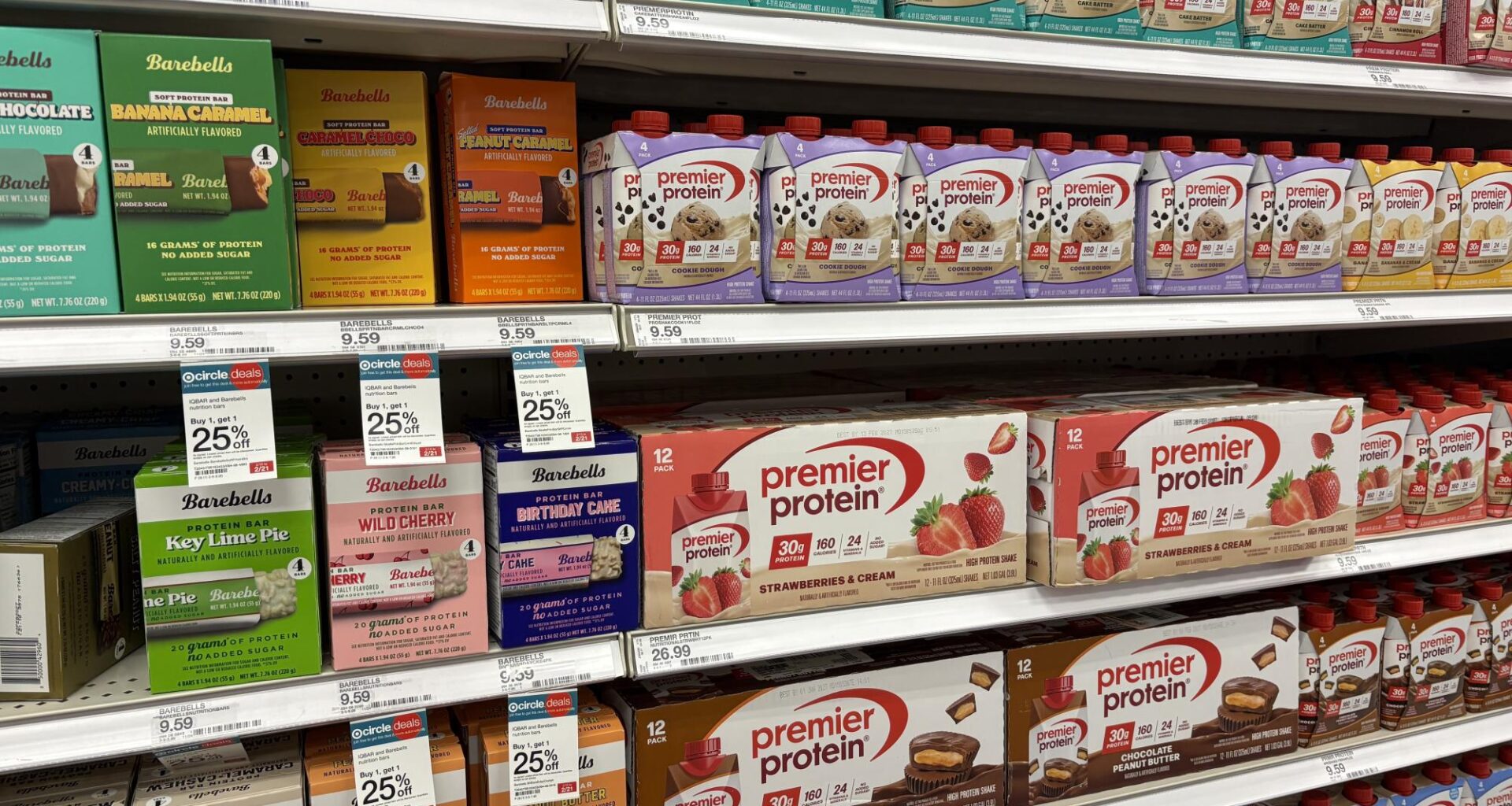
The hottest word in food marketing is no longer “low-fat” or “organic.” It’s protein.
When walking through the aisles of a grocery store or scrolling past fitness influencers on social media, protein is everywhere.
Diet trends like these are not new. The 1980s highlighted low-fat diets, while paleo and keto diets took the 2010s by storm. Yet, consumers are seeing language around health, wellness and dieting much more frequently because of the rise of social media.
“I think we can kind of blame social media when it comes to where we see the most widespread information about trends,” said Rebecca Dority, a professor of professional practice and the director of the TCU Didactic Program in Dietetics. “Whereas 20 or 30 years ago, we saw dietary trends originate from either healthcare providers or magazines that had self-help articles.”
Social media influencers often post “what I eat in a day” videos showcasing their diets to their followers and creating new trends.
“Influencers definitely have a big impact in propelling that trend and extending the trends that are set by brands,” said Philip Kim, an assistant professor of marketing.
What many consumers might not realize is that food items that seem like a healthy alternative might have other “bad” ingredients that customers are unaware of.
“They aren’t lying about the high amounts of protein, but if that coincides with a high amount of sugar or ultra-processed ingredients, then that full picture is not communicated,” Kim said.
Kim mentioned that brands emphasize “demonizing” certain ingredients over others to make their products seem more appealing.
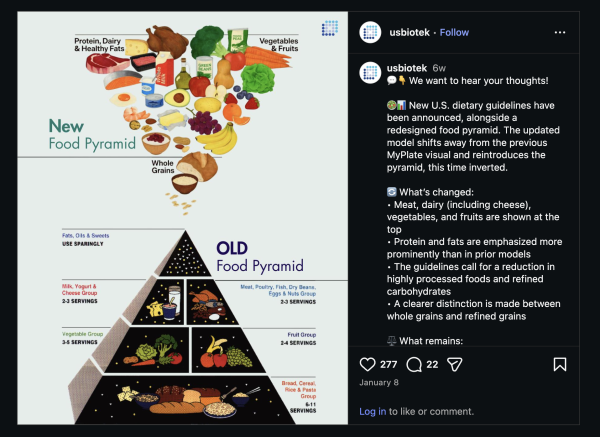 New U.S. dietary guidelines and food pyramid. Screenshot from @usbiotek Instagram.
Regarding protein, Dority said the amount someone needs to consume each day changes from person to person.
“Even though there may be a segment of the population that could use more protein, or any other nutrient for that matter, that doesn’t automatically mean that the bulk of people need to increase their intake,” Dority said.
Unless dietitians can see a patient’s full diet and exercise patterns, they cannot make recommendations about whether an increase in protein would actually benefit them, Dority said.
With recent changes to the Dietary Guidelines for Americans recommending higher amounts of protein and a social media boom of high-protein diets, it can be confusing for consumers to determine how much protein is right for them.
“Even something that started as good or factual information can end up as something totally different after it gets picked apart and molded into how we want it to be or how we interpret it,” Dority said.
When buzzwords are used in food marketing, readers may not realize that many of those claims are not regulated by the Food and Drug Administration or the Federal Trade Commission.
“I think there could be more regulation to mandate firms and brands to be a little bit more transparent about communicating to consumers the benefits and risks associated with their products,” Kim said.
Both Dority and Kim reflected on how consumers have an important responsibility to educate themselves about the foods they eat because oftentimes the marketing language can cause confusion.
“There’s a big segment of the population that has not received any education on health and nutrition,” Dority said. She also said that those in this segment are more vulnerable to messaging that is being pushed on social media.
So, what diet trend should we follow?
“In a perfect world, I would like to have people cooking more of their meals at home and being in control of the ingredients,” Dority said. “While it takes a lot of knowledge, and everyone might not feel comfortable cooking, if more people prepared meals, I think that would bring so much more awareness to what’s going into people’s bodies.”