
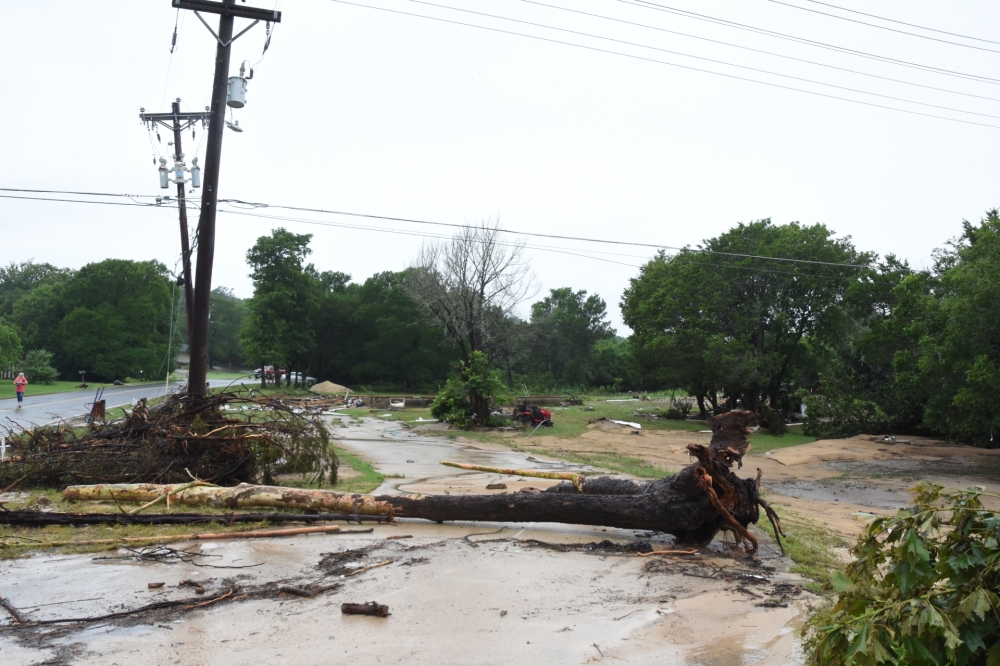
The focus of a national initiative to build climate resilience at the local level in Central Texas will focus on three specific climate hazards, the Center for Climate and Energy Solutions announced in February.
What you need to know
The Feb. 18 announcement states that the “triple threat” of extreme heat, wildfires and flooding in the area will be the focus of the Climate Resilient Communities Accelerator hub in the area. This comes after months of meetings with area leaders, assessment of area disasters and other information gathering.
This accelerator program will be the first through the CCES to include flooding, according the news release.
“Although the harmful impacts of any of these hazards alone can be very significant, the compounding impacts when they overlap can be devastating,” the release states. “Extreme heat can amplify wildfire risk, and heavy rainfall immediately following wildfire can increase erosion and flooding due to soil and vegetation changes.”
Remember this?
In October, the Austin-San Antonio region was named as the site of the next hub for the Climate Resilient Communities Accelerator, a national initiative focused on engaging local governments, businesses, nonprofits, academics and communities to identify potential solutions to climate challenges.
The details
The accelerator will provide a “structured environment”, per a September news release from the city of Austin and Travis County Emergency Services District No. 2, also known as the Pflugerville Fire Department, where participating organizations can share data as well as align existing resources and efforts already in play to come up with innovative solutions.
Why now?
In recent years, Central Texas has experienced increasing instances of extreme weather, such as winter storms in 2021 and 2023; a 2022 tornado in Round Rock; wildfires throughout the region; extreme heat; and flooding along the Guadalupe and San Gabriel Rivers in July.
These are the most common climate hazards in the area, said Zach Baumer, director of the city of Austin’s Office of Climate Action and Resilience in an October release.
Per the February announcement, finding ways to address these climate concerns can drive regional investment in both the private and public sector, as well as improve public health and safety for impacted communities.
Drought was also identified as a major area of concern for the region.
What’s next?
Over the next two years, the accelerator will convene a series of workshops to facilitate the creation of a regional roadmap to address climate-related hazards. In March, the CCES will convene the accelerator in person for the first time to identify local challenges and strategies.